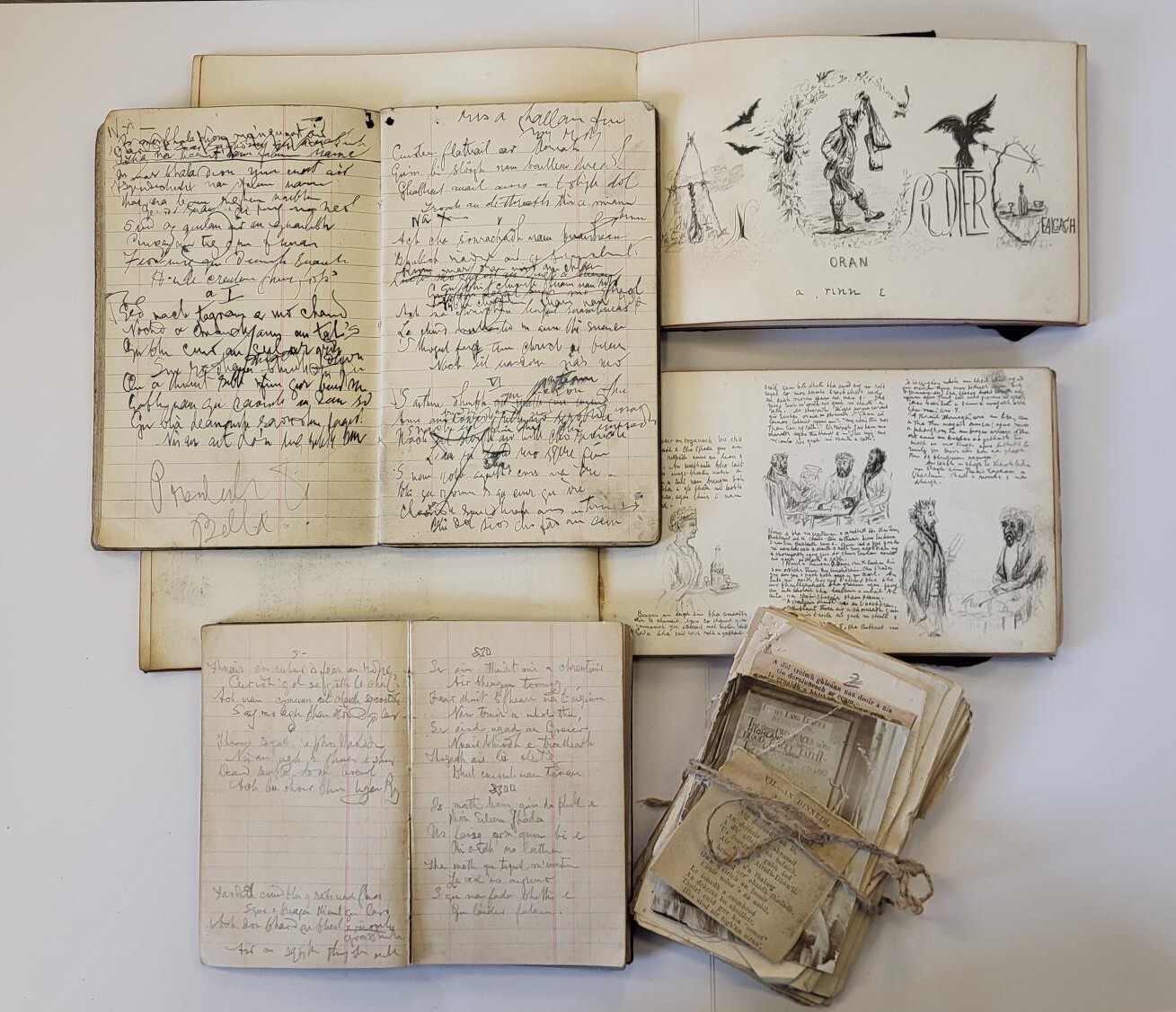

As always we would like to open this newsletter with a continued thanks for your support for, and interest in, the work of the Highland Archive Service and we are delighted to celebrate that work by sharing with you our 2025-2026 Annual Report, which looks back at the Service's achievements and undertakings over the last year.
We hope you enjoy reading both the annual report and this newsletter and discovering more about the activities of our teams across the Highlands. If you have any feedback or would like to know more about any aspect of our work please contact us on archives@highlifehighland.com - we would love to hear from you.
Highland Archive Centre Update
As well as a steady stream of hundreds of people visiting to use our collections for local and family history research, the late spring and summer months were full of activities, events, talks, and some special occasions!
Events and activities
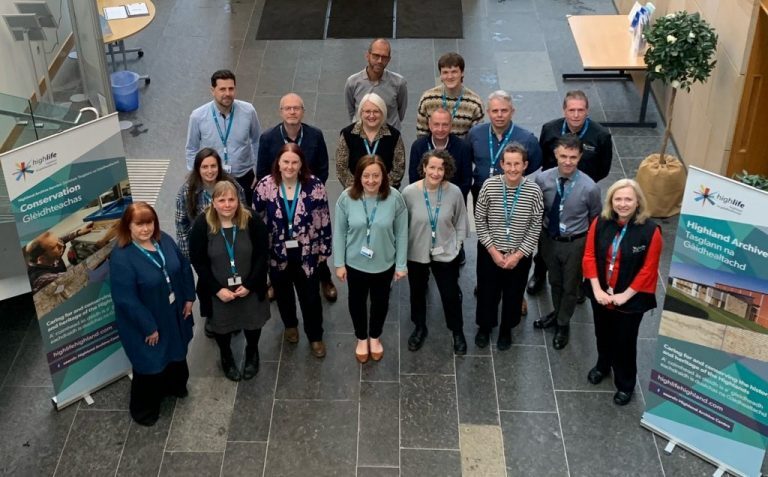
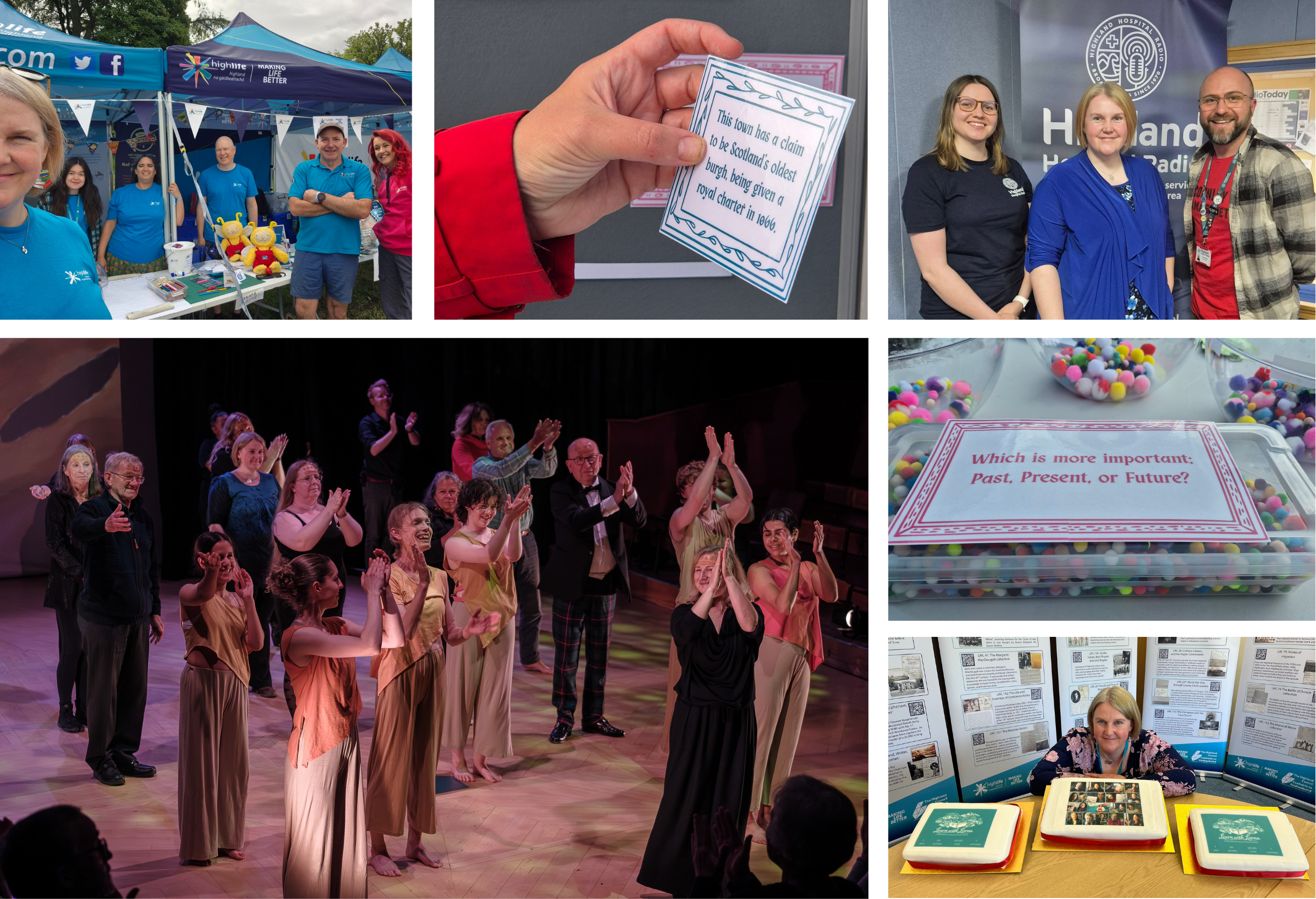
We were absolutely delighted in May to hold the first in-person Learn with Lorna event when around 85 people from near and far came together to hear a talk on what can be considered to be 'the treasures of the Highland Archive Service' before enjoying displays of archive material from across the service's four offices. It was wonderful to receive such positive feedback from those who attended with people commenting on the emotion of the talk, the pleasure of seeing such a wide range of material from our collections, and many other aspects of the day. Perhaps the most frequently made comments, which were greatly appreciated, spoke of the obvious closeness of our team, and the passion we all have for caring for, and sharing, our collections. The bringing together of multiple members of the team from across the centres was a highlight of the day for us too! We were delighted to receive extensive press coverage of the event, with both live and pre-recorded interviews on BBC Scotland News, BBC ALBA's An Là, BBC Radio nan Gàidheal, BBC Radio Scotland, and Highland Hospital Radio. Following the event, our Community Engagement Officer, Lorna Steele-McGinn, wrote a reflection on the Learn with Lorna story which can be read here. The series, which has been on a summer break since June, will return to Facebook and YouTube with episode 261 - Travel Tales - on 3rd September.
In addition to that special occasion, we've been delighted over the past few months to attend a wide range of other events from Highland Pride (with our colleagues at High Life Highland Libraries) to Belladrum Tartan Heart music festival (with High Life Highland Countryside Rangers and Libraries colleagues), as well as give talks and tours to a diverse range of groups, from local history societies to Highland authors!
After some months of working alongside a group researching the history of the Northern Meeting Park, it was a pleasure to have a display at the launch of the newly created panels within the park, and we were also proud to be invited to take part in Dance North's Rise 2026 programme, hosted at Findhorn Ecovillage. The latter saw us taking part in the Guuranda X Rise performance where Lorna shared stories from our collections that tell of clearance and migration, while artist Lynda Buchan and Findhorn resident Jonathan told stories of their connection to the land, before the packed out audiences enjoyed watching Guuranda dancers and the Sing Moray - Community Choir share stories of Narungga culture from Australia. Pictures from just some of these events can be seen below (large picture of Guuranda X event courtesy of Alexander Williamson).
Education
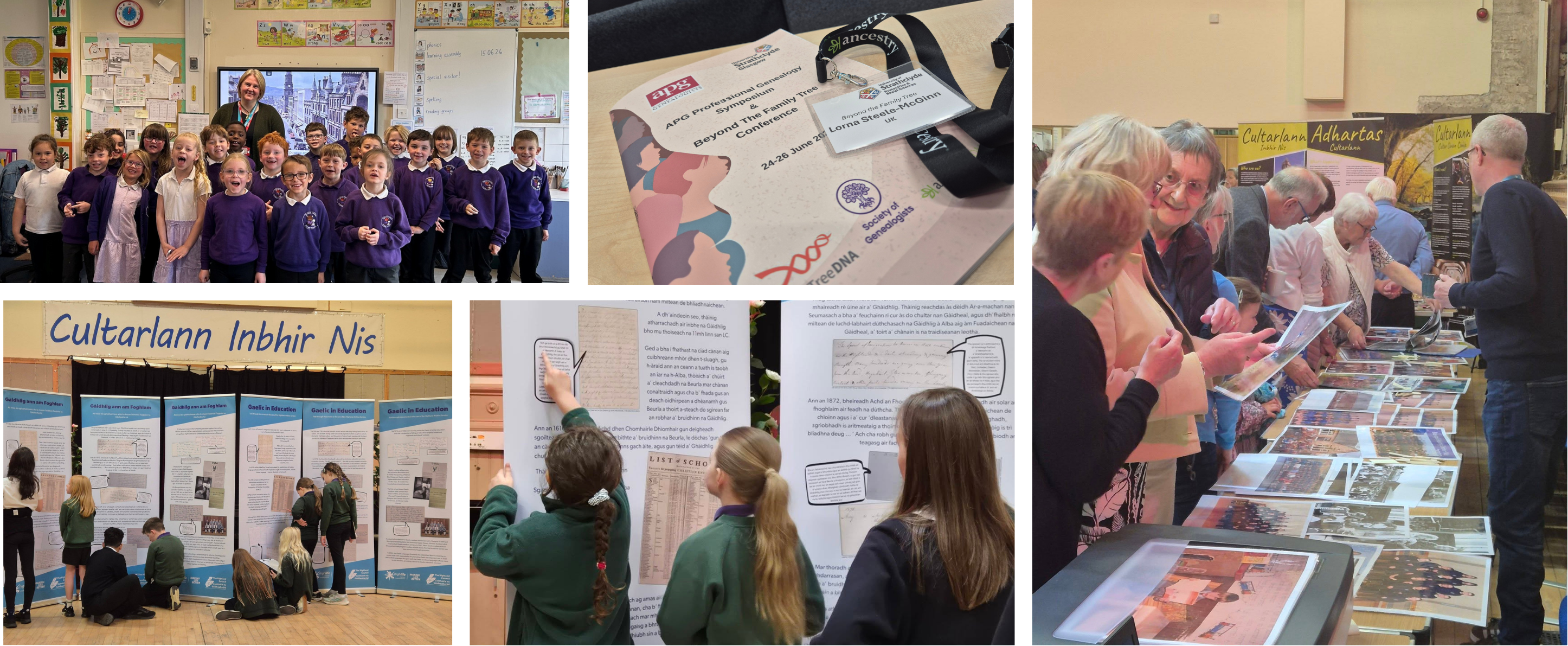
We have enjoyed giving talks and tours to learners of all ages since our last newsletter. We welcomed students from the University of Georgia (on an exchange visit in partnership with the University of the Highlands and Islands) and students from the University of Glasgow studying the history of mental health care to the Highland Archive Centre, and were delighted to be asked to speak at the University of Strathclyde's 'Beyond the Family Tree' conference in Glasgow.
It's always a pleasure to spend time in schools sharing archival content and concepts with young people, and the last few months have been no exception. We have enjoyed working with pupils at Duncan Forbes Primary, Fortrose Academy, Cradehall Primary, Tomnacross Primary and others, looking at everything from the Highland connection to enslavement in the Caribbean to the story of Inverness. We are always amazed by the insightful questions posed to us by children in classrooms, as well as enjoying the creative fun of archive sessions during the school holidays, which this year we have delivered in multiple locations from Helmsdale to Charleston. Of particular note this summer was a celebratory event held at Cultarlann Inbhir Nis to mark forty years of Gaelic Medium Education (GME) for which we created a new exhibition with activities for Gaelic speaking pupils of both primary and secondary age. It was a pleasure to both research and tell the story of Gaelic in education, which can be read in our blog here, and to share in the event with Gaelic speakers young and old whose memories and stories were a joy to hear.
Finally, and still on an 'education' note, we're delighted to share that news that our Archive Assistant, Kirsteen, has recently graduated with her second degree!
At the end of June, I graduated with an MLitt Scottish Heritage from the University of Aberdeen. The topic of my dissertation was emigration from the Isle of Lewis in the 1920s, focusing on the lives and experiences of my own relatives. During my research, I used archival material from both the Highland Archive Centre and Tasglann nan Eilean (Hebridean Archives), as well as my own family records. It was an incredibly fascinating and rewarding topic, and by the end I had more questions than I had at the start!
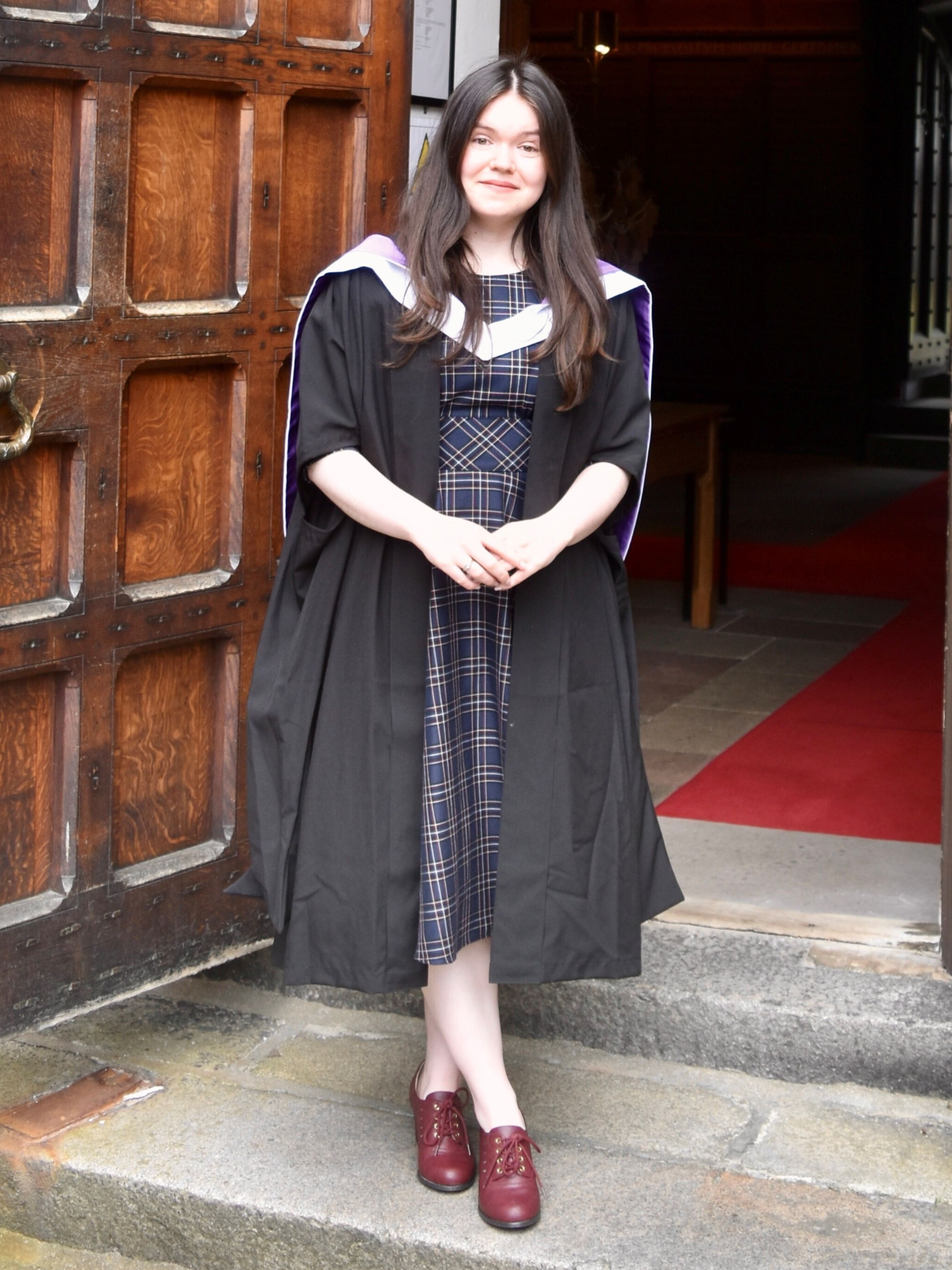
Congratulations Kirsteen - we're all really proud of you!
Upcoming Events
We have a number of exciting events coming up at which we would be delighted to see you.
Open Day - 5th September (10-4)
- Drop in any time between 10am-4pm to see displays of archive material and chat to the archive staff about our work and collections
- Call or email to book on to one of our three behind-the-scenes tours at 10:30am, 12:30pm, or 2:00pm
- Chat to our family historian and conservators about how to trace your family story and how to care for any old documents or books you have at home
- Children's activities
- No charge but donations appreciated
Family History for Beginners classes
- Set 1: Monday evenings (4 weeks from 14th September) 7pm-9pm ONLINE
- Set 2: Friday mornings (4 weeks from 25th September) 10am-12pm IN PERSON at Highland Archive Centre, Bught Road, Inverness IV3 5SS
- Cost of £48 (£40 - HLH Member) for a set of four
Family History Day - 31st October (10:30-1)
- Talk & Q&A: “The Quirks of Family History” with Family Historian Anne Fraser
- Displays of original documents to enrich genealogy research, Scotland’s People taster sessions, and the chance to chat with Family Historians, Anne and Alasdair, about all things genealogy.
- No charge but donations appreciated
- Book here
Archives for Beginners classes
- Set 1: Friday mornings (4 weeks from 6th November) 10am-12pm IN PERSON at Highland Archive Centre, Bught Road, Inverness IV3 5SS
- Set 2: Wednesday afternoons (4 weeks from 11th November) 2pm-4pm ONLINE
- Cost of £48 (£40 - HLH Member) for a set of four
For more detailed information on these events please visit our What's On page here.
We really appreciate all requests to give talks (in person and online), tours, and run school sessions, so if you're a member of group or a teacher, why not get in touch to hear stories from our collections and learn about the work of the archive service?
In the meantime, thank you for your support of our work which is greatly appreciated.
Family History
Summer is a busy time for our Family Historians, Anne Fraser and Alasdair MacDonald. We have had visitors from across the world looking to trace their roots in Scotland, and many locals too.
Anna Pelikan who runs the Scottish Cooking Experience in Inverness, a class that blends Scottish food, culture, and heritage, visited for a one-to-one consultation with Alasdair with the aim of confirming her family's connection to Jacobite heroine, Flora Macdonald. We often have enquiries of this nature - people seeking to trace their family ties to famous figures or historical events. Tracing family into the Jacobite period can be difficult as births, marriages, and deaths were not fully documented in the 18th century and in some areas, including the Western Isles, surviving parish registers mostly date from the 1800s onwards. In Anna’s case, we were able to follow her line back to her Hebridean ancestors who ran the Polochar Inn, and latterly the Carnan Inn, in the 19th century - the family name being Marquis. There was an obituary written for a member of this family in 1925 that mentions their relationship to Flora Macdonald, however it did not provide a clear genealogical rundown. Alasdair discovered an article on the Macdonald of Milton family published in the Inverness Courier in 1888 which gave mention to a Mr McMarquis, “said to be the ugliest man in Uist”, who married Margaret Macdonald, daughter of Captain Angus Macdonald of Milton, and had a daughter named Isabella who was still living in Iochdar in 1888. There was only one Isabella (Mc)Marquis living in South Uist at that time, Anna Pelikan’s ancestor who we had identified. Her grandfather, Captain Angus Macdonald, was the nephew of Flora Macdonald!
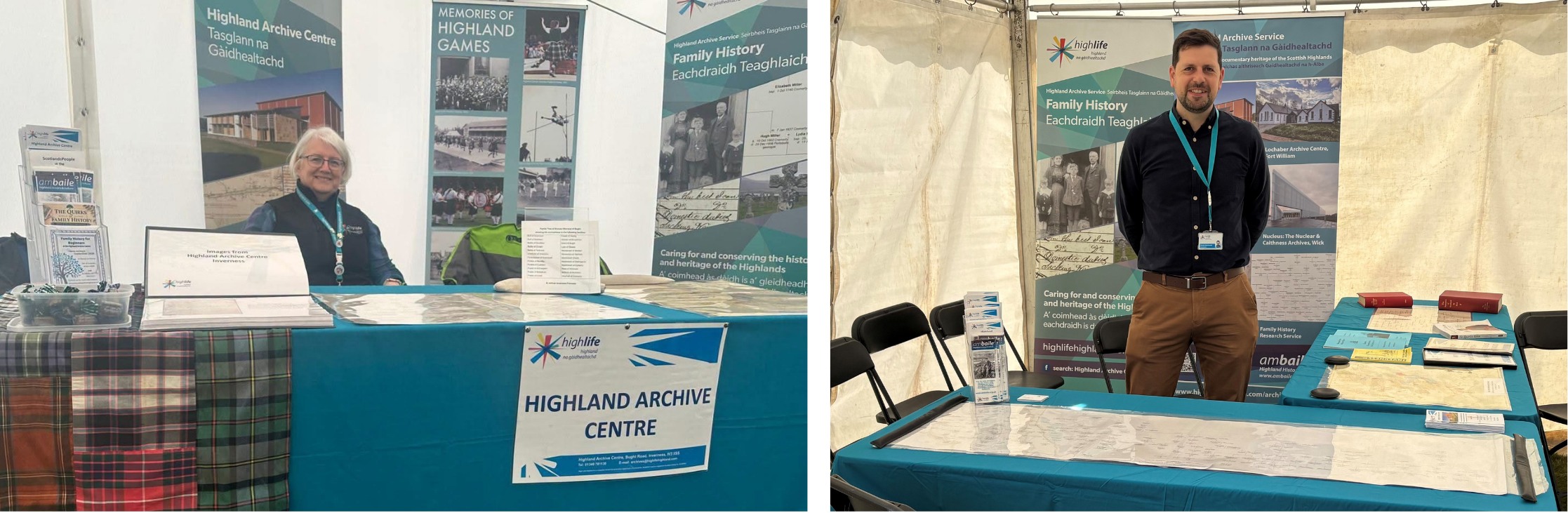
Aside from working through research like this, Alasdair joined Lochaber Archivist Rory Green to represent the Highland Archive Service at Arisaig Games (above right) and ran a stall Moy Country Fair where he discussed family history with attendees and proposed future research projects. Anne has also been out and about at event such as Inverness Highland Games (above left), and giving family history talks to local groups including Strathglass Heritage Association and Trinity Life Church.
For more information about the work of our family historians, to request some research, to book onto a class, or to purchase family history research vouchers as a present please contact us.
Am Baile - Highland History and Culture website
Am Baile's content is hosted on behalf of a wide range of partners and for this newsletter we're having a look at some pictures on the website that come from the Joseph Cook Collection at Inverness Museum & Art Gallery. Pictures which represent a significant moment in the history of Inverness and beyond.
Next month sees the anniversary of a historic meeting which took place in the Town House in Inverness. On 7 September 1921, against the backdrop of the Anglo-Irish truce and ongoing efforts to end years of conflict, members of the British Cabinet gathered in the town to consider its response to Irish nationalist leader, Éamon de Valera, who had rejected their most recent proposal. It was the first Cabinet meeting ever held outside London. Decades of debate over Irish self-government had given way to armed conflict following the Easter Rising of 1916 and the subsequent Anglo-Irish War. A truce came into effect in July 1921, but negotiations remained delicate. After de Valera rejected British proposals in late August, Prime Minister David Lloyd George, who was holidaying in Gairloch, summoned Cabinet colleagues north to discuss the next move. Contemporary newspaper reports describe the town bathed in sunshine on the morning of 7 September as large crowds gathered from the railway station along the High Street and around the Town House. Every available vantage point was occupied. Windows overflowed with spectators, rooftops were crowded with onlookers, and some shopkeepers even cleared their displays so people could watch the historic proceedings from inside. Local police and special constables were reinforced by detectives from Scotland Yard.
The London train arrived at 10am carrying Cabinet ministers, who were welcomed by Robert Munro, Secretary of State for Scotland, before retiring briefly to the Station Hotel. Attention soon shifted to the Town House, where the area outside was reserved for journalists, photographers and cinema cameramen. The dignitaries were welcomed by Provost Macdonald and other civic leaders. Winston Churchill and General Sir Cecil MacReady were among the first arrivals from nearby Brahan Castle. The biggest reception, however, was reserved for Lloyd George. Having travelled from Brahan Castle via Moy Hall, where he had breakfasted with King George V, the Prime Minister arrived 25 minutes late. As his car slowly made its way through the town, crowds cheered enthusiastically and waved handkerchiefs.
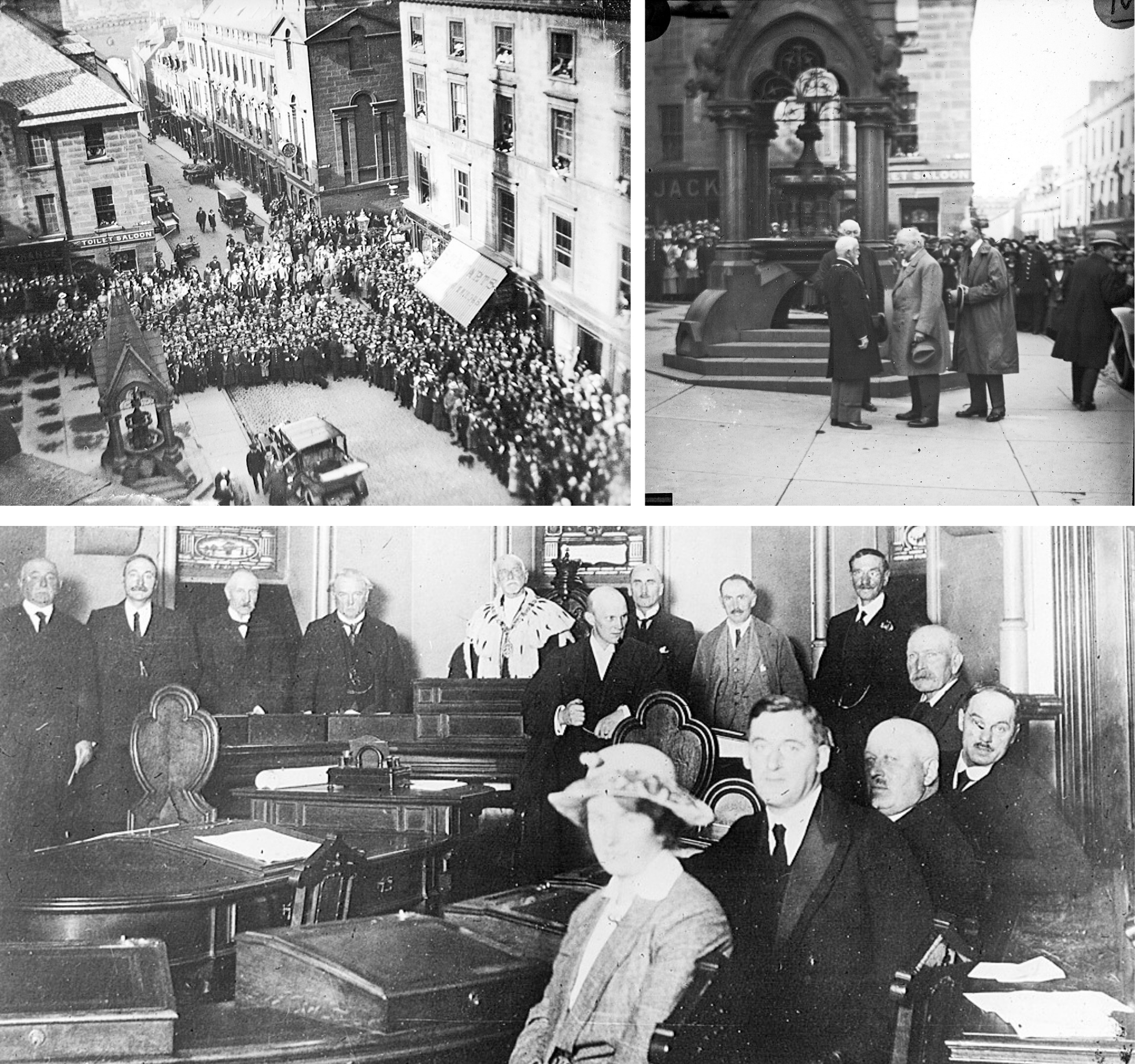
Inside the Town House, the atmosphere differed from the formality of Westminster. Many ministers wore lounge suits rather than formal dress, while military officers appeared in civilian clothing. Sixteen Cabinet members attended, meeting in the Council Chamber from 11.30am until early afternoon, with advisers and secretaries working in adjoining rooms. The key moment came shortly after 3pm when Sinn Féin representatives Richard Barton and John O'Sheehan arrived to receive the Cabinet's official communication. They left shortly afterwards to begin the journey back to Dublin. As ministers emerged, Lloyd George and Churchill again received loud cheers from the assembled crowds.
The "Inverness Formula", as it became known, insisted that Ireland remain within the Empire but also called for direct negotiations between the two sides. Those talks eventually led to the Anglo-Irish Treaty, signed in London three months later, and the creation of the Irish Free State. Although the meeting lasted only a few hours, Inverness played a small but significant role in one of the most important political settlements of the twentieth century.
To discover more stories from across the Highlands, visit the Am Baile website here.
Conservation
As usual, the conservation team is busy with a variety of work and we've outlined just a few of our current projects below!
Chivas Brothers collection, Strathisla Distillery
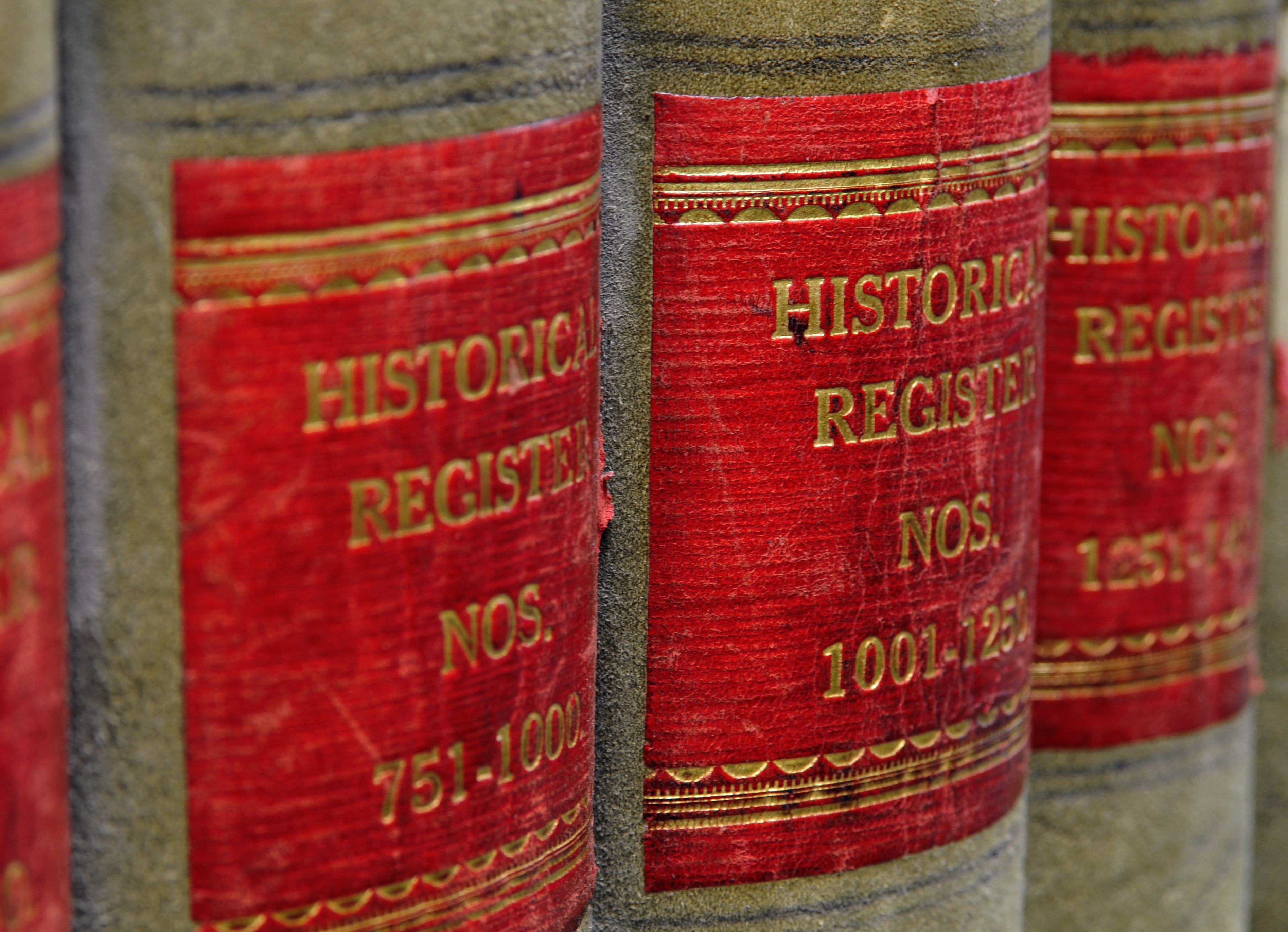
Since our last article, the High Life Highland Conservation Service has continued the refurbishment programme for the Chivas Brothers collection, Strathisla Distillery. These books require cleaning using a latex aerated “smoke” sponge, having corners consolidated using paste where the corner boards are delaminating and breaking down, building up with card fragments if the corners are missing sections and attaching new leather corners where appropriate. There are some page repairs in some volumes. The spines are also re-lined where required and a new hollow attached instead of the spring back binding that the books would have originally have had. Spring backs would literally spring the spine flat, which is very intrusive and eventually damaging to the spine. Here we opt for a more sympathetic hollow made from paper, allowing the leather spine to be supported but not a tight back, i.e. adhered directly to the spine. A 'before and after' of this work can be seen below.

Scottish Catholic Archives
As mentioned in the previous newsletter we are working with the Scottish Catholic Archives, supported via the Menzies Trust, on a three year project to stabilise and house the Menzies of Pifodels Collection. The first phase of the project was completed in mid June and we are now in the process of cleaning and flattening a more varied collection of paper based material with a few parchment documents including attached pendant wax seals.
Johnsons of Elgin Cash Book
Johnsons of Elgin has been a famous name in Scottish fashion for over 200 years and we were recently approached to undertake repairs to the oldest cash book in their archive collection which had been severely flood-damaged several years ago. The book's wet damage was mainly along the bottom edge (worse at the front and back) where the pages were damaged and the bottom of the boards severely brittle and breaking down. The volume's writing was iron gall ink, but these inks were surprisingly stable, given the amount of wet damage present.
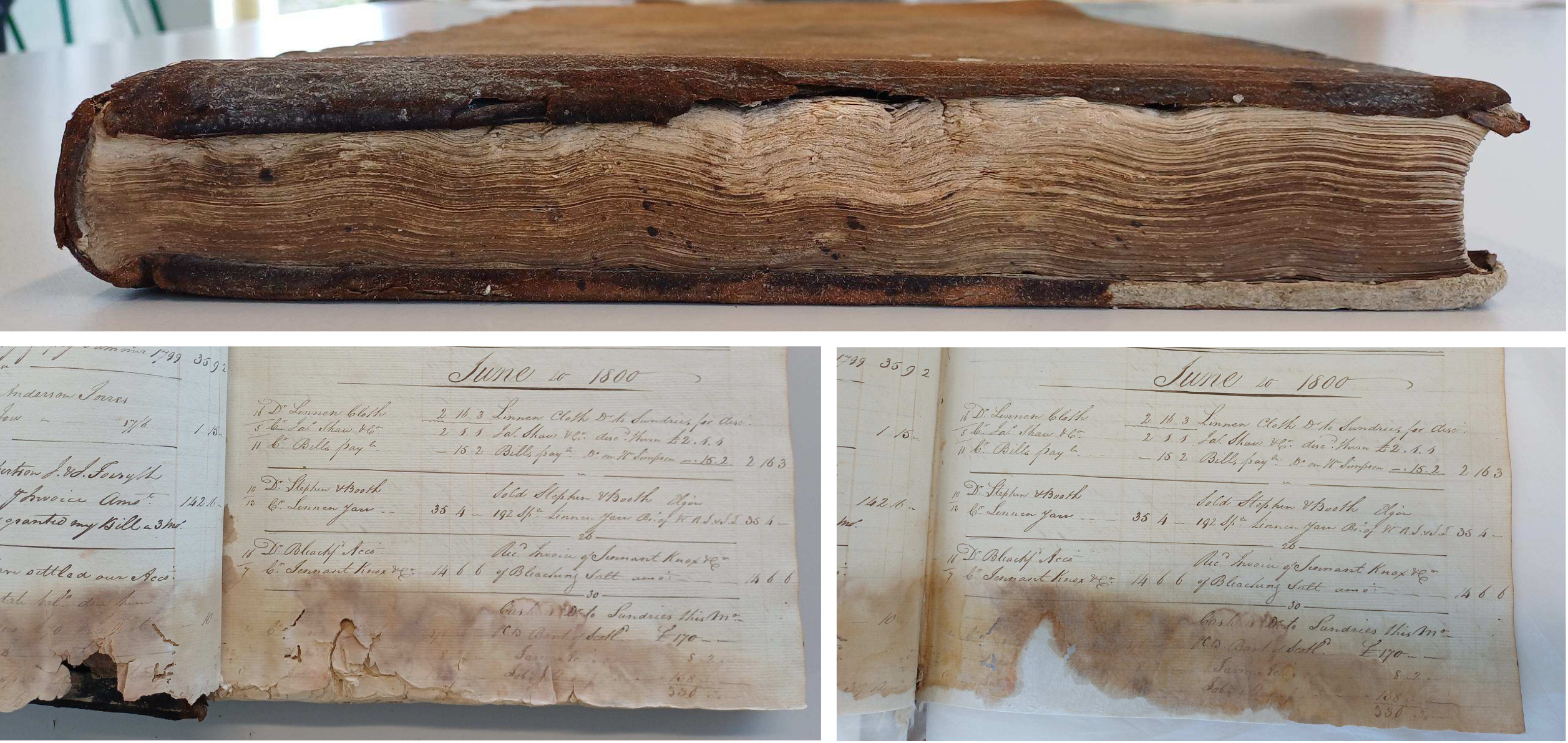
The Johnsons of Elgin Archivist, Sarah, came to the Highland Archive Centre in mid-July with her marketing colleague, Kirsty, to photograph and film aspects of conservation treatments being carried out on the book and we look forward to sharing those with you when the project is complete!
For more information about our conservation work please visit https://www.highlifehighland.com/archives-service/conservation/
Conservation services
For enquiries about archival conservation, contact us at:
Nucleus: The Nuclear and Caithness Archive Update
The Caithness Archive team have been keeping busy in both the searchroom and with activities in our building and beyond! Over the past few months we’ve run outreach sessions with Newton Park and Bower Primary Schools; continued to deliver our regular reminiscence sessions at local nursing homes with Wick Voices; welcomed several groups to our searchroom including the Caithness Family History Society and Murkle SWI; and hosted talks and workshops on everything from Norse history to Nuclear memory and art.
We are particularly proud of our latest exhibition ‘The Life and Art of David Barrogill Keith’, which launched at North Coast Visitor Centre in Thurso on 5th June 2026. It is viewable at Waterlines, Lybster, until 30th August and will subsequently be shown at Nucleus. The exhibition brings together wonderful artwork from the collection of Robert Maitland (seen below with one of the 49 paintings in his collection), local knowledge and research by Alan McIvor and the Caithness Archive team – as well as examples from the Keith Family archives held at Nucleus. We were delighted that D.B. Keith’s great-grand nieces and nephew Jane, Flora, Catriona, and Sandy were able to travel to Thurso from Edinburgh for the exhibition launch (see below).
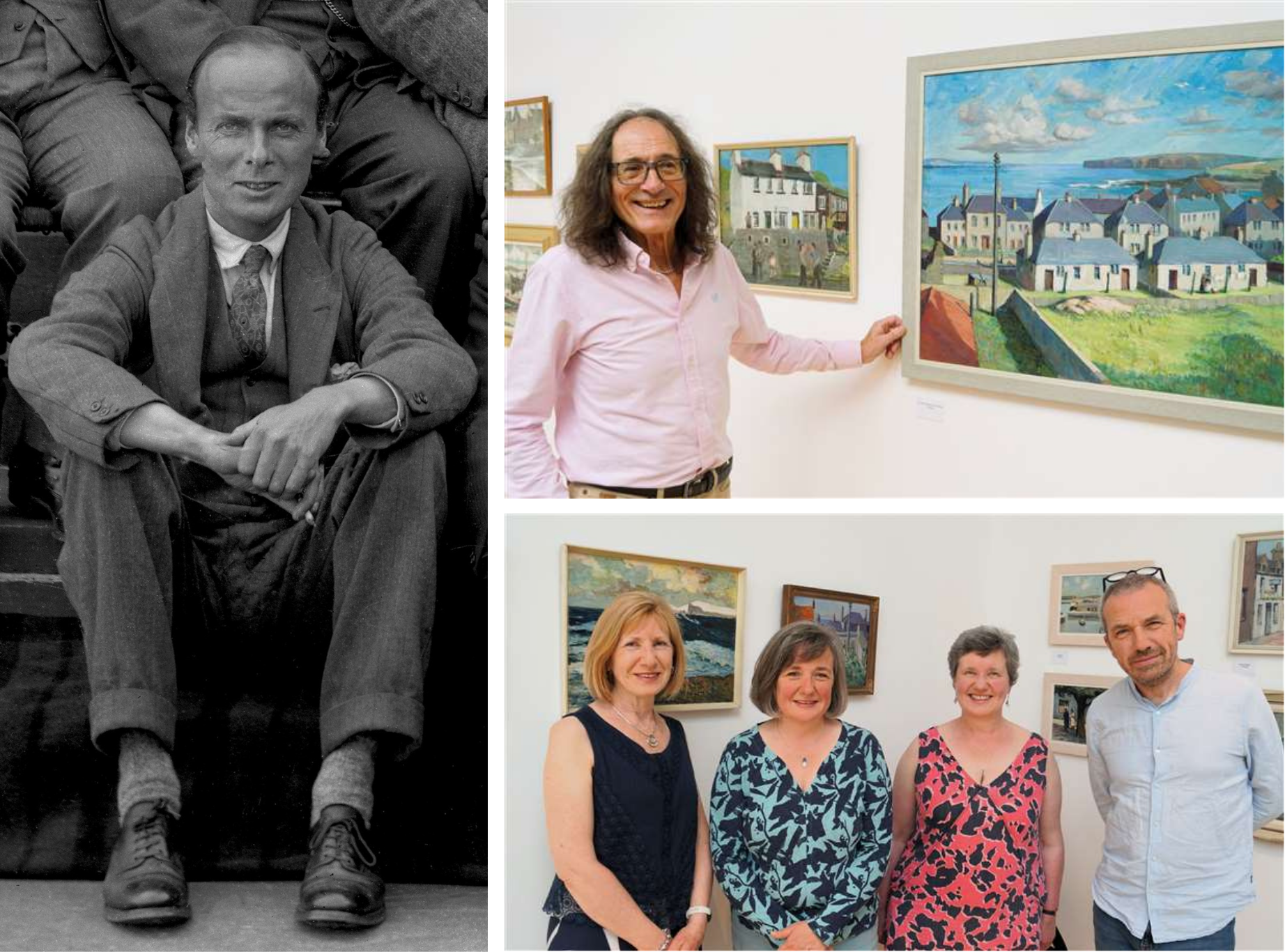
Affectionately known as ‘Barrogill Keith’ or ‘D.B. Keith’, David Barrogill Keith (seen above left in an image courtesy of the Johnston Collection (JN25324B046)) was a well-known figure in Caithness and beyond, with many of his original artworks still hanging in houses around the county today. However, his life and work may not be as familiar to a modern audience. Having begun his life in Thurso, David went on to train as a lawyer at the University of Edinburgh; study painting at the Académie Delacluse in Paris and drawing at Edinburgh College of Art; fight on the Western Front during World War One; practice as a partner with Keith & Murray Solicitors (Thurso); and serve as Sheriff-Substitute of Caithness, Sutherland, Orkney and Shetland - all the while painting and writing prolifically. After retiring he continued to spend much time writing and painting. He died in 1980 at his home at Thurso East aged 88.
Upcoming Event
Open Day - 20th September (11-3)
- Drop in any time between 11am-3pm to see displays of archive material and chat to the archive staff about our work and collections
- Call or email to book on to our behind-the-scenes tour at 1:00pm
- Chat to our staff about how to further your own research or trace your family story within our collections
- Explore our latest exhibition 'The Life and Art of David Barrogill Keith'
- Children's activities
If you would like to organise a bespoke visit to Nucleus for a group, organisation or club then get in touch with the Caithness Archive Team today:
T: 01955 29 00 50
E: north.highlandarchive@highlifehighland.com
Engage with us online
Our online exhibitions, including 'Atomic Housing: Thurso Transformed', 'Atomic Recreation', and 'WK: History of a harbour' can be found on our website along with all previous editions of our blog, 'Stories From The Archive', which take an in-depth look at our collections. Please do have a look and please follow us on Facebook to see a wealth of material from Caithness' history!
Contact Nucleus
Please get in touch with us at:
Skye and Lochalsh Archive Centre Update
We’ve had a whirlwind of talks, exhibitions and many visitors over the last few months at Skye and Lochalsh Archive Centre.
In June to celebrate Skye Week we hosted Dr Margaret Bennett who gave a talk about the life and music of Martyn Bennett. Margaret’s depth of knowledge, not only of Martyn himself but of Scottish culture, tradition and storytelling, made this a truly special event. Martyn's music carried tradition forward and for so many young people it created a sense of pride, identity and possibility that was unforgettable.
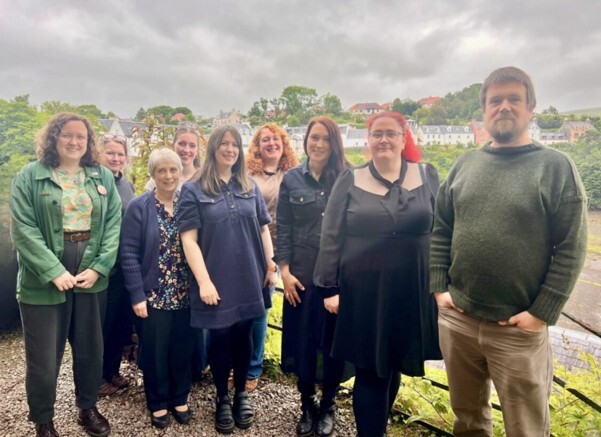
We are delighted to share an update from Seanchas Beò | Living Lore, an 18-month project led by Atlas Arts, exploring storytelling, cultural heritage, and oral histories rooted in local communities. Developed in partnership with Atlas Arts, Ionad Thròndairnis, Tobar an Dualchais/Kist o Riches, and Skye and Lochalsh Archive Centre, Seanchas Beò brings together artists, communities, and archival collections to uncover, share, and creatively respond to the rich histories and living traditions of the area. Three artists have been appointed to the project: Dr Iain MacKinnon, working with Skye and Lochalsh Archive Centre; Grace Wright, working with Ionad Thròndairnis; and Raghnaid Sandilands, working with Tobar an Dualchais/Kist o Riches. Throughout the project, the artists will collaborate with Atlas Arts, partner organisations, and local communities to create new community-based artworks and events. Together, they will explore how cultural memory, preserved in archives, landscapes, language, and lived experience, can be activated and reimagined through contemporary creative practice. Seanchas Beò | Living Lore (project members below) is funded by Creative Scotland through its Culture Collective programme.
Gaelic Medium Education 40th Anniversary Project
Archivist Catherine MacPhee worked with Shona Paterson, Highland Council Gaelic Community Learning and Development Officer, to deliver a programme of events throughout 2026 marking 40 years of Gaelic Medium Education (GME) in the Highlands and Islands. With funding secured by Shona, the project created a range of lasting resources, including exhibition banners, pop-up displays, and commemorative gifts for pupils. Designed to extend beyond the anniversary year, these materials will continue to support Gaelic education, cultural learning, and community engagement in the future.
Central to the project is a rolling programme of archive-led learning sessions in schools and communities. Using photographs, documents, maps, and objects, participants explore the history of GME and the wider story of Gaelic language and culture in their local areas. The programme includes a travelling exhibition, hands-on activities, and special public access events at Skye and Lochalsh Archive Centre. School visits have introduced pupils to archives and their role in preserving community memory. At Kilmuir and Staffin Primary Schools, pupils contributed to a GME40 time capsule, using bilingual Gaelic and English worksheets to record their memories, experiences, and hopes for Gaelic education. The time capsule, to be opened in 40 years, will create a lasting link between past, present, and future generations of Gaelic speakers and learners.
More than an anniversary project, GME40 recognises Gaelic Medium Education as one of the most significant cultural developments in modern Highland history. Through archival research, community engagement, and oral history recordings with teachers, former pupils, parents, and campaigners, the project is preserving the stories behind the growth of Gaelic education. By engaging with historic records and contributing their own voices, young people are not only learning about history but helping to create it. The exhibition resources, oral histories, and archival material generated through the project will leave a lasting legacy, demonstrating how Gaelic Medium Education continues to strengthen cultural identity, community resilience, and language preservation.
Skye and Lochalsh Archive Centre
Contact us at:
Lochaber Archive Centre Update
It's been a busy few months for Lochaber Archive Centre and the time has been both productive and enjoyable. In our searchroom we have welcomed researchers from places as far apart as Scotland and Australia. Our researchers have been have been immersed in everything from school records to documents relating to forts constructed during the Cromwellian occupation of Scotland. It has been great to have them all with us and to be able to support their research interests.
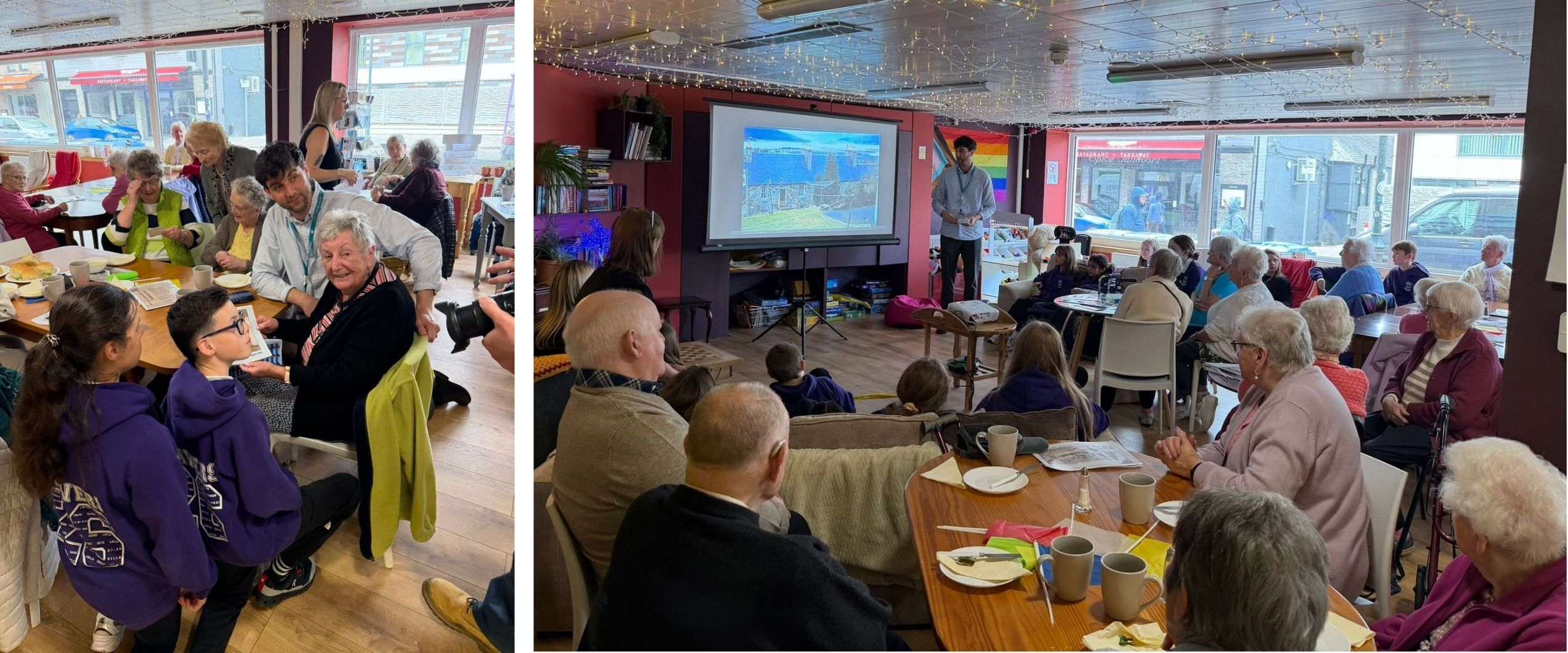
In addition to running the searchroom we have been busy with a range of other activities. In May, we teamed up with Care Lochaber and Lochaber Hope to deliver a reminiscence session for older members of the community. This event took place at Lochaber Hope’s New Connections Community Hub and involved Archivist Rory Green accompanying the participants on a trip down memory lane with the help of photographs of Lochaber in days gone by. Homemade soup and sandwiches were provided and we were lucky to be joined by P4-6 pupils from Lundavra Primary School for some intergenerational conversation about memory, community and place. A wonderful, and meaningful, day was enjoyed by all and the images below capture some of the day's fun.
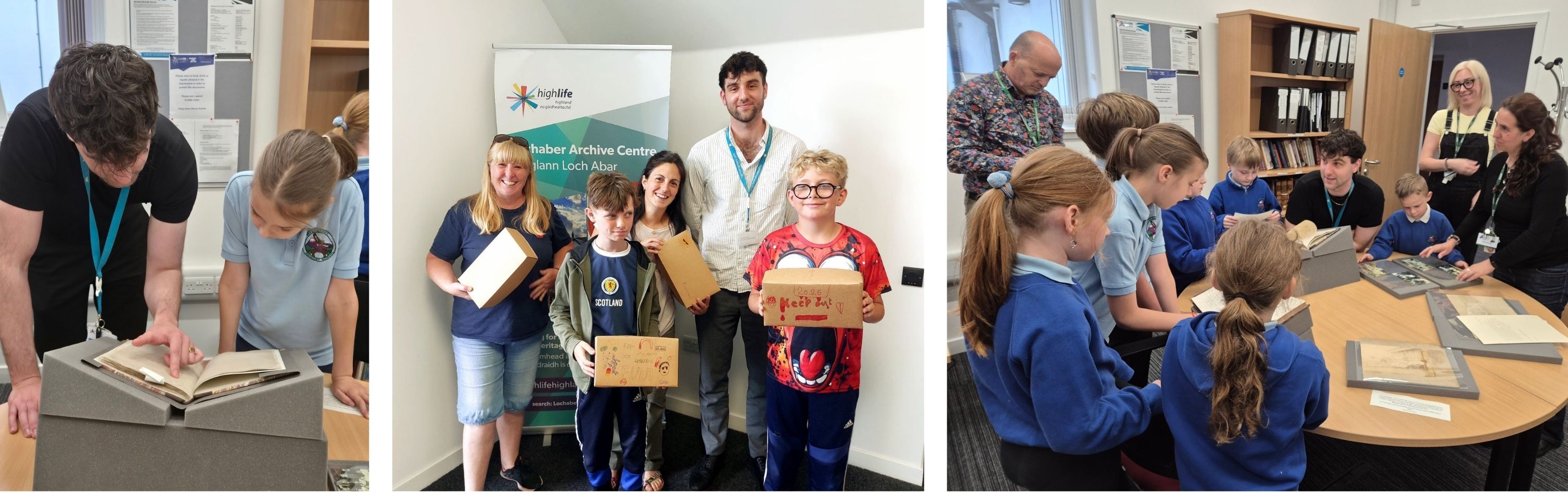
May also saw a visit by Rory to Inverlochy Primary School, where P6-7 pupils learnt about the history of their local area (everything from famous battles to successful shinty teams) through archive materials. Then, in June, we welcomed P1-7 pupils of Invergarry Primary School to Lochaber Archive Centre to explore the facility, and to learn more about what archives are and how they are looked after. Our work with young people didn't stop at the end of term! Summer means the High Life Highland School's Out programme and it was a pleasure again to support our Active Schools colleagues in delivering their summer camps with the archive service providing fun, history and archive based sessions for young people attending the camps through the school holidays.
The other thing summer always brings for all of our offices is attendance at local shows and Highland Games and Lochaber Archive Centre had a stall at both Invergarry and Arisaig Highland Games – something we very much look forward to each year. Attendance at such events give us the opportunity to meet and speak with the wider-Lochaber community in a light-hearted and informal atmosphere.
From mid-to-late July, we once again teamed up with Lochaber Hope to deliver our Summer Youth Project – a collaboration that ran each Wednesday for a three week period, and one that both organisations have been working to make happen for some time. This exciting project invited young people aged 8-13 to get to know their local area, think about ideas of self, community, place, belonging – and to create their very own collection that will be permanently preserved by the Lochaber Archive Centre. The weekly sessions included a walking tour of Fort William High Street where we looked at important landmarks, compared the present day with historical photographs, and took pictures with disposable cameras. Over the course of the next two weeks, the young participants spent time in the archive learning more about the uses of archives such as photographs, and how they can be looked after so that they remain accessible for years to come. Then, after the participants had spent a week taking photographs in their spare time, the developed results were displayed at Lochaber Hope’s New Connections. A selection of each photographer’s work will then make their way to Lochaber Archive Centre where they will be catalogued and stored for permanent preservation, whilst being accessible to anybody who wishes to view them.
The Highland Archive Service, along with the rest of High Life Highland, is always working to improve so that we can continue to make life better for people in the Highlands and beyond. Please take a moment to help us by rating our service via the link below.
We would really appreciate hearing from you about your interactions with the Highland Archive Centre, Nucleus: The Nuclear and Caithness Archives, Lochaber Archive Centre, and Skye and Lochalsh Archive Centre and Am Baile. Your contributions help us to shape our service. Thank you.
How likely are you to recommend High Life Highland?