



The 2025-26 academic year marks the 40th anniversary of Gaelic Medium Education. This blog looks at the history of Gaelic in education from the 1600s to the present day.
Gaelic is one of Scotland’s indigenous languages and was in widespread use across much of Scotland for thousands of years. Despite this, the status of Gaelic started to change from around the 11th century CE.
Although it remained the first language of a large proportion of the population, particularly in the north and west of Scotland, the court started to turn to English as the lingua franca and soon attempts were underway to anglicise Gaelic-speaking areas.
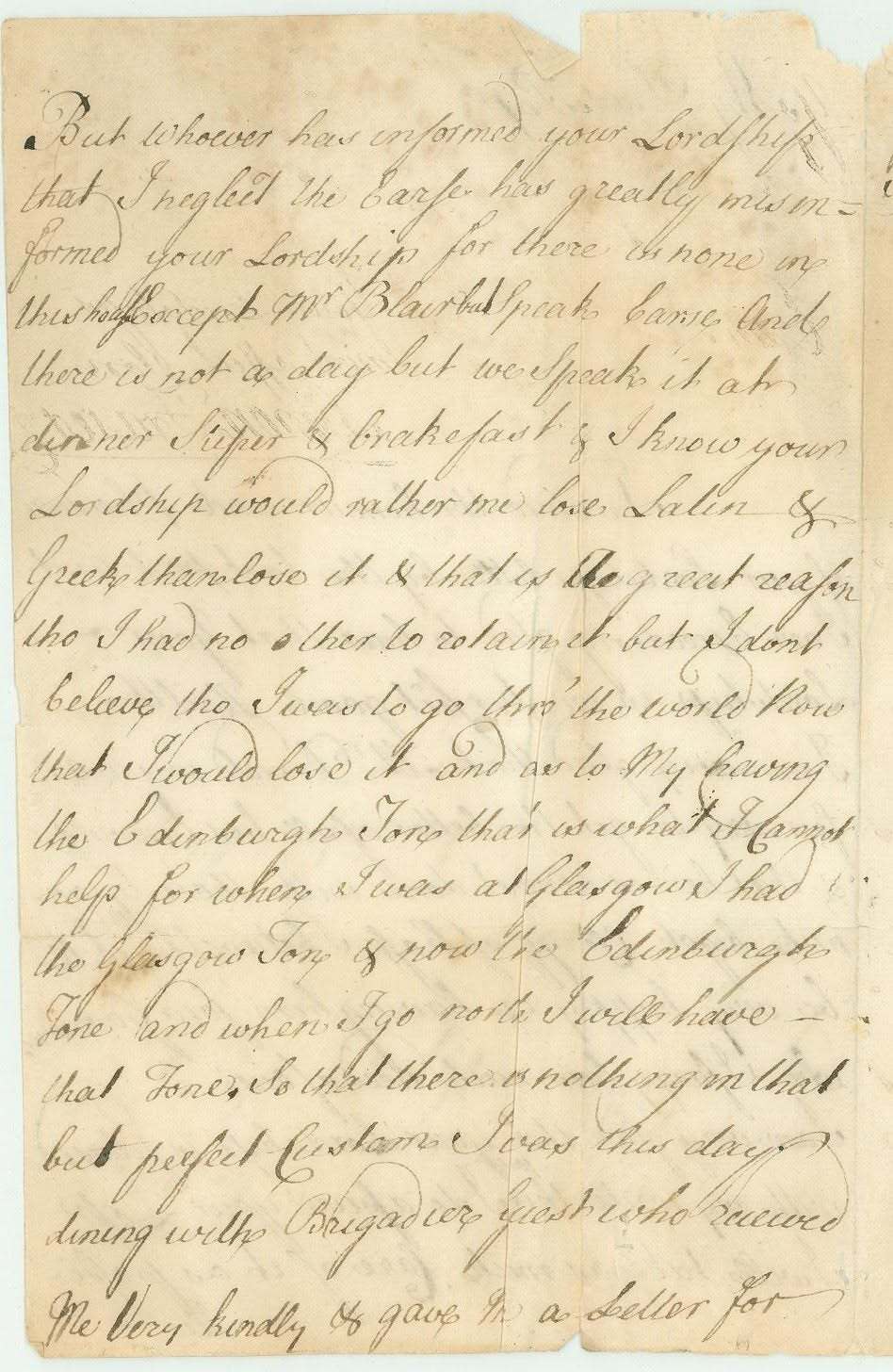
But whoever has informed your Lordship that I neglect the Earse [Irish/Gaelic] has greatly misinformed your Lordship for there is none in this house except Mr Blair but speaks Earse and there is not a day but we speak it at dinner, supper and breakfast & I know your Lordship would rather me lose Latin & Greek than lose it & that is the great reason tho I had no other to retain it but I don't believe tho I was to go thro' the world now that I would lose it ...
In 1616, an Act of the Privy Council encouraged the establishment of English-language schools in hopes that the ‘Inglishe toung be universallie plantit, and the Irische language … may be abolisheit and removeit’.
The 18th century saw the growth of educational societies such as the Society in Scotland for the Propagation of Christian Knowledge (SSPCK).
SSPCK schools were set up across the Highlands and Islands with the aim of assimilating a population seen by some to be culturally separate from the rest of Scotland. Initially hostile to the Gaelic language, the SSPCK’s early teaching was in English.
Although one of the society’s early aims was to de-Gaelicise the Highlands and Islands, it soon recognised the need to use Gaelic as a medium through which to teach other subjects. Gaelic-speaking teachers were sought and Raining’s School in Inverness was one of those that provided training.
The 18th and 19th centuries brought seismic events with long-lasting implications for Gaelic. The Jacobite Risings were followed by legislation which sought to actively dismantle Highland culture, and thousands of native Gaelic speakers left Scotland during the Highland Clearances taking both language and traditions with them.
In 1872, the Education (Scotland) Act would revolutionise education provision across the country. The Act, which made it ‘... the duty of every parent to provide elementary education in reading, writing, and arithmetic for his children, between five and thirteen years of age ...’ brought education to generations of children. However, it made no provision for Gaelic, assuming that all teaching would be delivered in English.
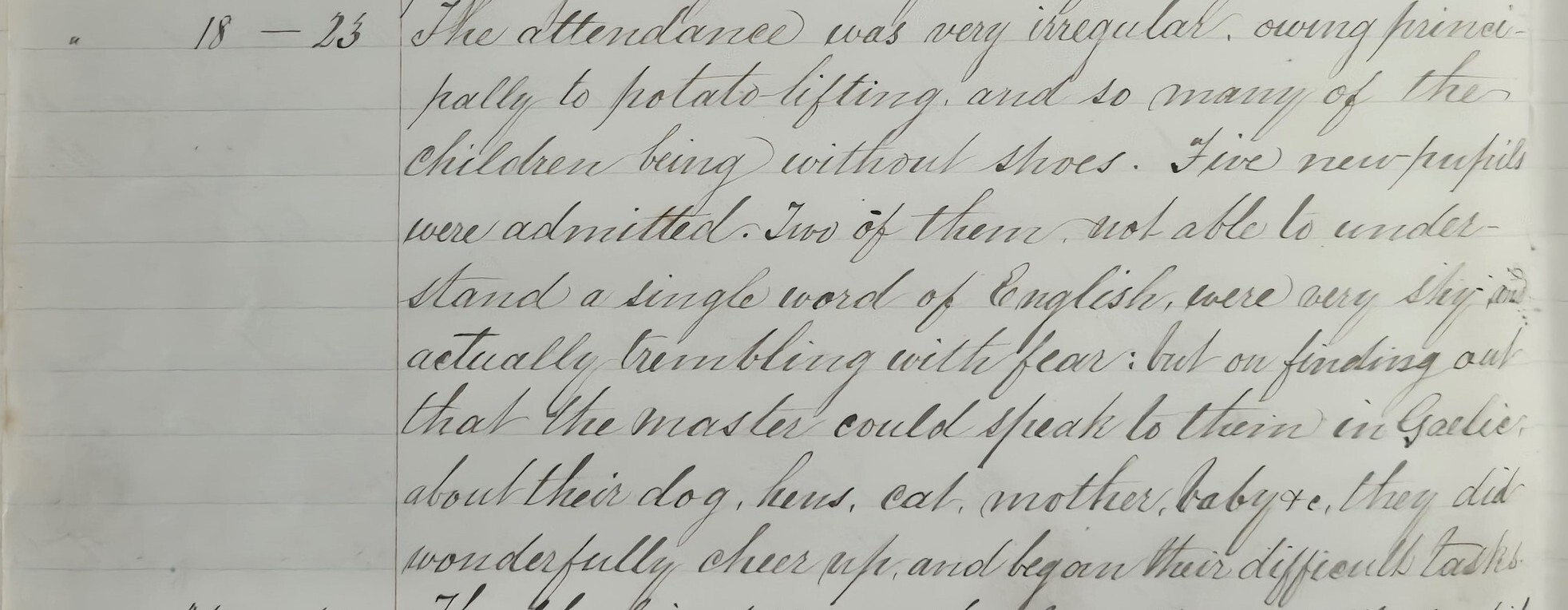
The attendance was very irregular owing principally to potato lifting and so many of the children being without shoes. Five new pupils were admitted. Two of them, not able to understand a single word of English, were very shy and actually trembling with fear; but on finding out that the master could speak to them in Gaelic about their dog, hens, cat, mother, baby etc. they did wonderfully cheer up and begin their difficult tasks.
As a result of the low value placed on the language by officialdom, and the perceived lack of advantages of speaking Gaelic, many children were encouraged to speak only English, resulting in further loss over the following decades.
But change was coming. Campaigns were underway to preserve and promote Gaelic language and culture and the late 19th century saw the birth of organisations such as An Comunn Gàidhealach.
The Education (Scotland) Act 1918 brought a slight change, requiring education authorities to make ‘adequate provision for teaching Gaelic in Gaelic-speaking areas’. The opportunity was seized in the Highlands and Islands in the following decades.
The 1970s and 1980s were turning points for Gaelic in formal education, with the introduction of bilingual education projects in selected Highlands and Islands’ schools.
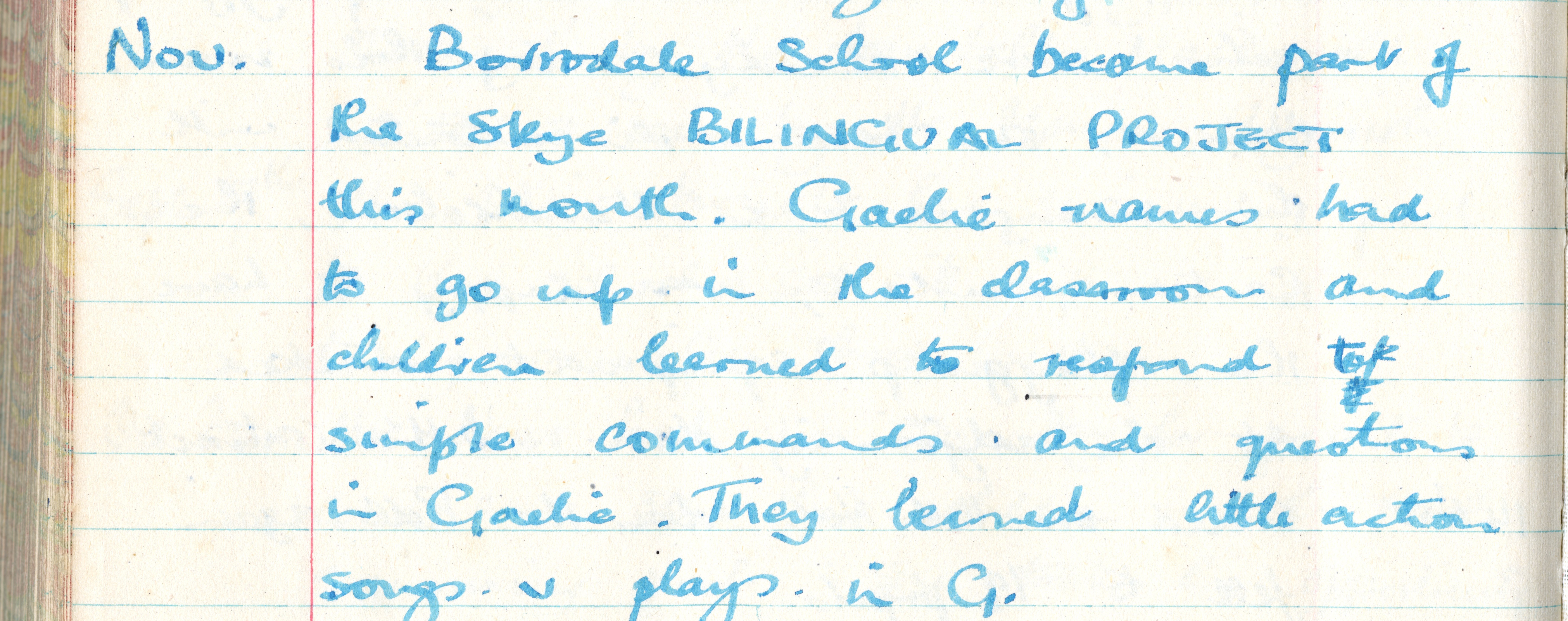
Borrodale School became part of the Skye BILINGUAL PROJECT this month. Gaelic names had to go up in the classroom and children learned to respond to simple commands and questions in Gaelic. They learned little action songs & plays in G.
Gaelic-medium playgroups and nurseries flourished and, in 1973, the opening of Sabhal Mòr Ostaig put Gaelic-medium higher and further education on the map. It wouldn’t be long before schools followed.
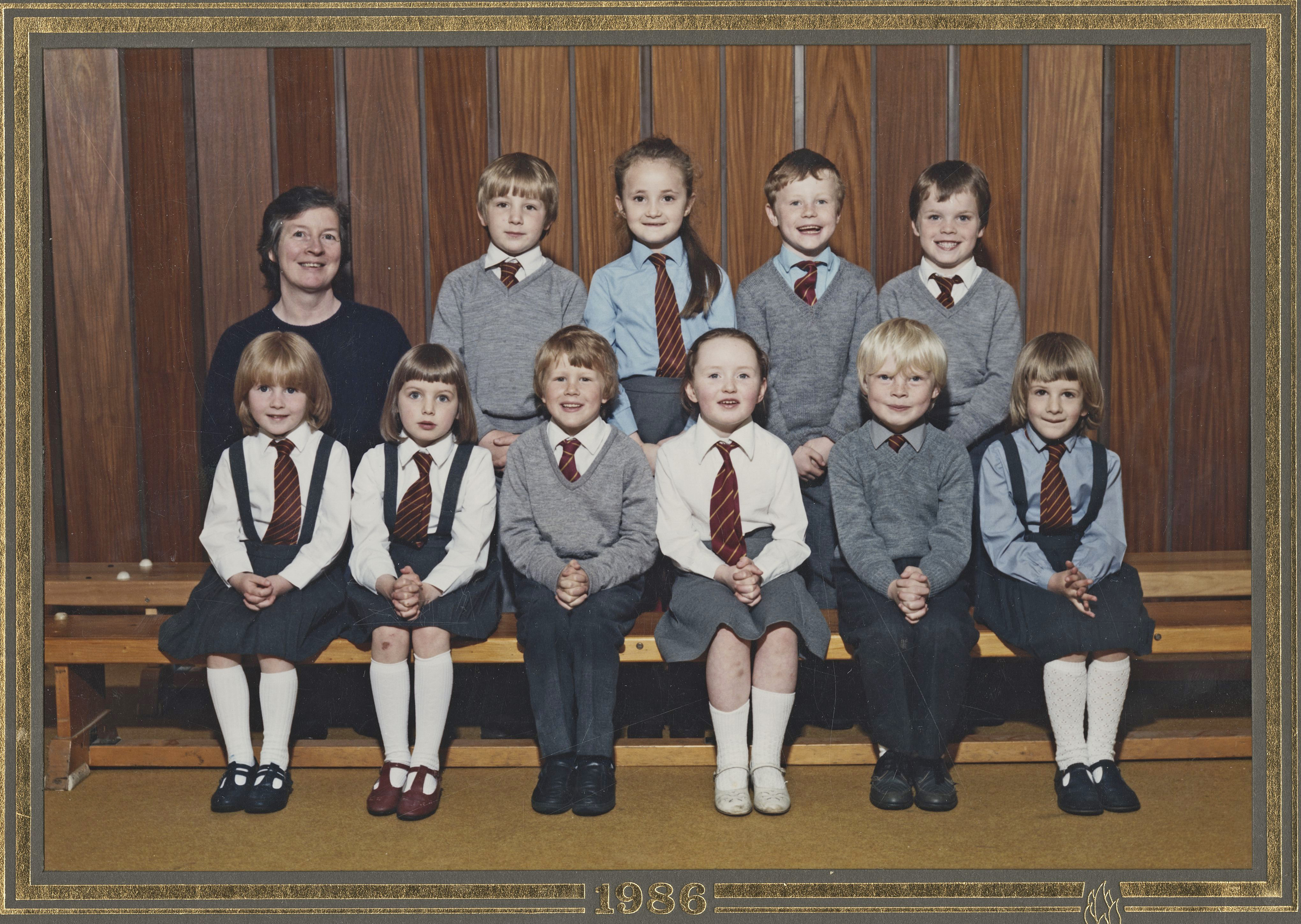
The first school-based Gaelic-medium units opened their doors in 1985, at the Sir John Maxwell Primary School in Glasgow and Central School in Inverness, to intense media interest.
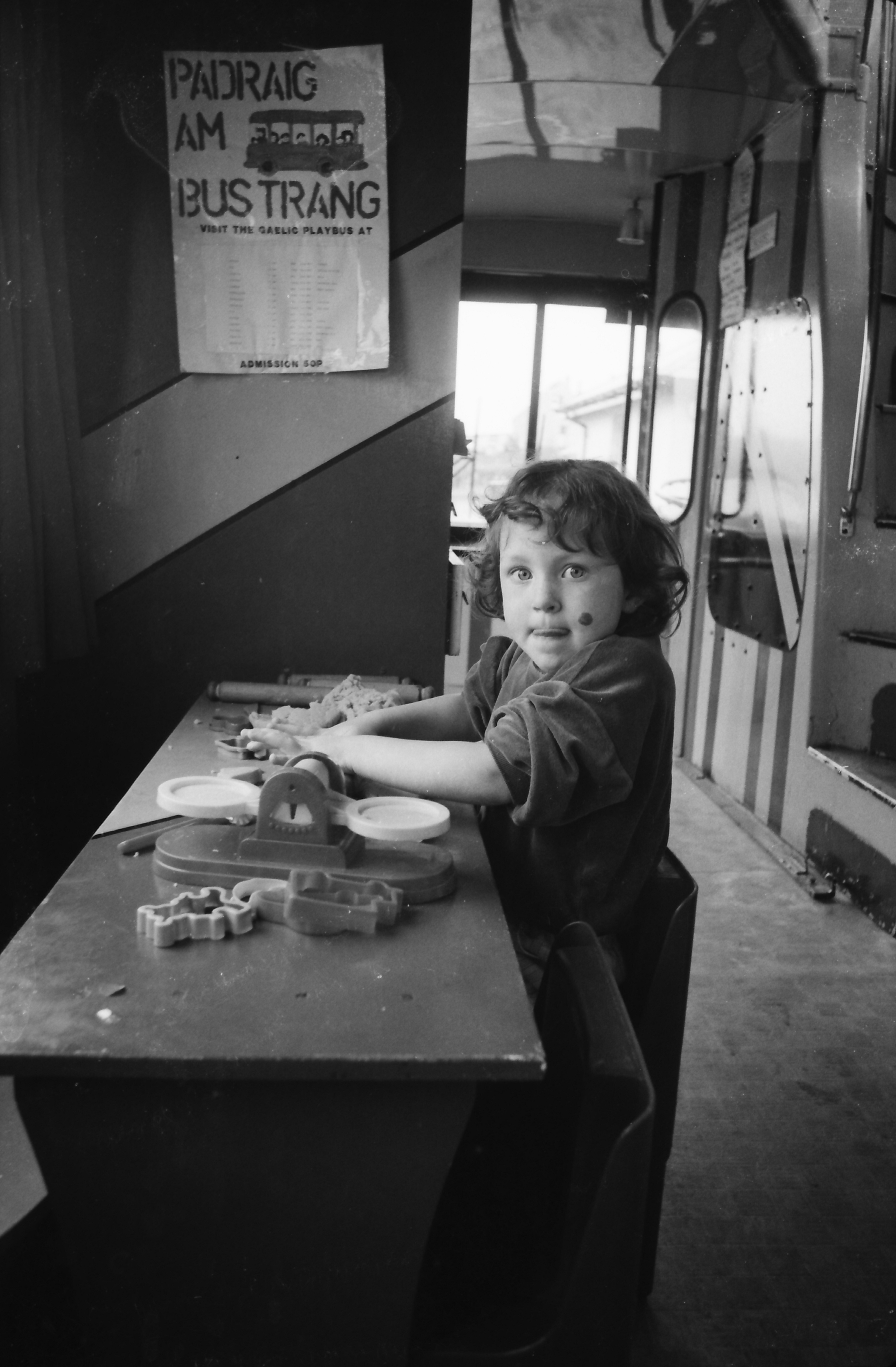
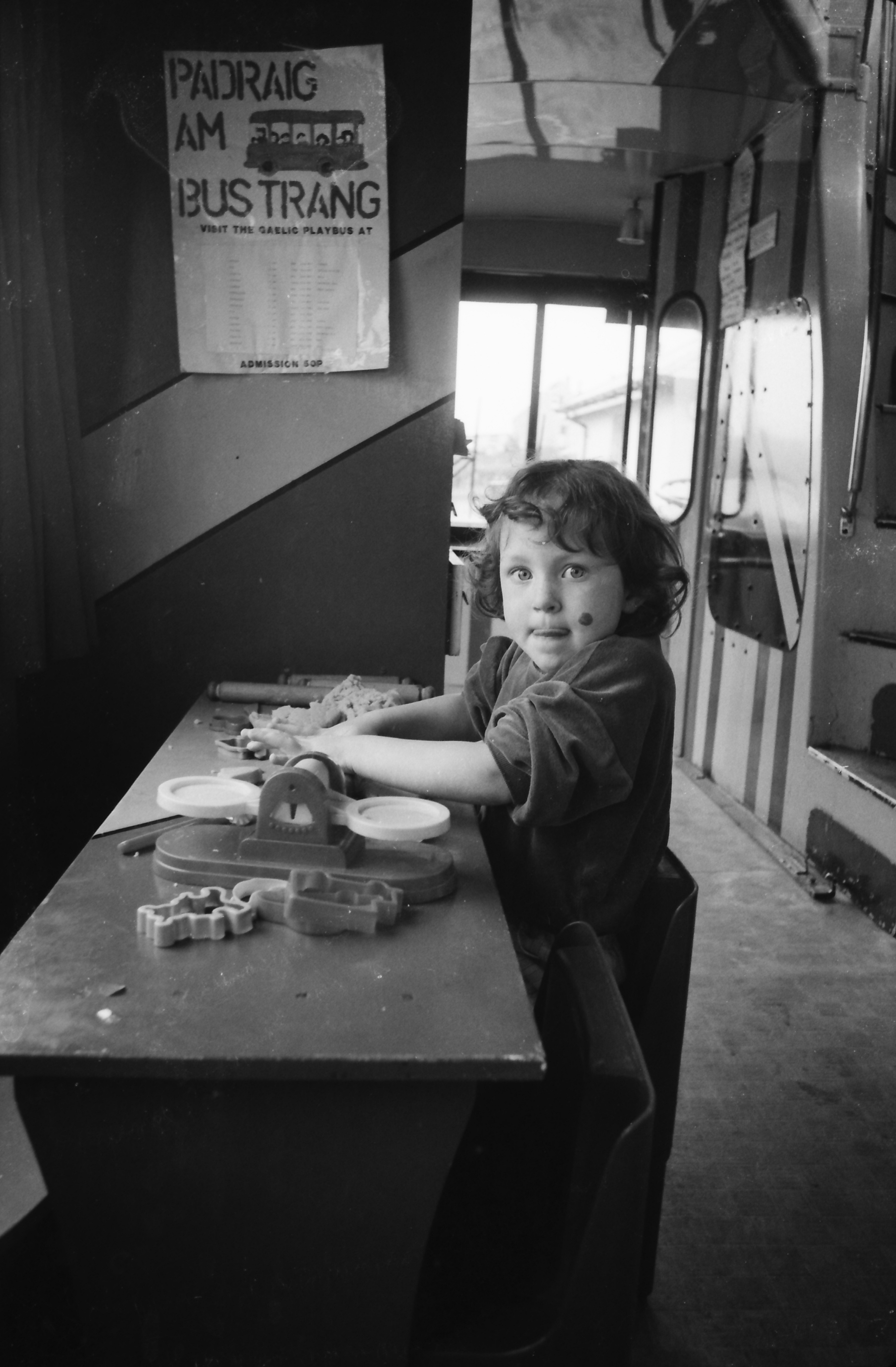
On the Gaelic playbus (GB3219/D263/19/27)
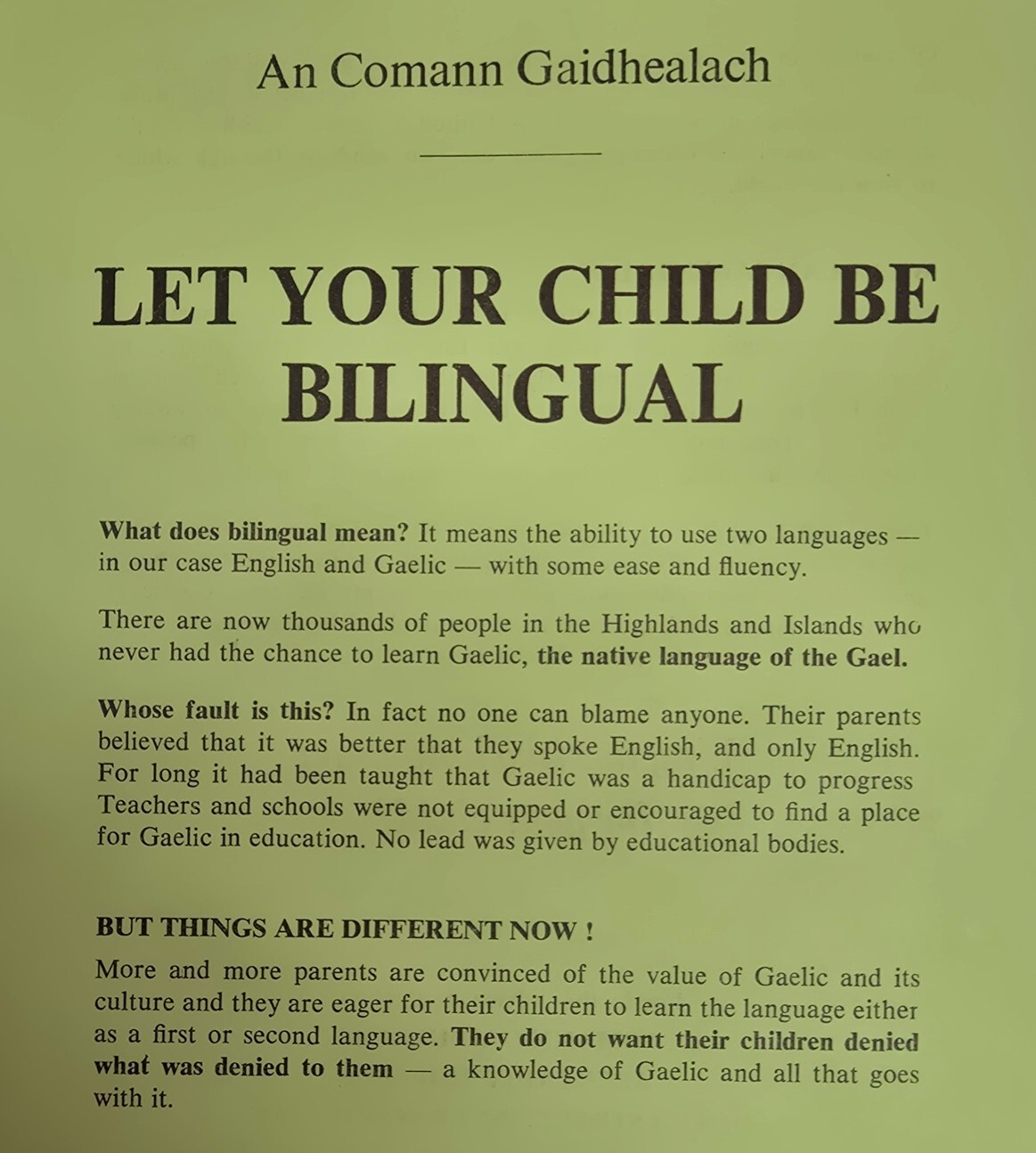
Promotional leaflet RE bilingual education c1980 (GB0232/D246/4/11/4/3)
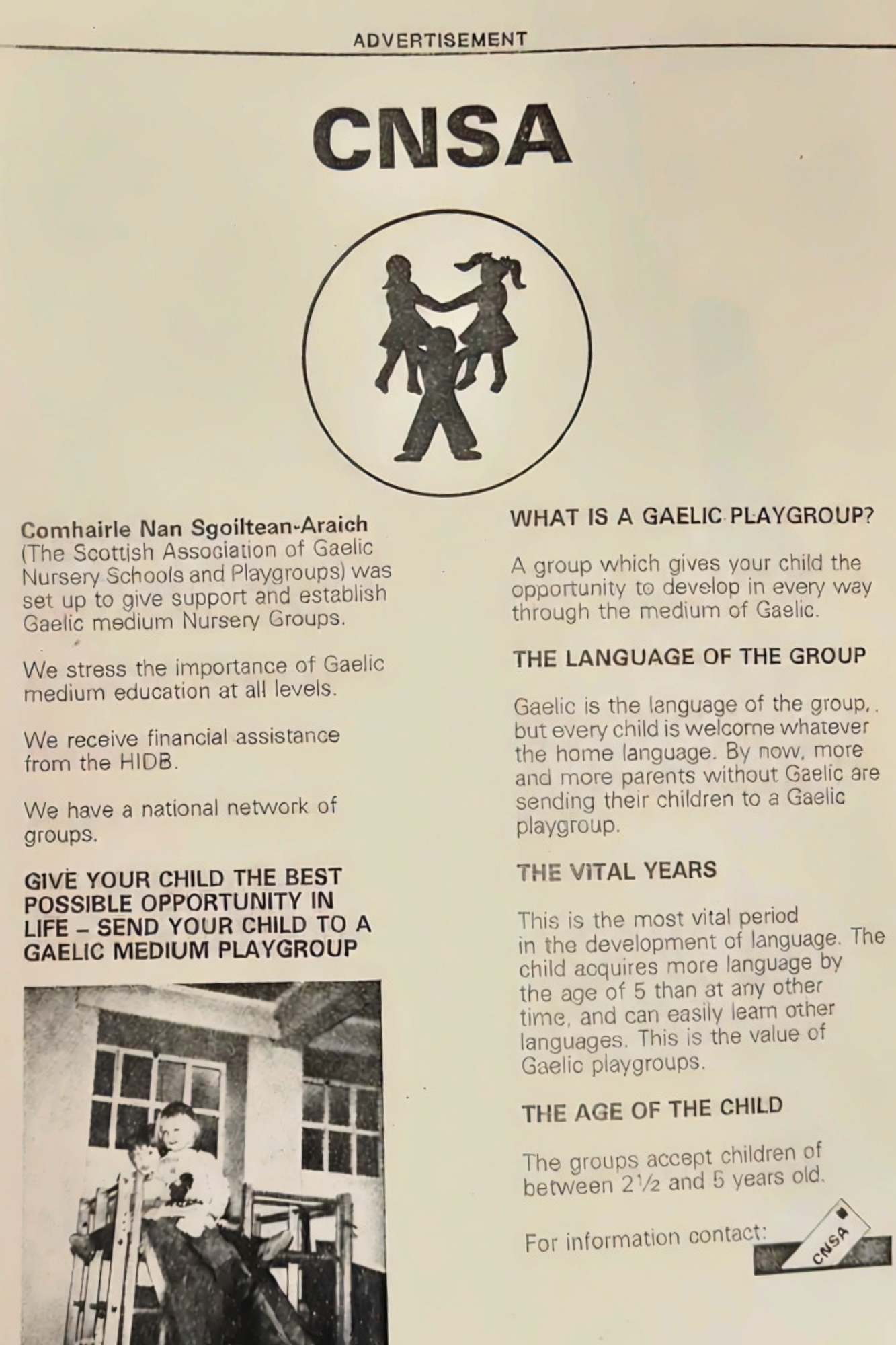
Scottish Association of Gaelic Nursery Schools and Playgroups leaflet, c1983 (GB0232/D246/4/11/4/3)
Scotland’s first standalone Gaelic-medium school opened in Glasgow in 1999 and Bun-Sgoil Ghàidhlig Inbhir Nis (Inverness Gaelic Primary School), Scotland’s first purpose-built Gaelic-medium primary, in 2007. More Gaelic-medium schools followed and many English-medium schools across the Highlands and Islands now have some level of Gaelic provision.
In 2005, the Gaelic Language (Scotland) Act established Bòrd na Gàidhlig as a public body with responsibility for promoting Gaelic development, and in 2025 the Scottish Languages Act gave both the Gaelic and Scots languages official status for the first time, providing a boost for Gaelic education provision.
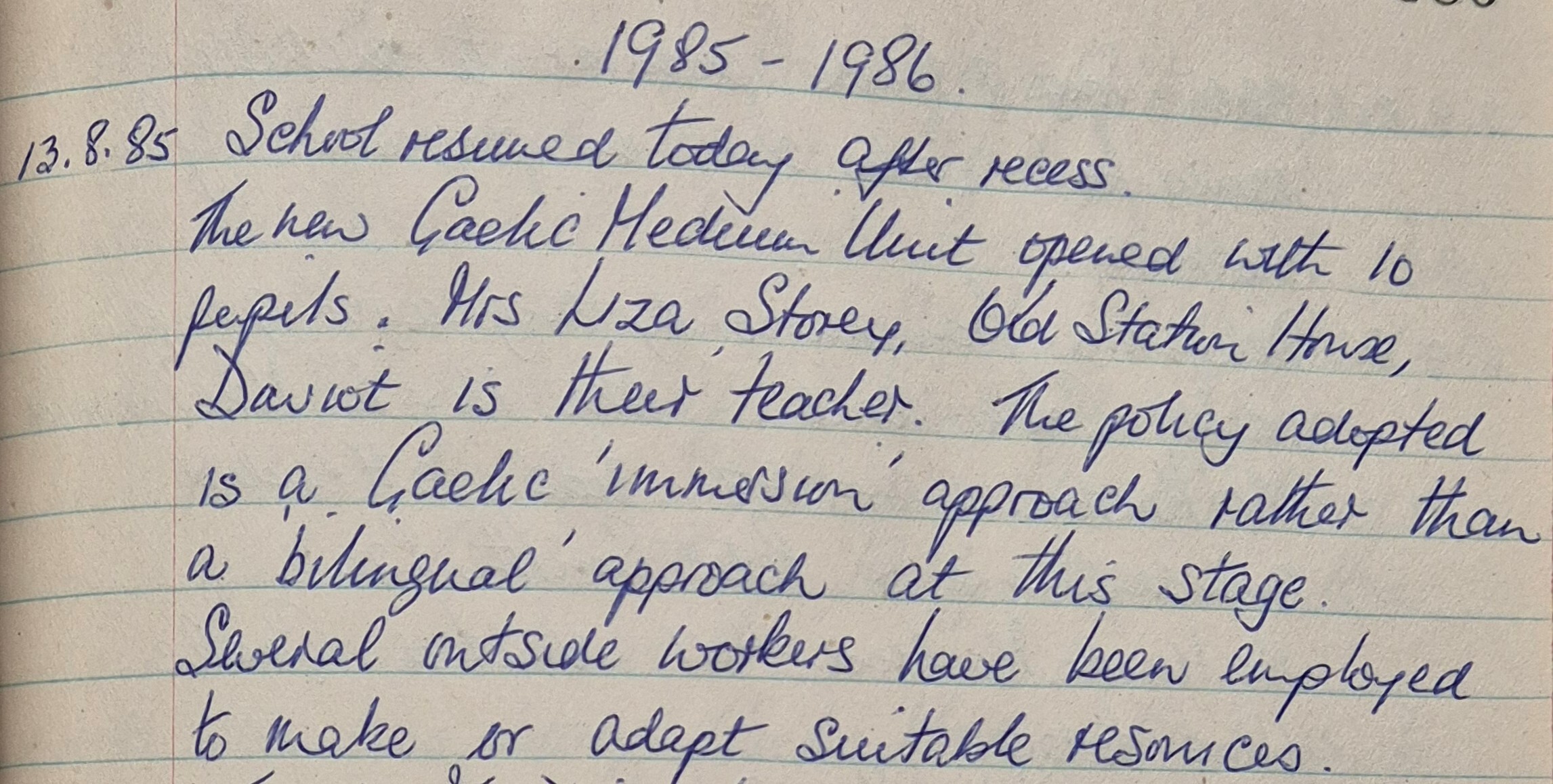
School resumed today after recess. The new Gaelic Medium Unit opened with 10 pupils. Mrs Liza Storey, Old Station House, Daviot, is their teacher. The policy adopted is a Gaelic ‘immersion’ approach rather than a ‘bilingual’ approach at this stage. Several outside workers have been employed to make or adapt suitable resources.