








What is considered a crime, and how we handle those who have committed crimes has changed a lot over the years. On this page you can watch videos that tell stories about historic crimes and punishments, look at examples of documents, and find some related activities!
Learn with Lorna videos about crime and punishment in the Highland Archive Service collections:
Crime & Punishment
The Highland Archive Service looks after some historic court papers as well as the Highland archives of Police Scotland. The documents below tell stories of some of those who have committed crimes in the past, as well as those who solved crimes.
- Hugh MacLeod, whose death warrant you can see below, was known as the Assynt Murderer. You can read a transcript of death warrant and discover more about Hugh’s story here.
- The extracts from the Fort William charge book date from July 1912 and March 1914 and list some of the offences people were charged with during that time period. These include ‘Allowing Cattle to Stray on to Public Road’; ‘Allowing Dog to Stray at Night’; ‘Theft of a Cabbage’; Theft of Carrots’ and ‘Playing Shinty on Public Street’!
- Finally there are is an extract from Wick police daily occurrence book (the diaries in which police officers recorded their daily activities). It tells of a mysterious theft in Wick Harbour. There is a typed copy here if the writing is tricky!
- Another interesting story, this time about gold theft, can be found in the daily occurrence book of Kildonan Police Station in Sutherland. You can read about that one here.
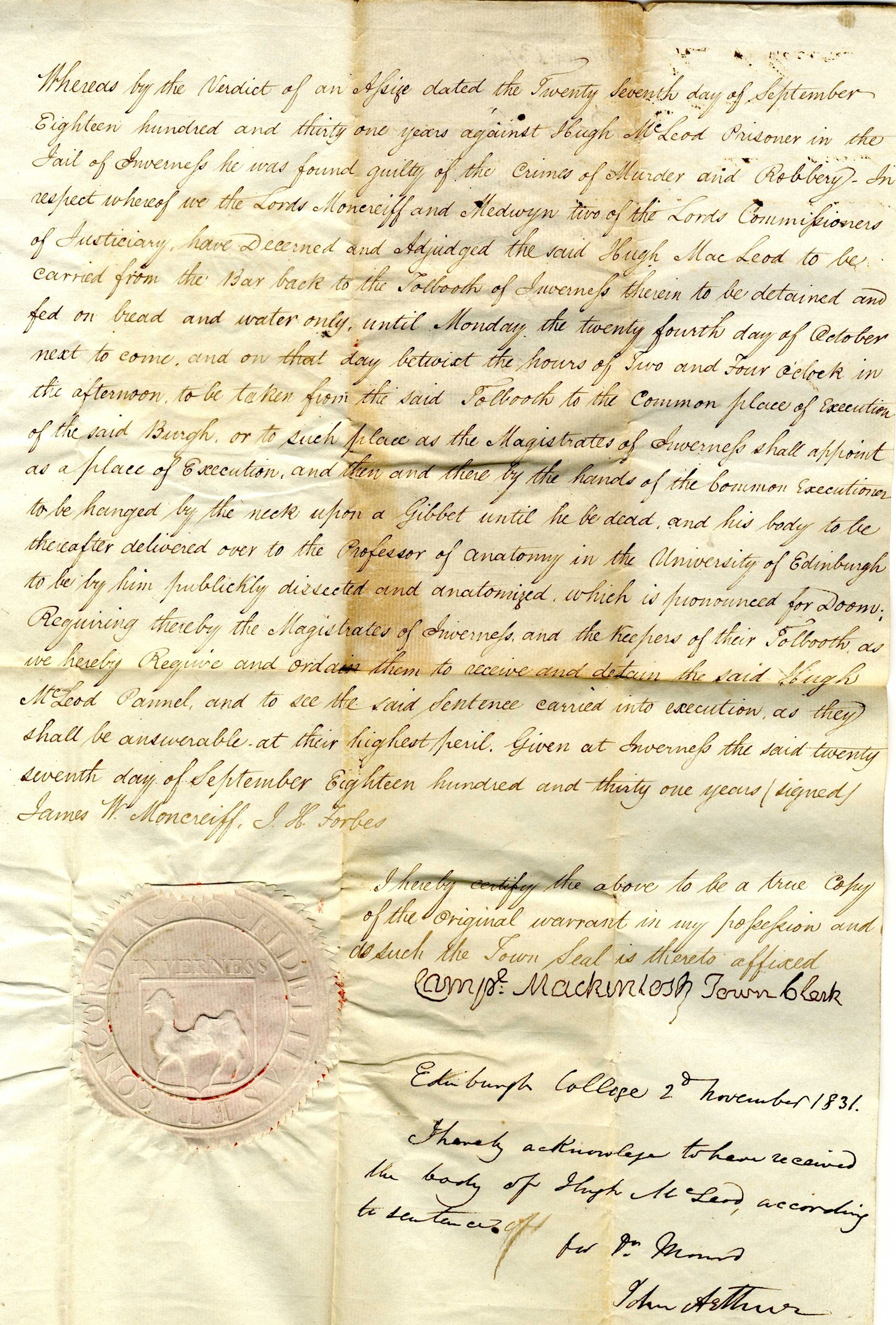
Dead warrant of the Assynt Murderer, 1831
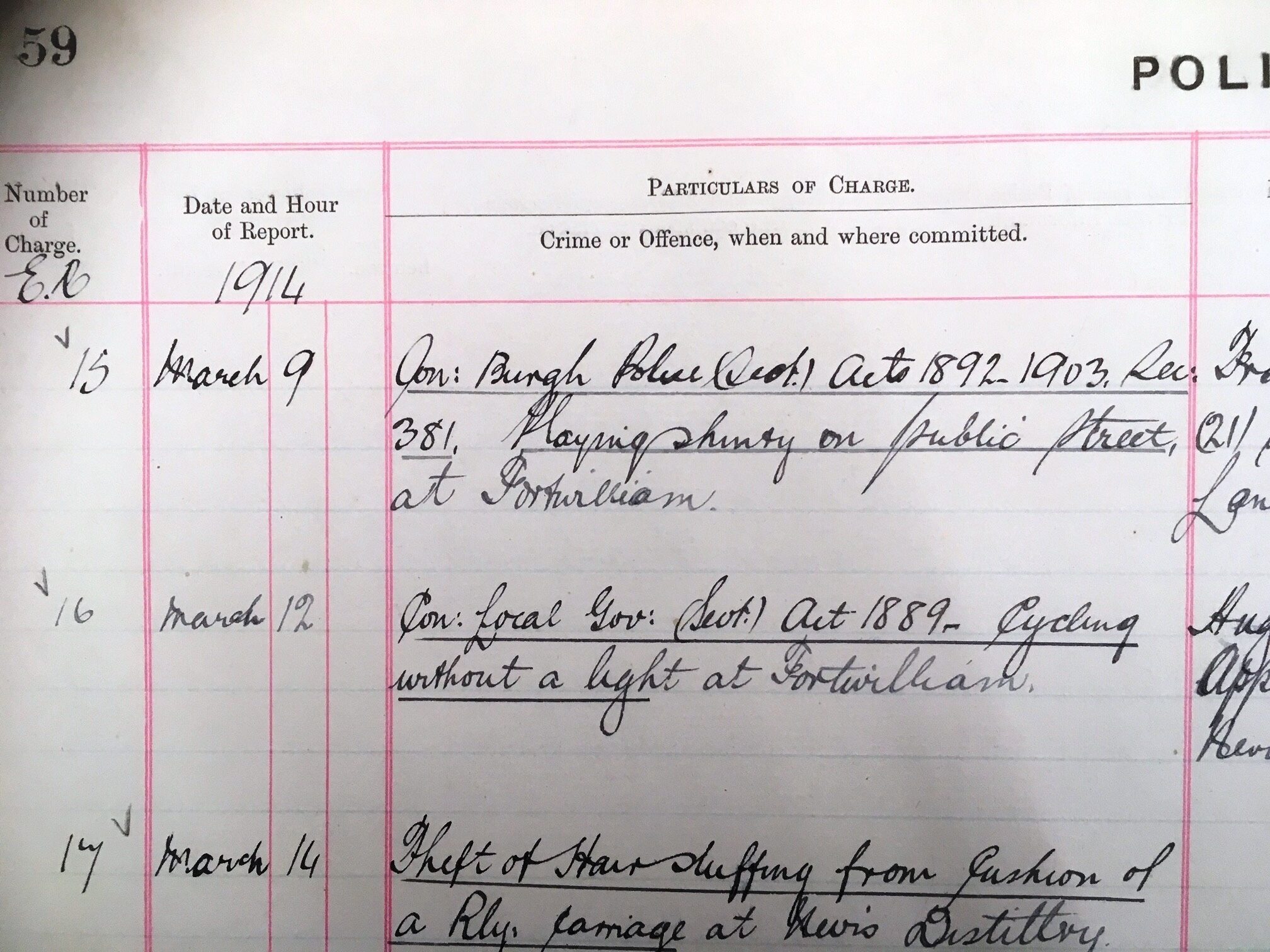
Fort William Charge Book, 1914
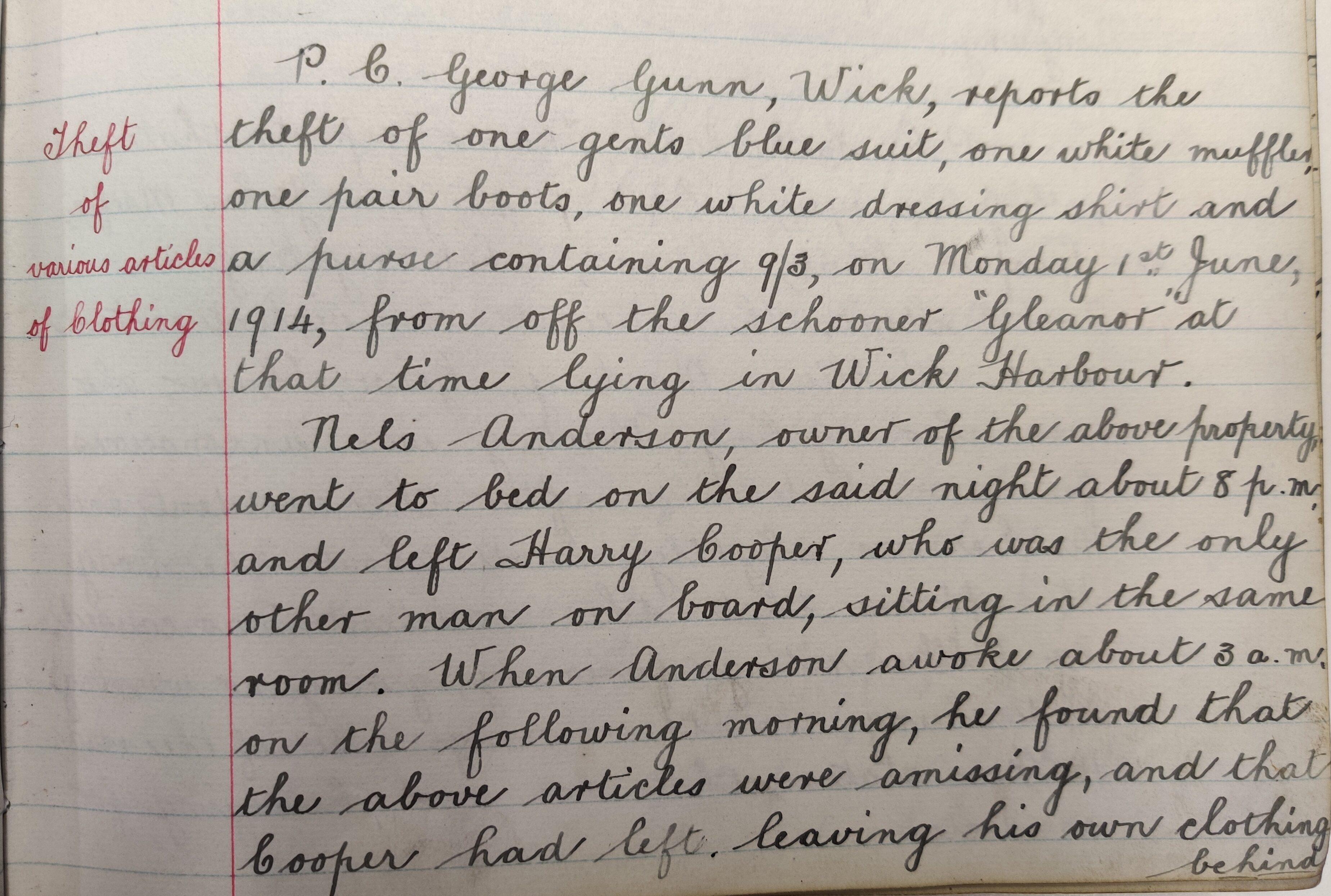
Wick police daily occurrence book, 1914
Law & Order
You can also use archives to find more information about police officers - the men and women working to stop crime. Below is a photograph of individuals serving in the Inverness-shire constabulary in 1901, as well as an example of the staff records we hold - the entry for PC William Sutherland.
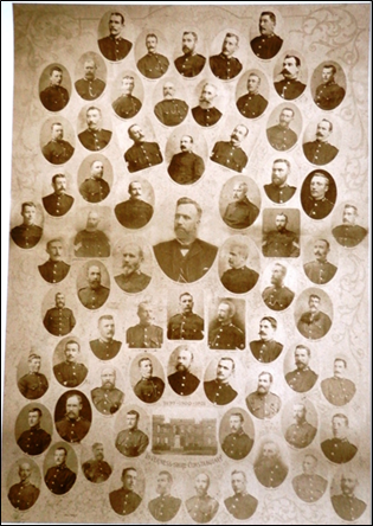
Inverness-shire Constabulary,1901
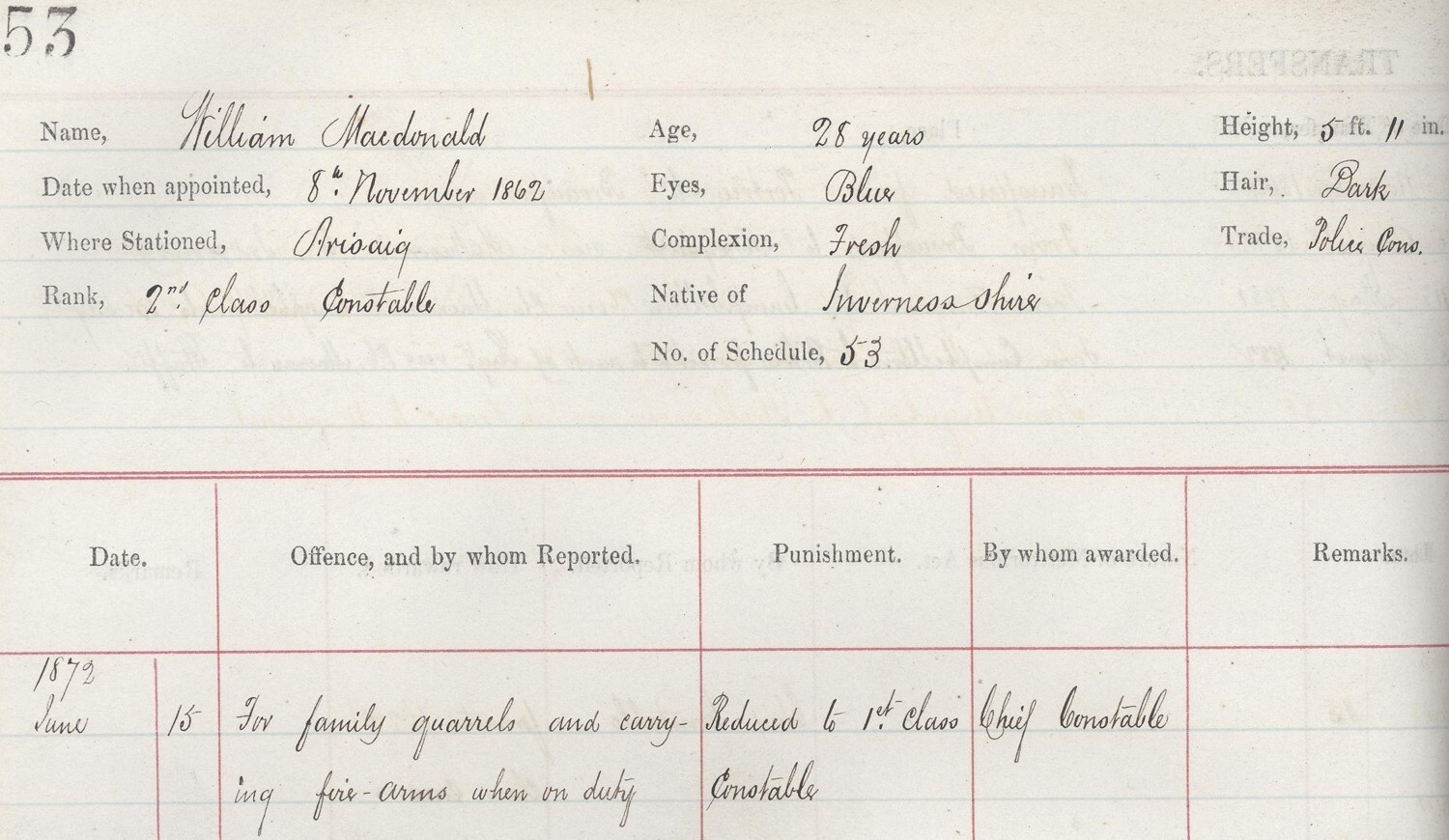
Personnel record of PC William Macdonald, page1
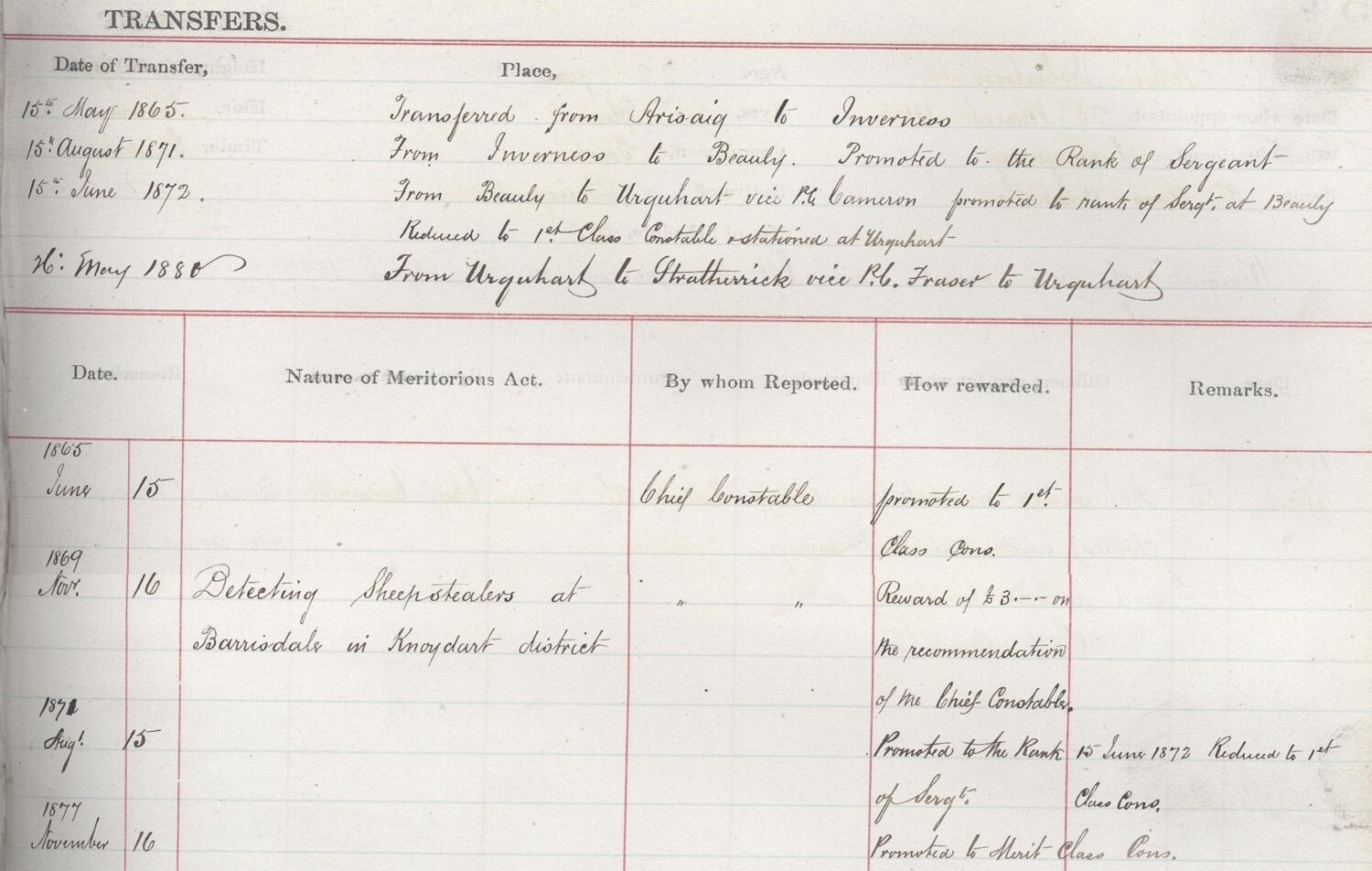
Personnel record of PC William Macdonald, page 2
Crime and punishment related activities
- Pick one of the crimes mentioned in these documents and create a ‘wanted’ poster for the person who committed the crime. Think about including a picture, a description of what he/she has done, and a reward for their capture!
- Read through the goldrush theft story. Why do you think Robert Ryder might have stolen the gold? Try and write a conversation between him and the police officer where he tries to explain his reasons.