









The Highland Clearances took place from the mid-1700s to the mid-1800s. Many people living across the Highlands and Islands were forcibly moved out of their rented homes and made to live somewhere else – either in another part of the Highlands or in another country altogether. This was often to make way for sheep or deer farming, which brought the landowners more money than they could get from their tenants. On this page you can watch videos that tell stories about the Highland Clearances, look at examples of documents, and find some related activities!
Learn with Lorna videos about the Highland Clearances in the Highland Archive Service collections:
Sometimes the way in which people were removed was brutal and their houses were set on fire to prevent them returning. One of the most well-known people from this period in Highland history is Patrick Sellar, the factor for the Sutherland estates. In 1815 he was taken to jail after it was claimed that he had set fire to a house in Strathnaver while someone was still inside. Below, you can see his entry in the Dornoch Jail Book, accused of wilful fire raising and culpable homicide’. He was found ‘not guilty’ but lost his job working for the Sutherland estates.
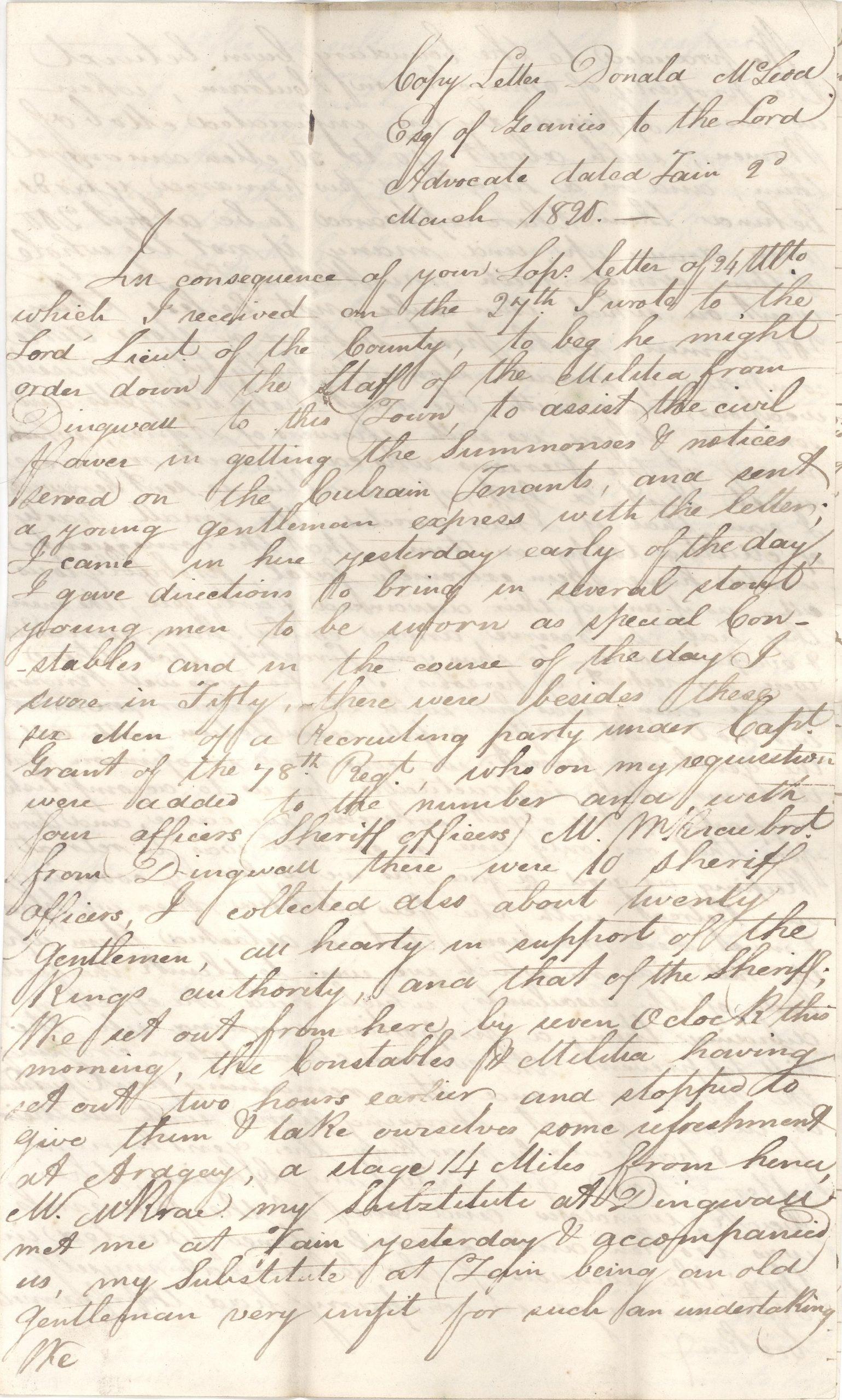
In 1820, Munro of Novar made moves to remove tenants from his estate in Culrain, in the Parish of Kincardine, to make way for a sheep farm. It led to an incident called the Culrain Riots. Below is a letter from Donald Macleod of Geanies in which he reports on the number of militia and constables, over 70 in total, sent to stop the resistance in Culrain. The militia was forced to retreat after being met with a volley of stones and missiles. He described it as an Act of Rebellion and said that a force of 500 plus field artillery (heavy weapons) would be necessary to overpower the rioters. A typed copy of this letter can be read here.
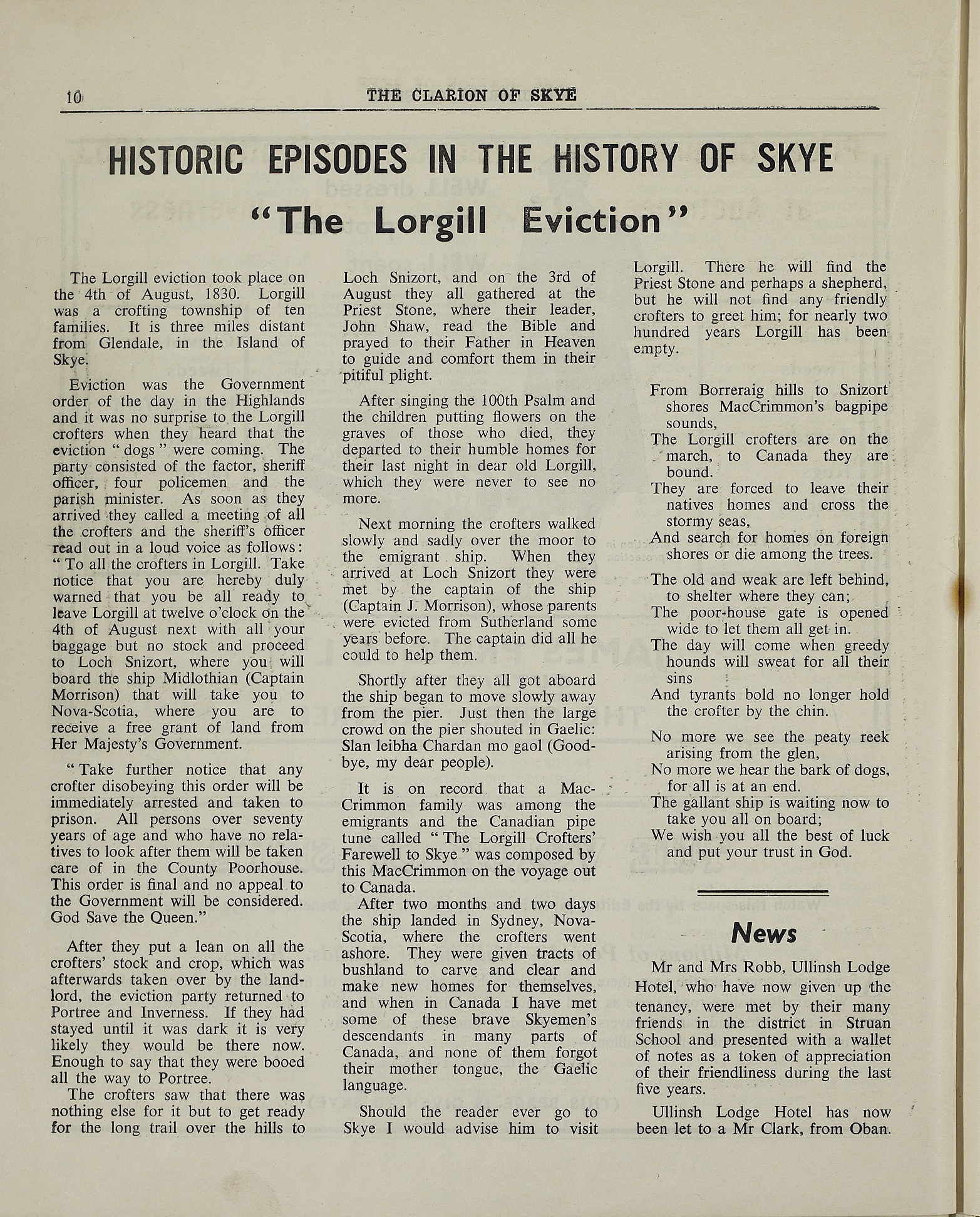
The Clarion Skye article, 'The Lorgill Eviction'
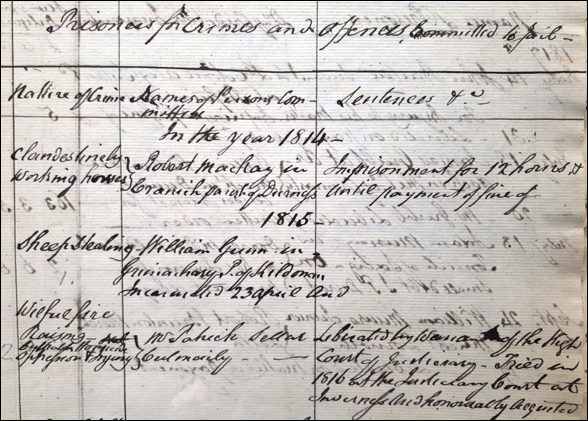
Dornoch Jail Book entry for Patrick Sellar, 1815
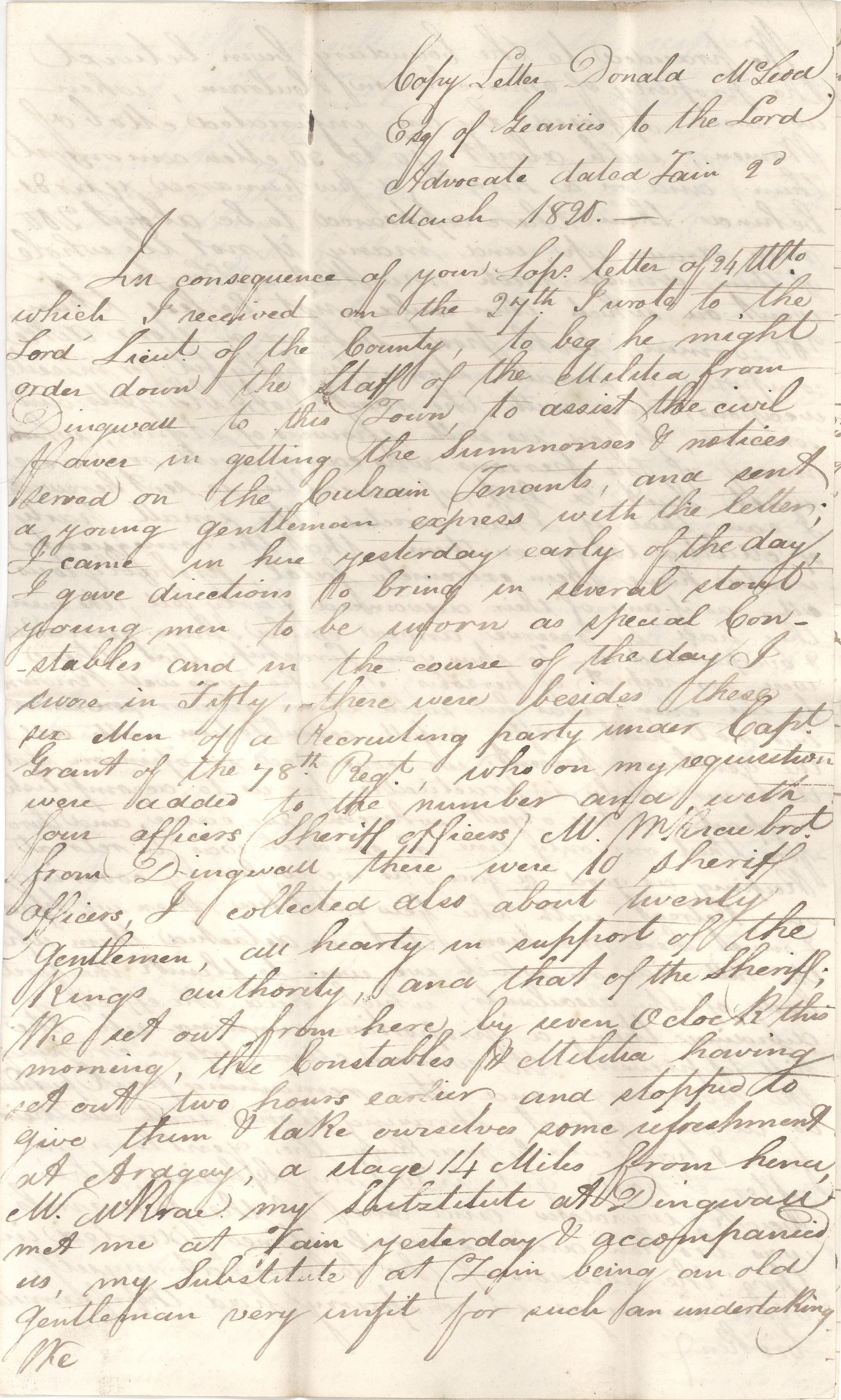
Letter RE: the attempted Culrain clearance, 1820
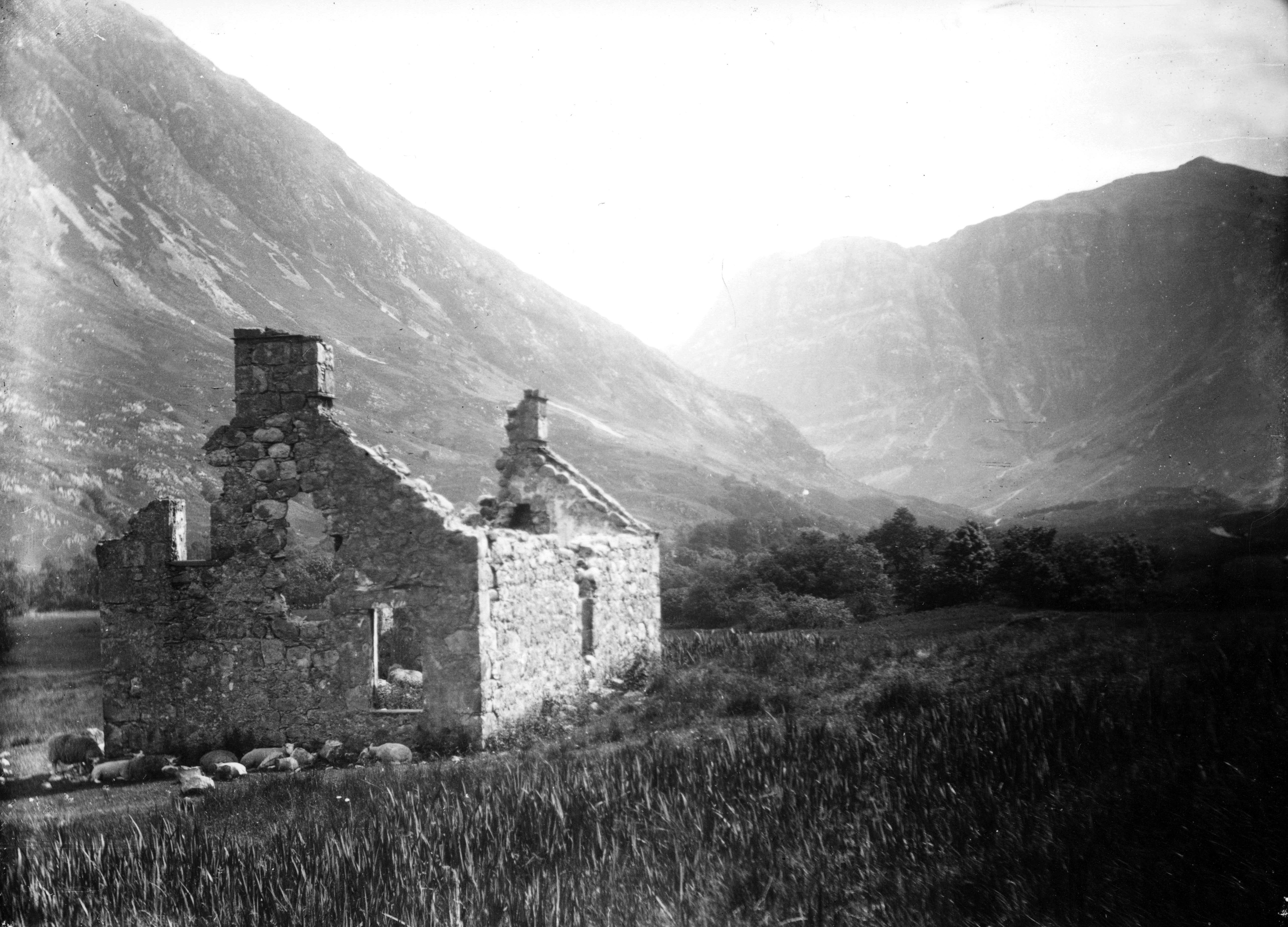
Ruined house, Inveriggan, Glencoe (www.ambaile.org.uk)
In the 1830s and 1840s, as a result of overcrowding and over-use of land there was a lot of discontent in some areas. The letter below indicates the Eastside of Staffin crofters were arranging meetings, possibly to resist changes and evictions. The ‘Eastside of Staffin crofters’ may relate to the Valtos Crofters. The Township of Valtos was one of the first to show organised resistance to the proprietor and the factor. The proprietor was described as – “The evictor of 21 townships, the rack-renter, the process-server, the persecutor of ‘the brave old crofter’”. You can find out more about the way people stood up to their landlords in our Battle of Braes exhibition.
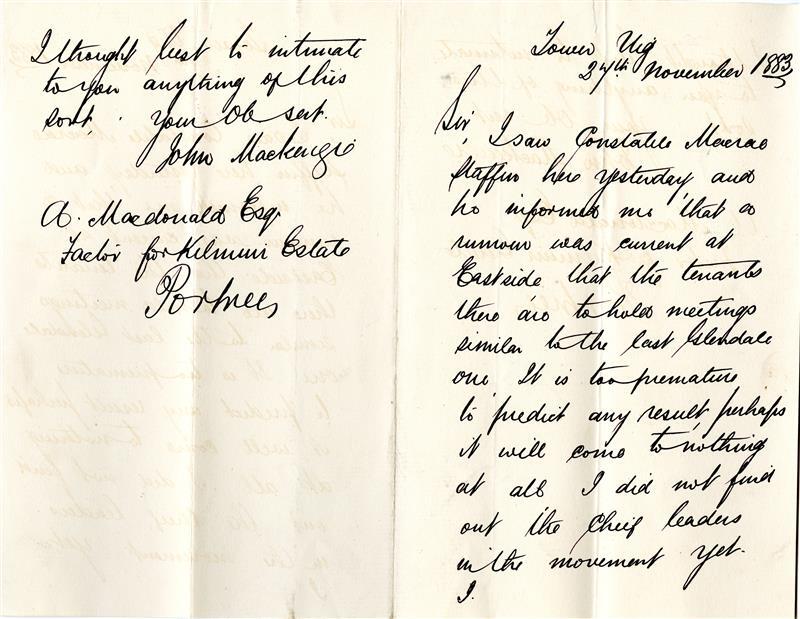
Letter by J MacKenzie to A MacDonald Esq, factor for Kilmuir estate, 1883
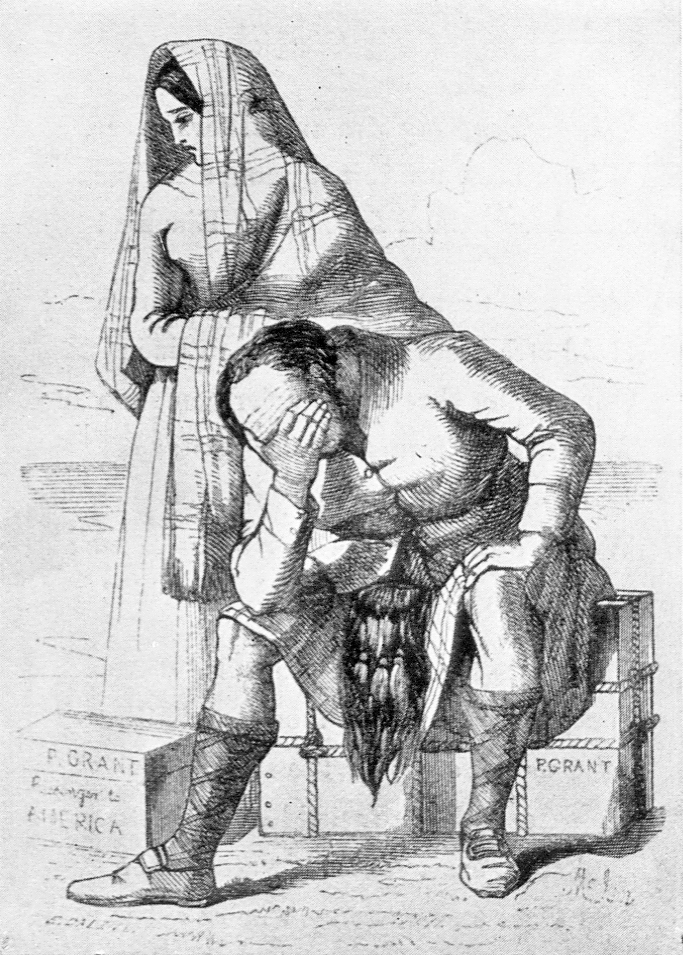
Illustration from "Argyll's Highlands" by Cuthbert Bede (www.ambaile.org.uk)
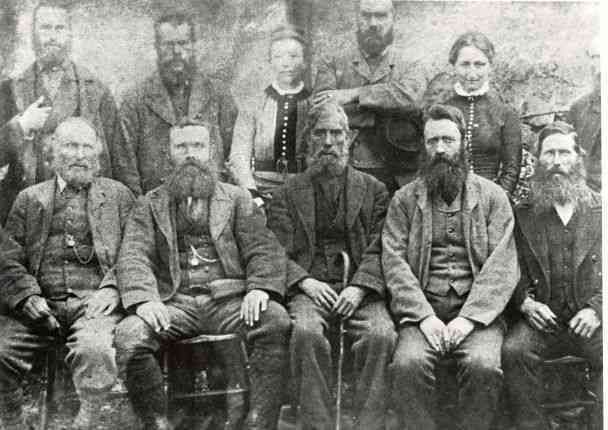
The Valtos Crofters, c1880
Highland Clearances related activities
- Try and recreate the court scene in which Patrick Sellar was found innocent. Write some words for the different characters involved – the judge, the family of the victim, and Patrick Sellar himself.
- One of the documents we have uploaded describes the scene in Culrain when officials tried to clear some people from their houses. There is a great description of women throwing stones at the carriages and hundreds of people refusing to leave. Try and draw a picture of this.
- Using the spider diagram template try to either a) think of all the things you would take with you to a new country or b) think about all the things you would miss about your homeland if you were forced to leave.
- In the present day, many people are still forced to leave their homes and go to another place without their possessions and without any choice. Do some research and find out about a place like this.