


On 4th August 1914 the British Prime Minister declared war on Germany. At that time Britain did not have a large army so a big recruitment drive was launched. Thousands of young Scots volunteered to fight. It was common for people from the same area to join the same regiment. By the end of 1915, 2.5 million men in Britain had enlisted, 320,589 were Scottish. The Regiments which recruited in the Highlands were for the most part the Cameron Highlanders, the Seaforth Highlanders and the Lovat Scouts.
The official number of Scots killed in World War One is 75,000 but some people claim that a more accurate figure may be closer to 150,000. Almost every community in Scotland suffered huge losses and a whole generation of men was lost.
On this page you can watch videos about the impact of World War One on Highlanders, look at examples of documents, and find some related activities!
Learn with Lorna videos about World War One in the Highland Archive Service collections:
War Front
During World War One, it was common for soldiers to write letters and postcards home. These letters, diaries and postcards give us a unique insight into what the war was like for individual people.
Below you can see letters from Ian Forsyth and David Barrogill Keith, as well as letters about Allan Cameron. Typed copies of each can be seen by clicking the links.
- Ian Forsyth owned a farm before he went to war in 1914. His letters to his wife give detailed accounts of his experiences at war.
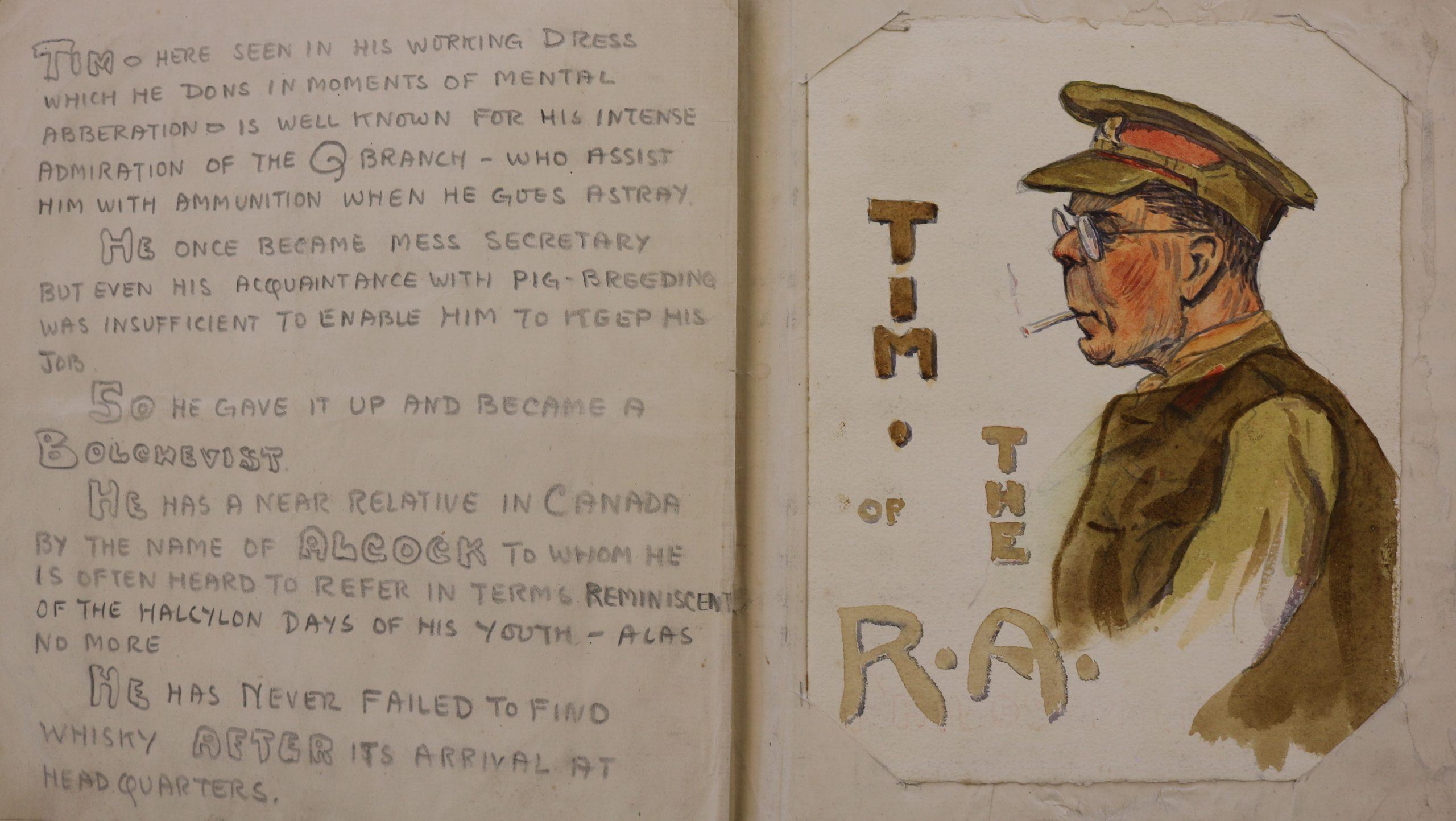
- David Barrogill Keith was born in Thurso in 1891. He was a newly qualified solicitor and a keen cartoonist in 1914 when the war started. He sent many letters and cartoons home full of detail about his extraordinary experiences!
- Allan Cameron went to fight as soon as war was declared in August 1914 and was killed in September 1914. His fellow soldiers wrote to his wife and mother to inform them of his death and where he was buried. One of them even drew a diagram to show exactly which grave was his.
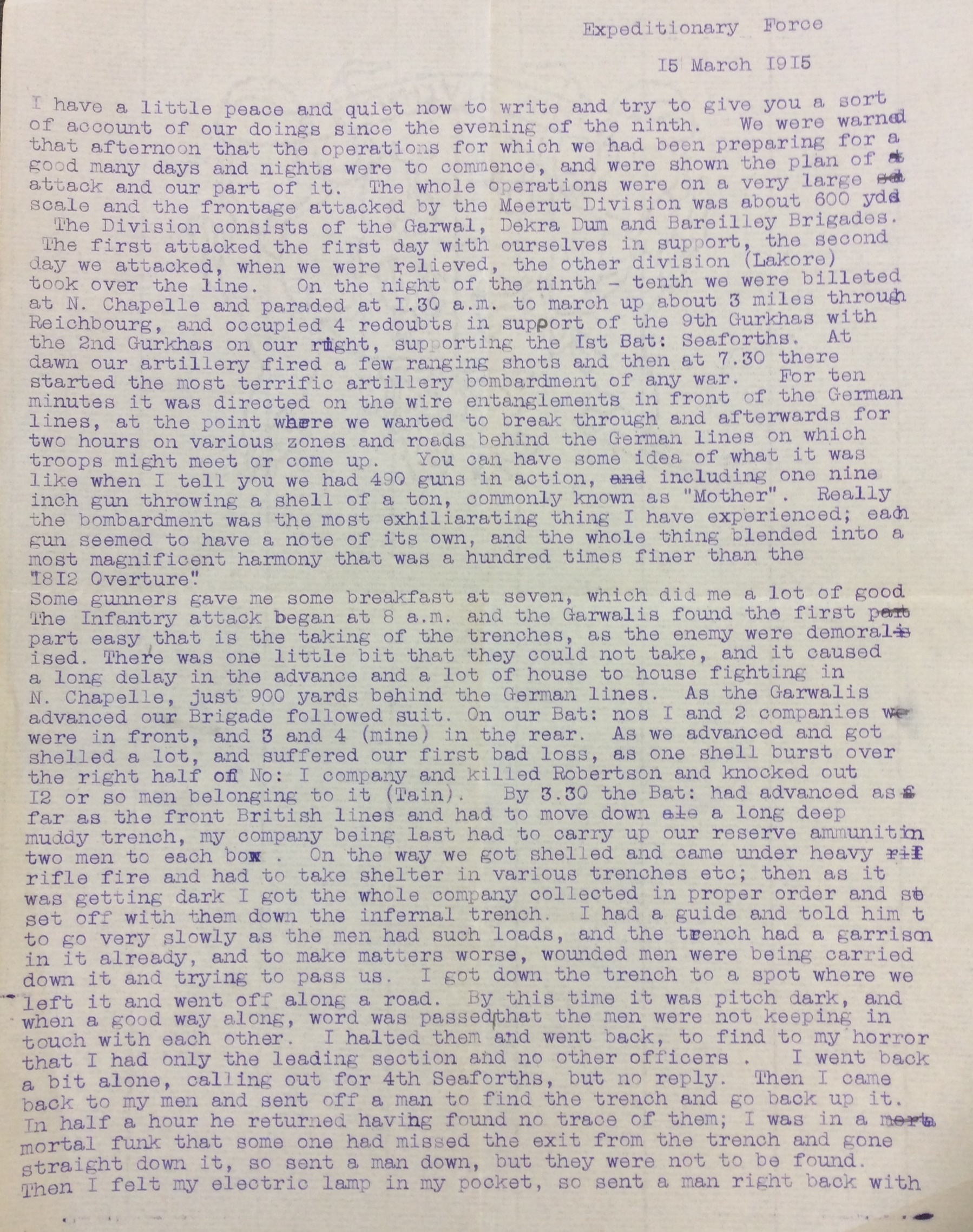
Letter by Ian Forsyth, 1915. Page 1
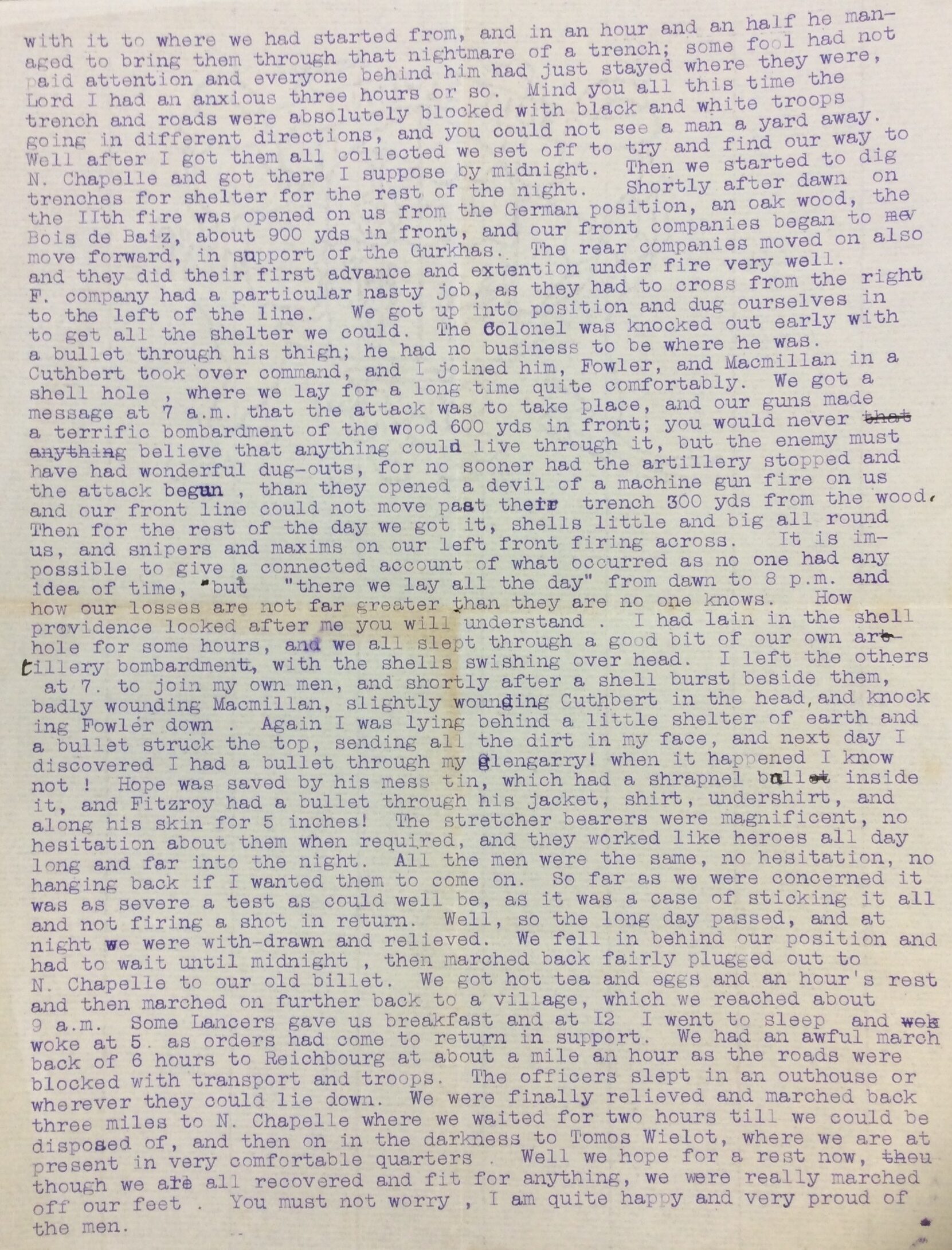
Letter by Ian Forsyth, 1915. Page 2.
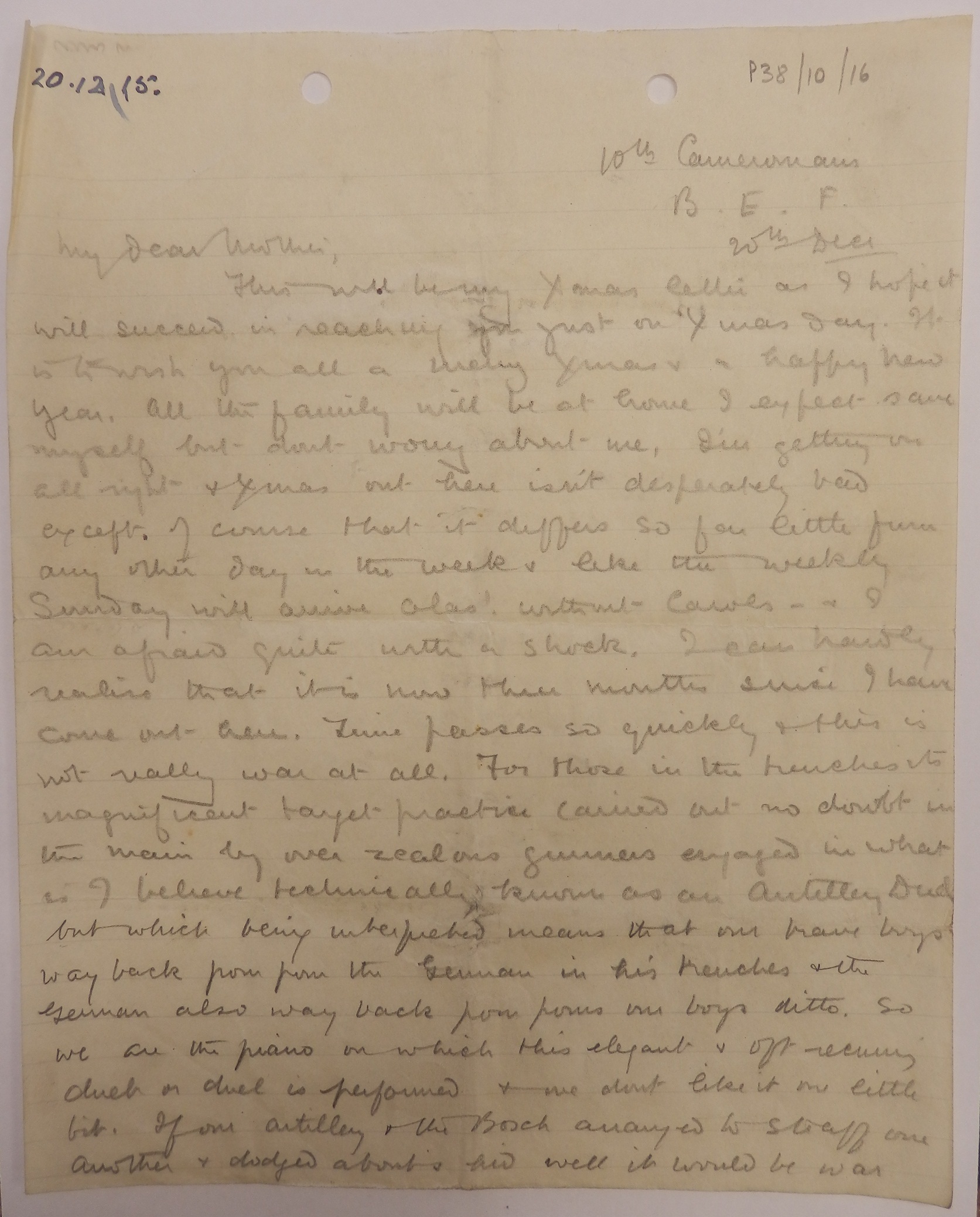
Letter by David Barrogill Keith, 1916
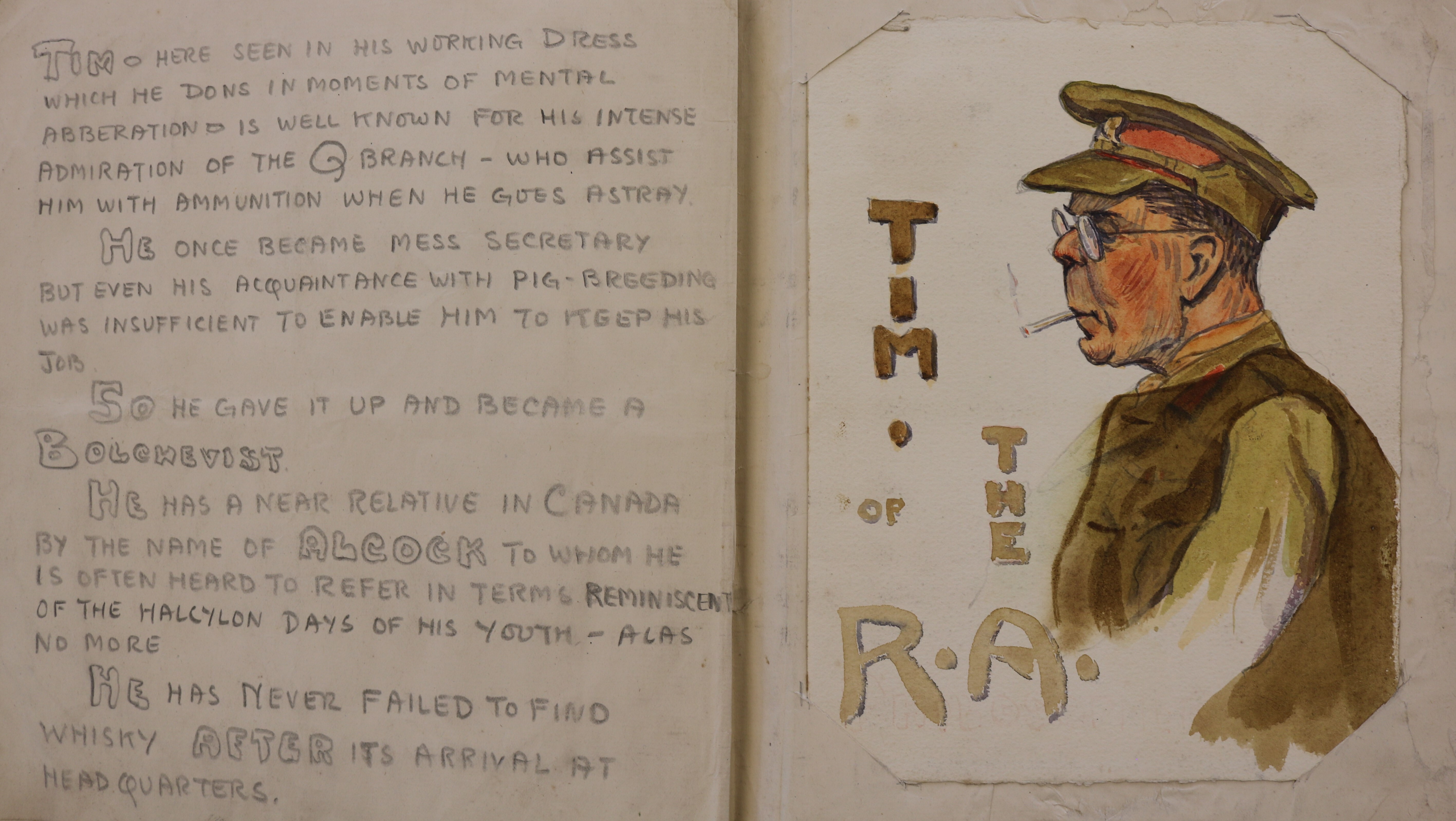
Caricature and notes by David Barrogill Keith
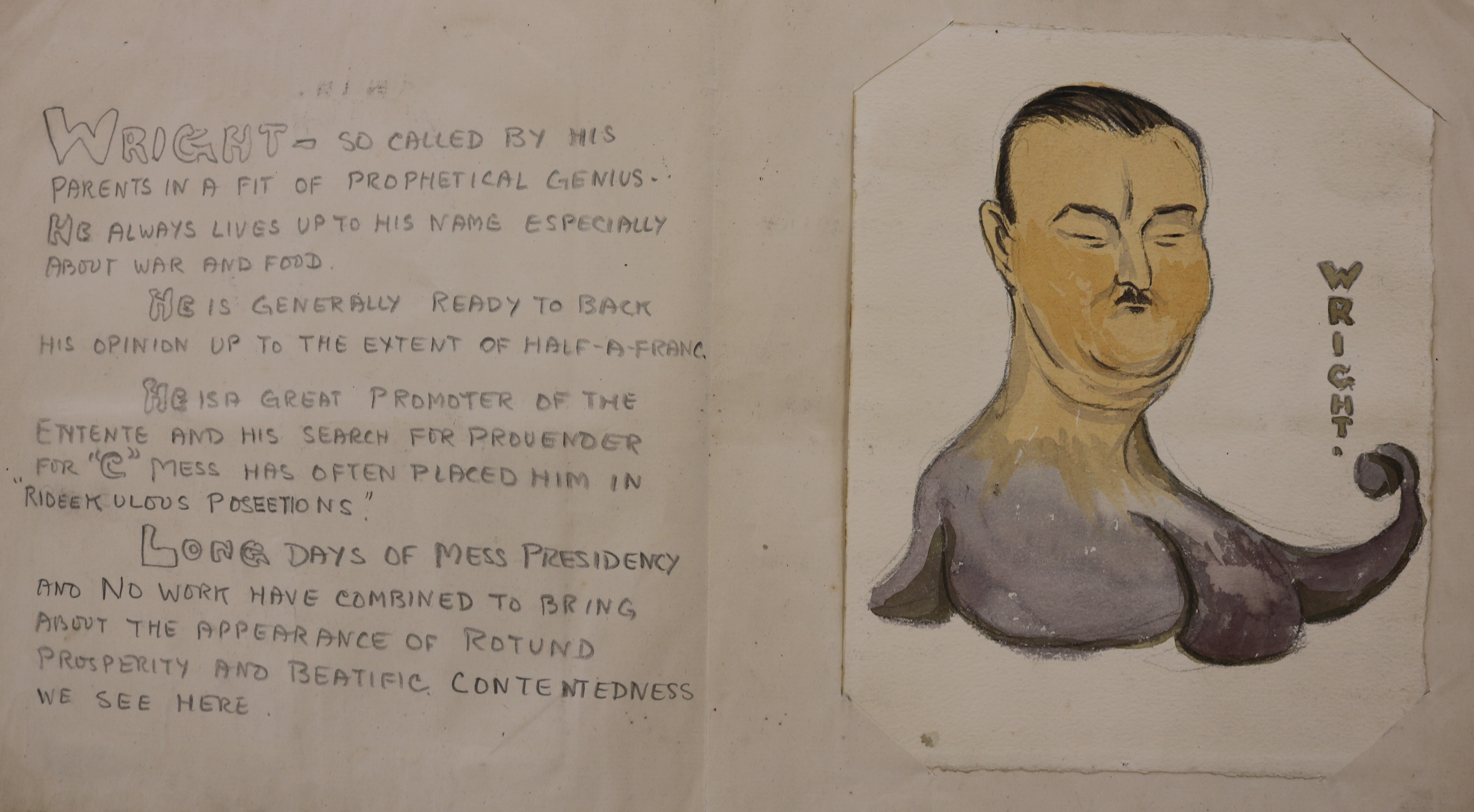
Notes and caricature by David Barrogill Keith
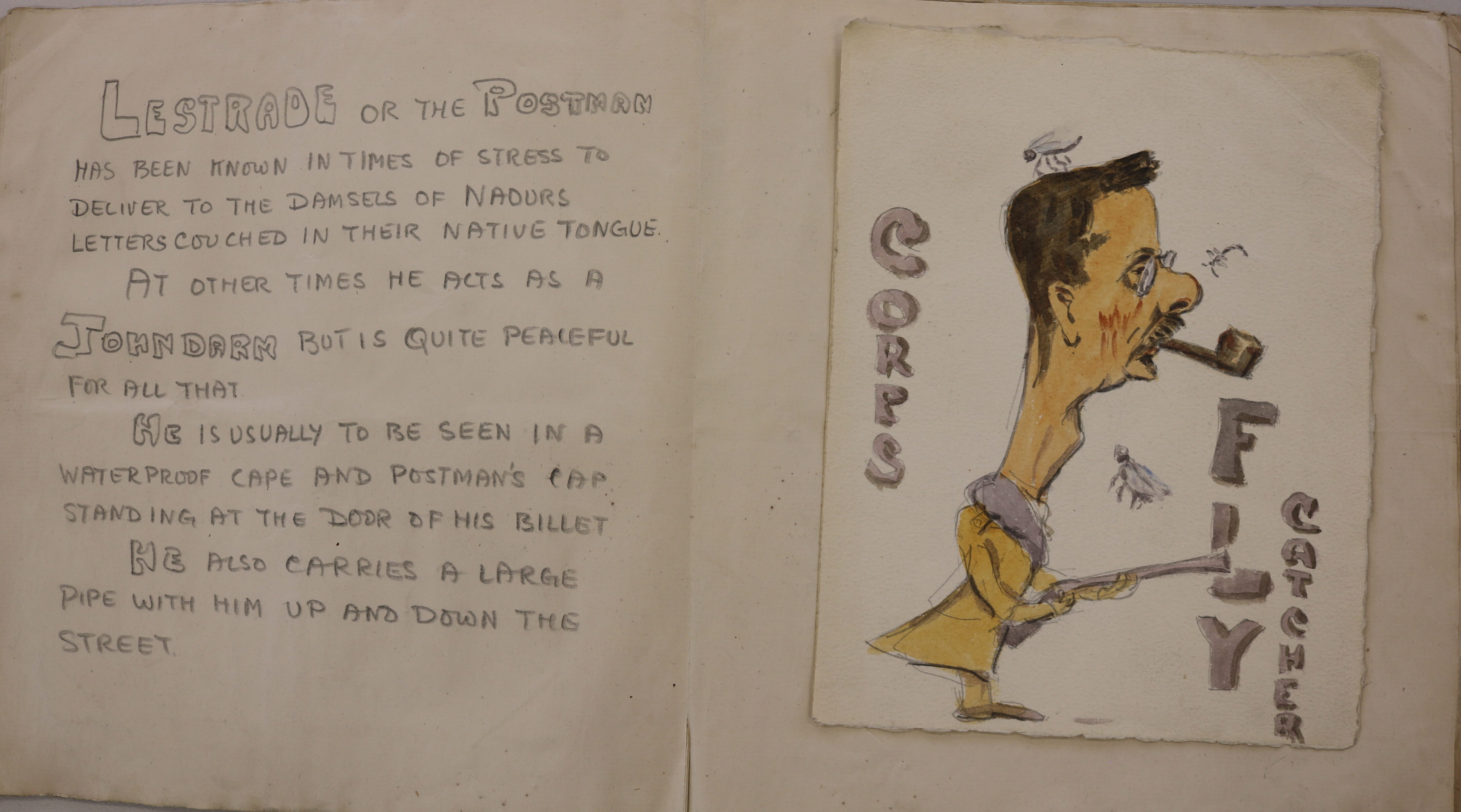
Notes and caricature by David Barrogill Keith
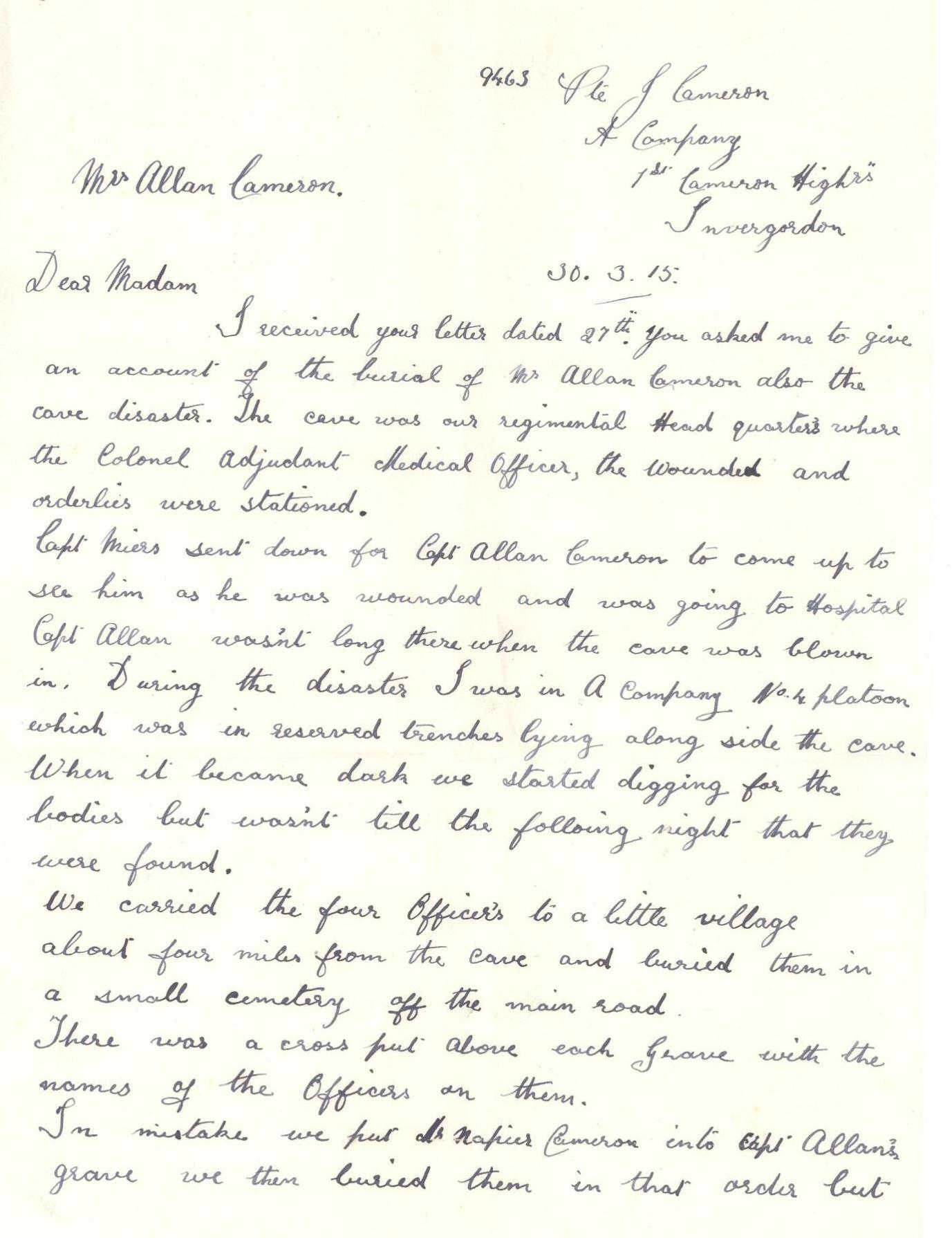
Letter to Allan Cameron's wife about his death and burial, 1914 Page 1
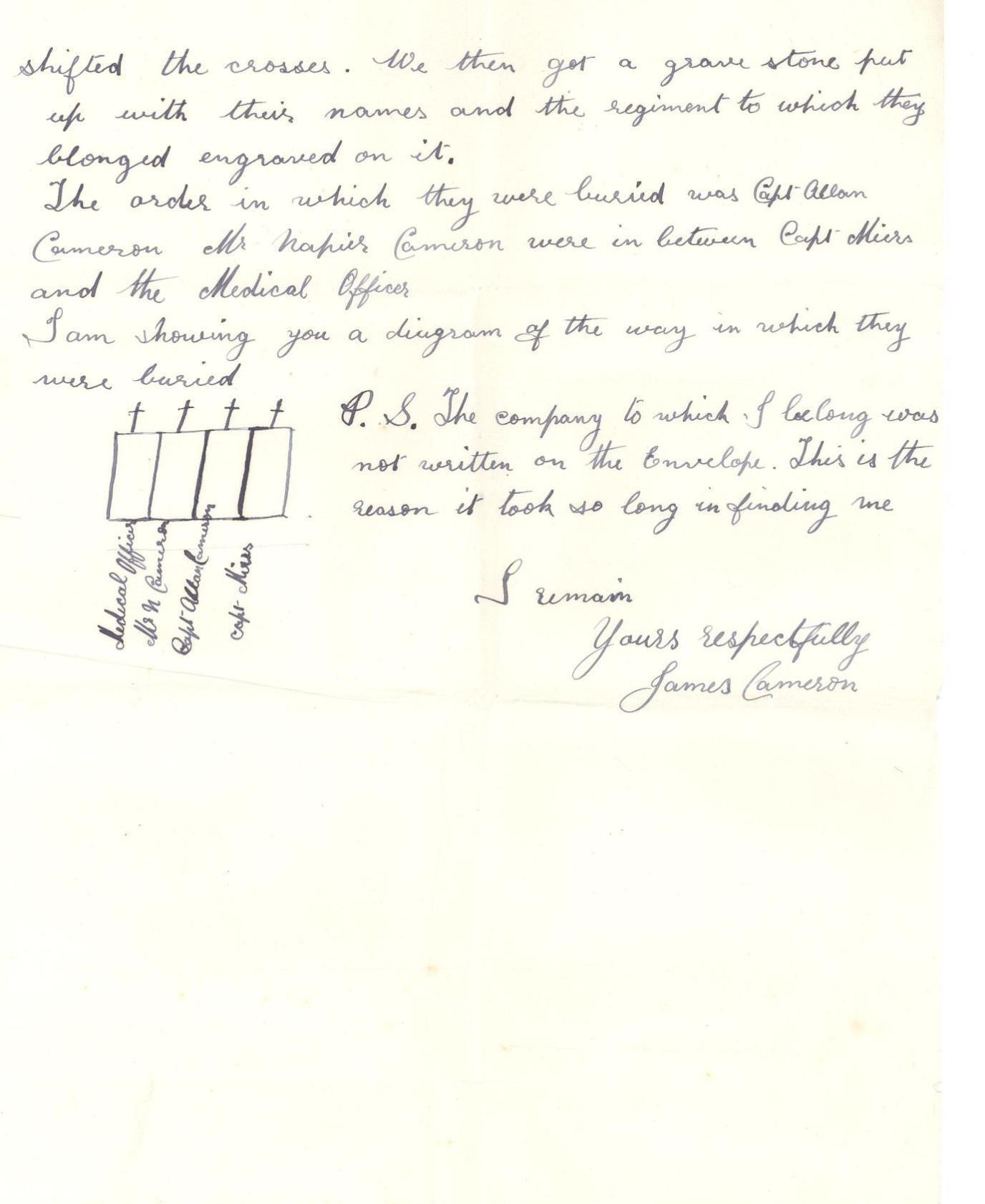
Letter to Allan Cameron's wife about his death and burial, 1914 Page 2
Home Front
Life changed at home too during World War One. The government brought in new laws called the Defence of the Realm Act (DORA. This gave them lots of emergency powers to do things that might help Britain and its allies win the war. For example, they took over buildings to use them as hospitals and barracks, and took over parks and other land to grow crops. In 1916, the government declared part of the Highlands a ‘Special Military Area’ (SMA) because of its importance to the navy. This meant that any one who lived in, worked or visited this area had to have a pass to prove they were allowed to be there. Below you can see an example of a local pass and some detail about the SMA.
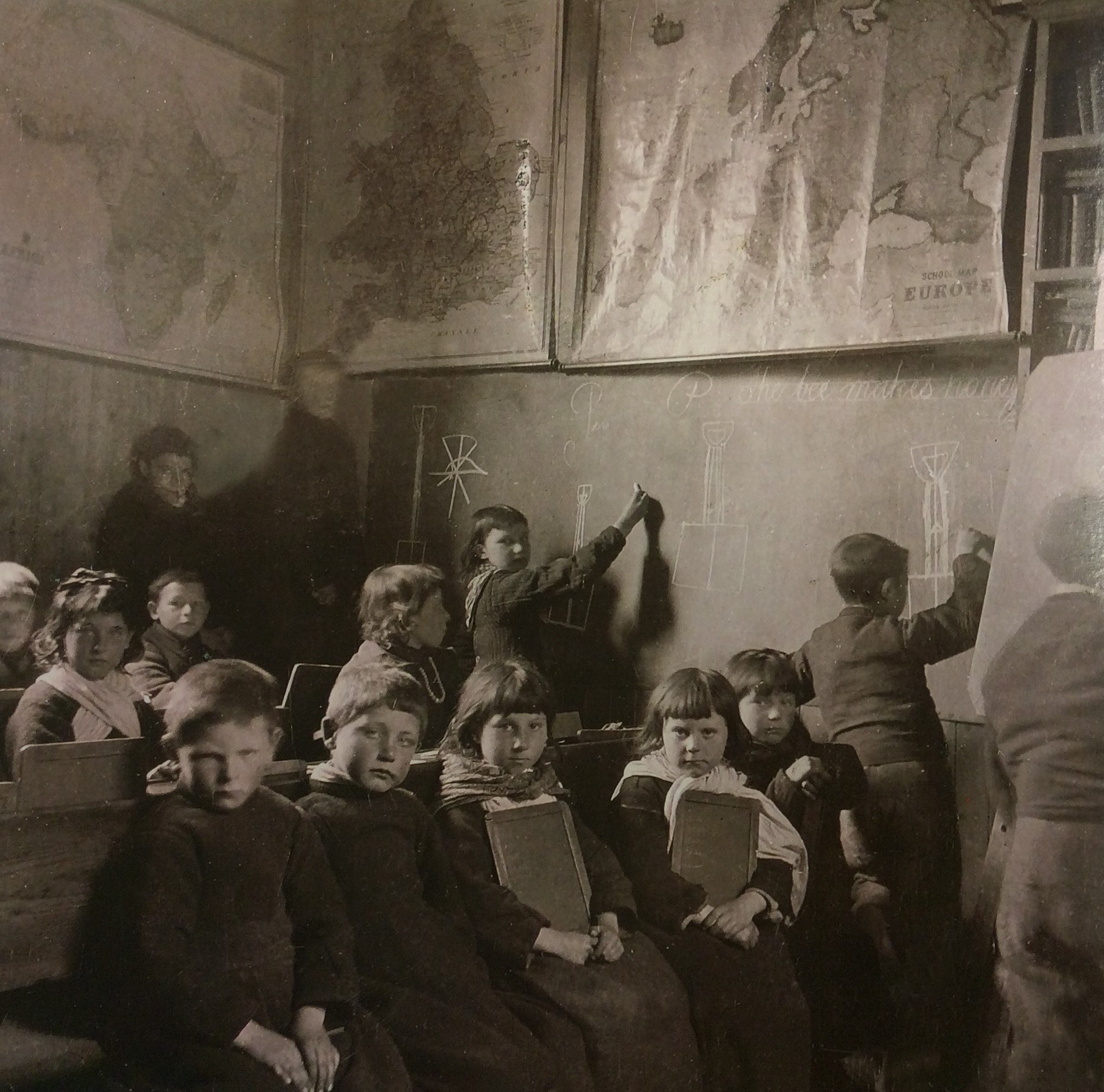
As many men were away fighting, or working in other important jobs during the war years, life changed for women and children who took on some of the work they had left. Some businesses even changed what they did to help the war effort. We can look at the records of businesses and schools to learn about some of these changes.
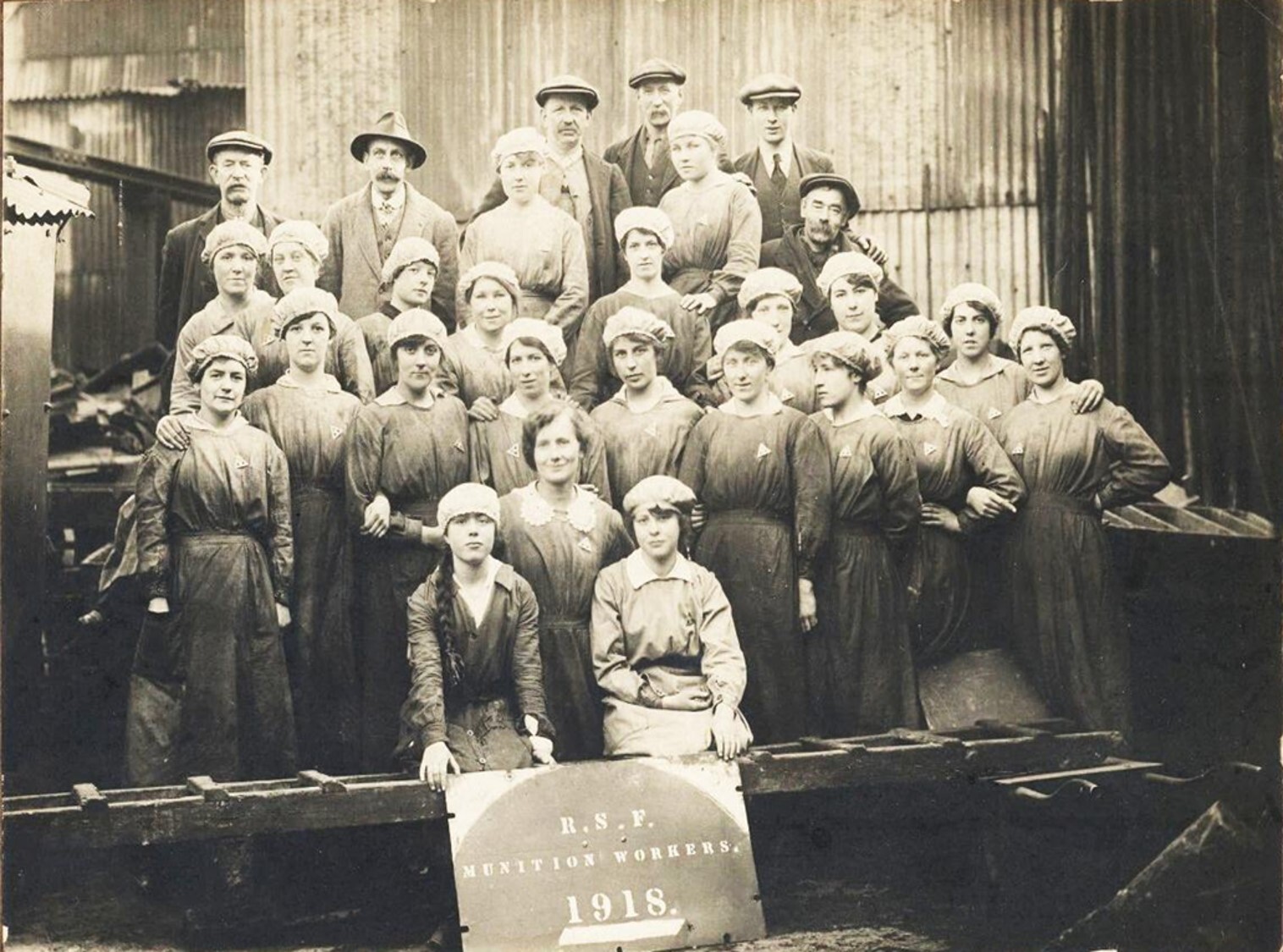
Munitions workers at Rose Street Foundry, Inverness, 1918
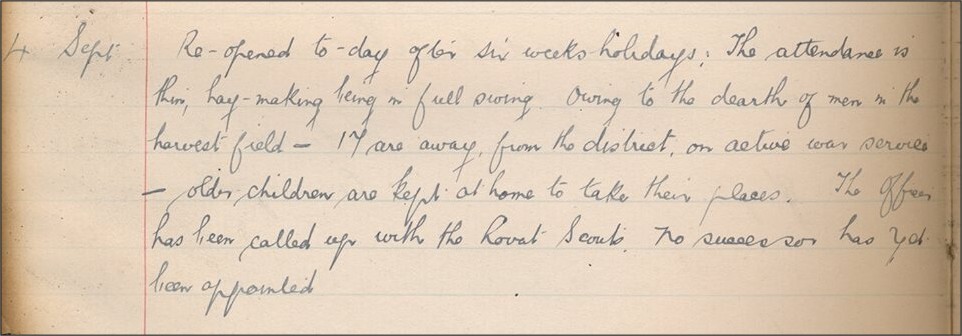
Bernisdale school log book, 1914
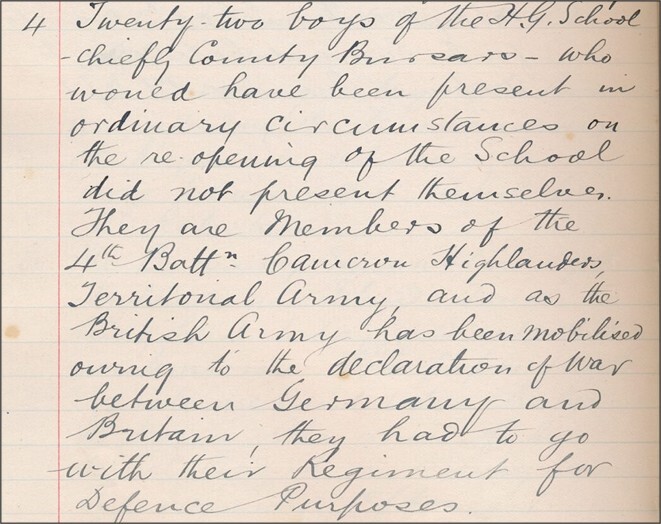
Portree school log book, 1914
World War One related activities
- Imagine you’ve just been told that you’re going off to fight. Write a diary entry about how you might feel. Scared? Excited? Worried about the family you’re leaving behind? Think about all of the people it would affect – your friends, your family, the friends you might be about to make, the enemies you might be about to make.
- Almost everyone has an ancestor who served in World War One. See if you can learn about someone in your family who lived through the war.
- There was a lot of poetry written during World War One. Have a look for some online, or try and write your own poem about living through a difficult, scary and unusual time.