









About the capercaillie
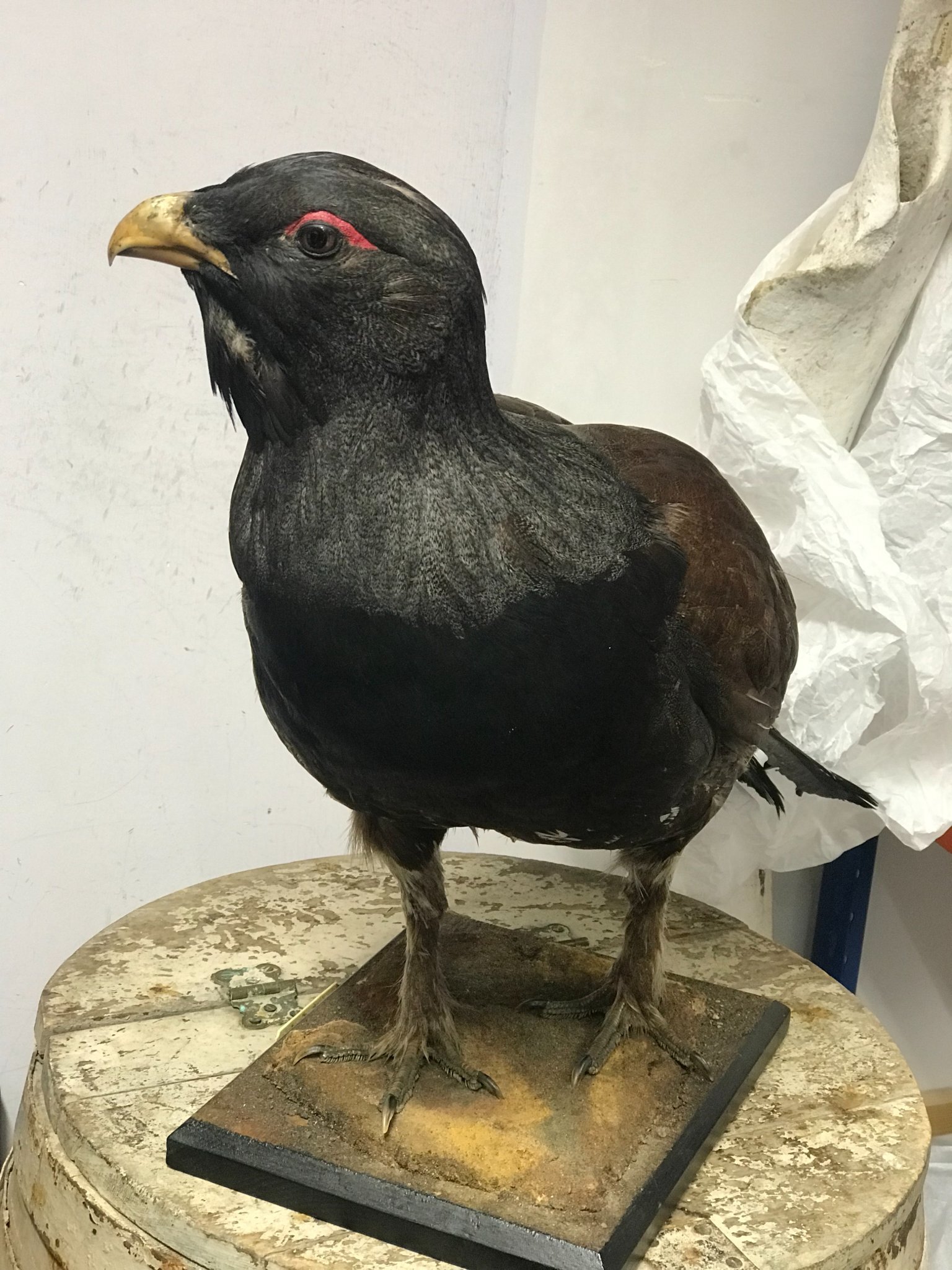
The Capercaillie is a huge woodland grouse. Also known as the Western/Eurasian capercaillie, wood grouse, heather cock or cock of the wood. The word capercaillie is itself derived from the Scottish Gaelic “capall coille”, meaning “Horse of the wood”. We ask someone more knowledgeable about birds if that name may be due to their infamous courtship displays sounding like the neighing of a horse, or if it is rather due to the impressive size of the species’ males. In an extreme case of sexual dimorphism, male capercaillies have mostly dark feathers compared to the light brown of the females and are also roughly twice as big.
Habitat and conservation
Capercaillies spend a lot of time feeding on the ground, but may also be found in trees, feeding on sprigs. Their usual habitats in Scotland are native pinewoods, a rare and vulnerable habitat, and in commercial conifer plantations. Their population in Scotland has been declining greatly since the 1960s due to deer fencing, predation, and lack of suitable habitats. Their overall population plummeted from around 10.000 in the 1960s to below 1000 in 1999. By 2015 a survey identified them as the bird most likely to become extinct in the UK.
This capercaillie was stuffed and mounted in Perthshire, 1923.