







In the Clans, Castle and Conflict display at the North Coast Visitor Centre is a tiny silver coin with a remarkable story to tell. At first glance, it may seem modest, but this medieval Scottish penny links Caithness to the reign of one of Scotland’s most significant kings and to a dramatic discovery made right here in the county.
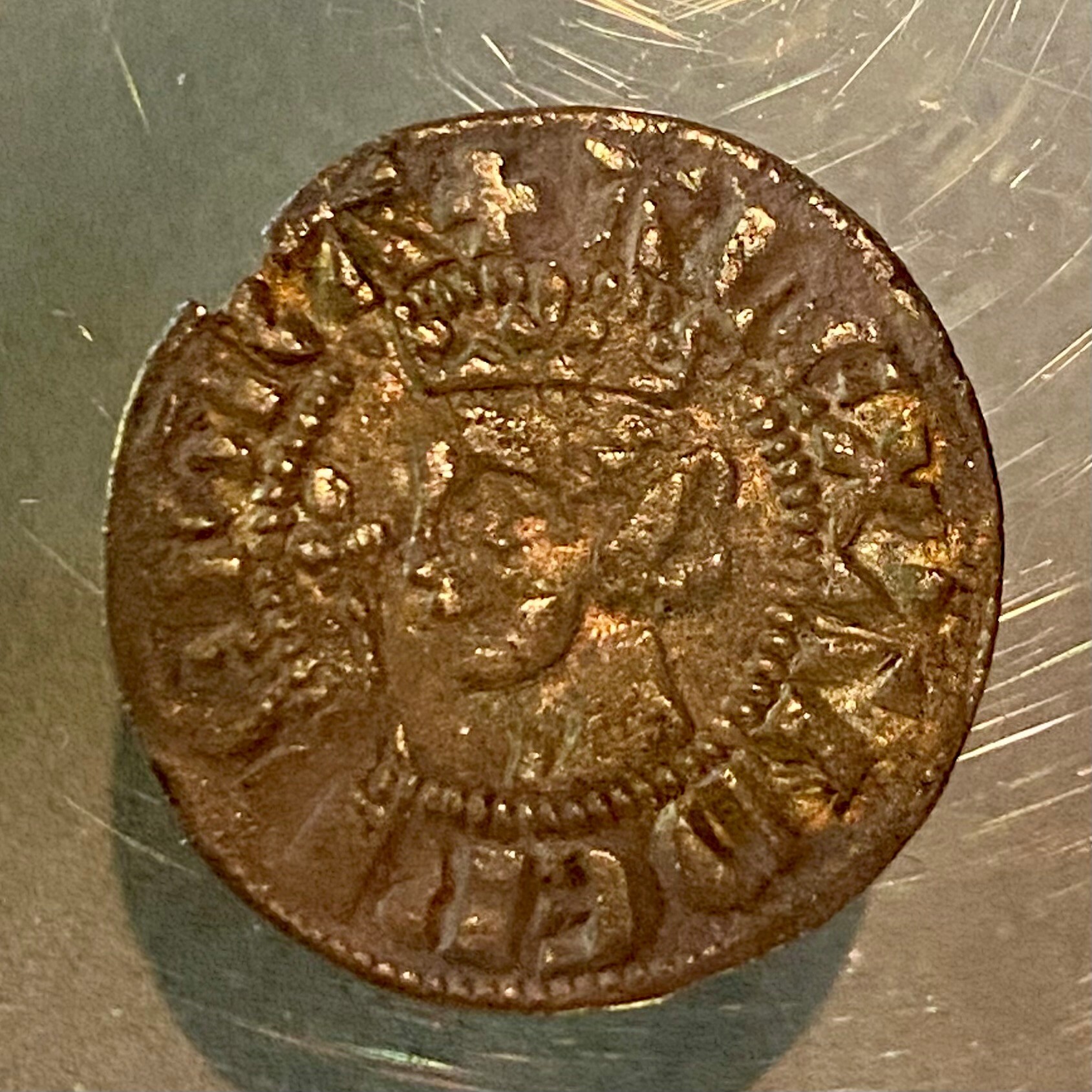
Our Object of the Month is a silver penny minted during the reign of King Alexander III of Scotland (1249–1286). Alexander III is often remembered as one of Scotland’s most successful medieval monarchs. His reign was a period of relative peace and prosperity, and by the time of his death, Scotland was an independent and stable kingdom.
However, Alexander III’s reign came to a sudden and tragic end on the night of 18 March 1286.
Having celebrated his birthday at Edinburgh Castle, the king set out to cross the Firth of Forth to Kinghorn, where he planned to reunite with his young French wife, Yolande de Dreux. Despite stormy weather and repeated warnings to delay his journey, Alexander insisted on pressing on.
Somewhere in the darkness, he became separated from his retinue.
The following morning, his body was discovered at the foot of a steep embankment near Kinghorn.
His death sent shockwaves through Scotland. With his sons already deceased and his only surviving heir, his granddaughter Margaret, Maid of Norway, dying before she could reach Scotland, the kingdom was plunged into a succession crisis. That uncertainty eventually led to the Wars of Independence and the rise of figures such as William Wallace and Robert the Bruce.
The coin on display was struck sometime between 1280 and 1286, during the final years of Alexander’s reign, making it a direct link to one of the last periods of stability before Scotland entered one of the most turbulent chapters in its history.
The Latin inscription on the obverse translates as:
Alexander, by the Grace of God.
A simple phrase, but a powerful statement of royal authority, reinforcing the king’s divinely sanctioned right to rule.
This particular coin was discovered as part of a hoard found at the ruined Chapel of Ladykirk, Duncansby, in 1969.
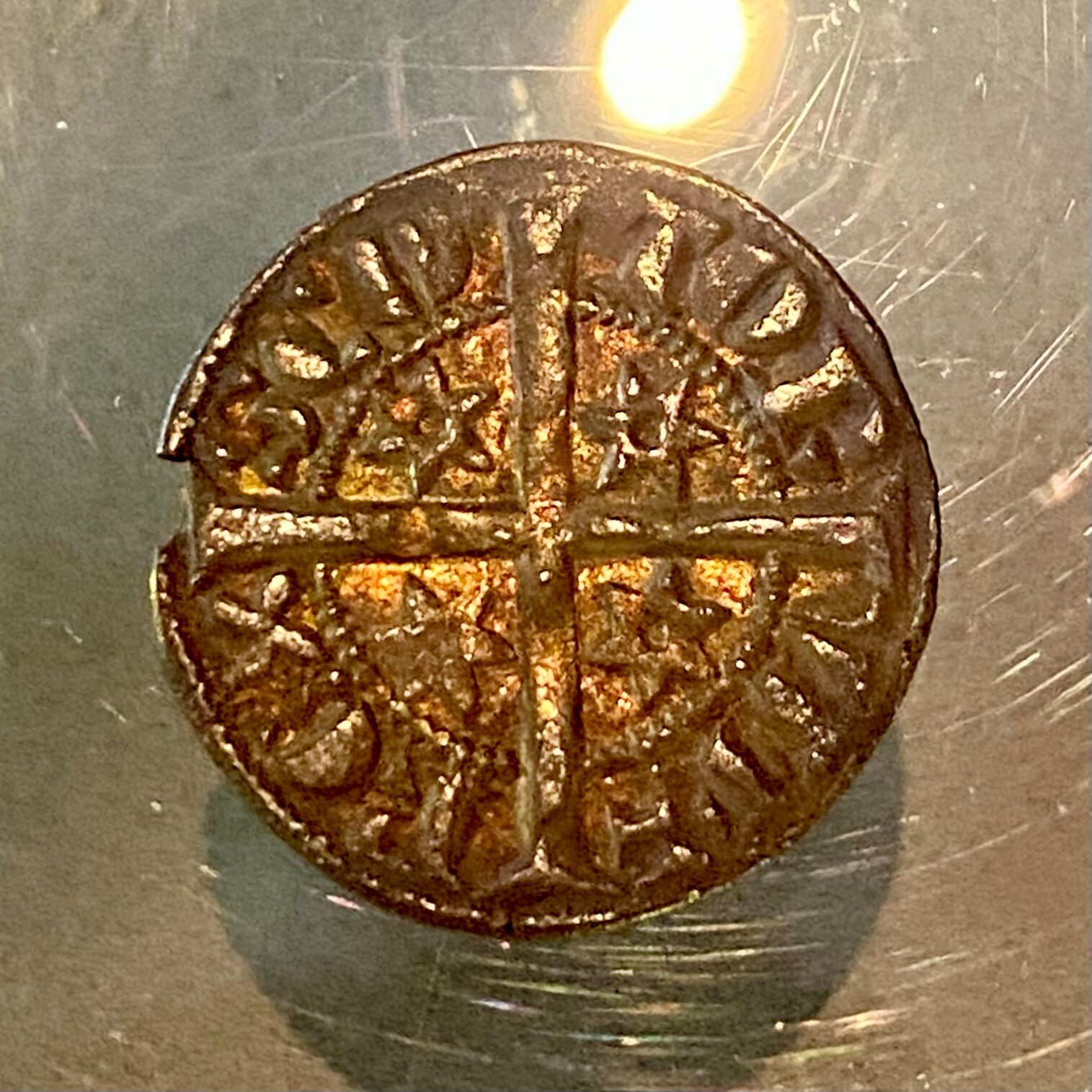
Located near John O’Groats on the north-eastern tip of mainland Scotland, Ladykirk has long been an atmospheric and historically significant site. During excavations and investigations at the chapel, a group of coins was uncovered buried in the sand near the cemetery.
The hoard included a range of medieval coins, including six silver pennies of Edward I and II of England, as well as this Scottish penny of Alexander III.
We may never know the why these coins were left, but they offer a tantalising glimpse into life in medieval Caithness.
Next time you visit, take a moment to look closely at this small silver disc. It may be no bigger than a modern coin, but it carries with it over 700 years of Scottish history.