



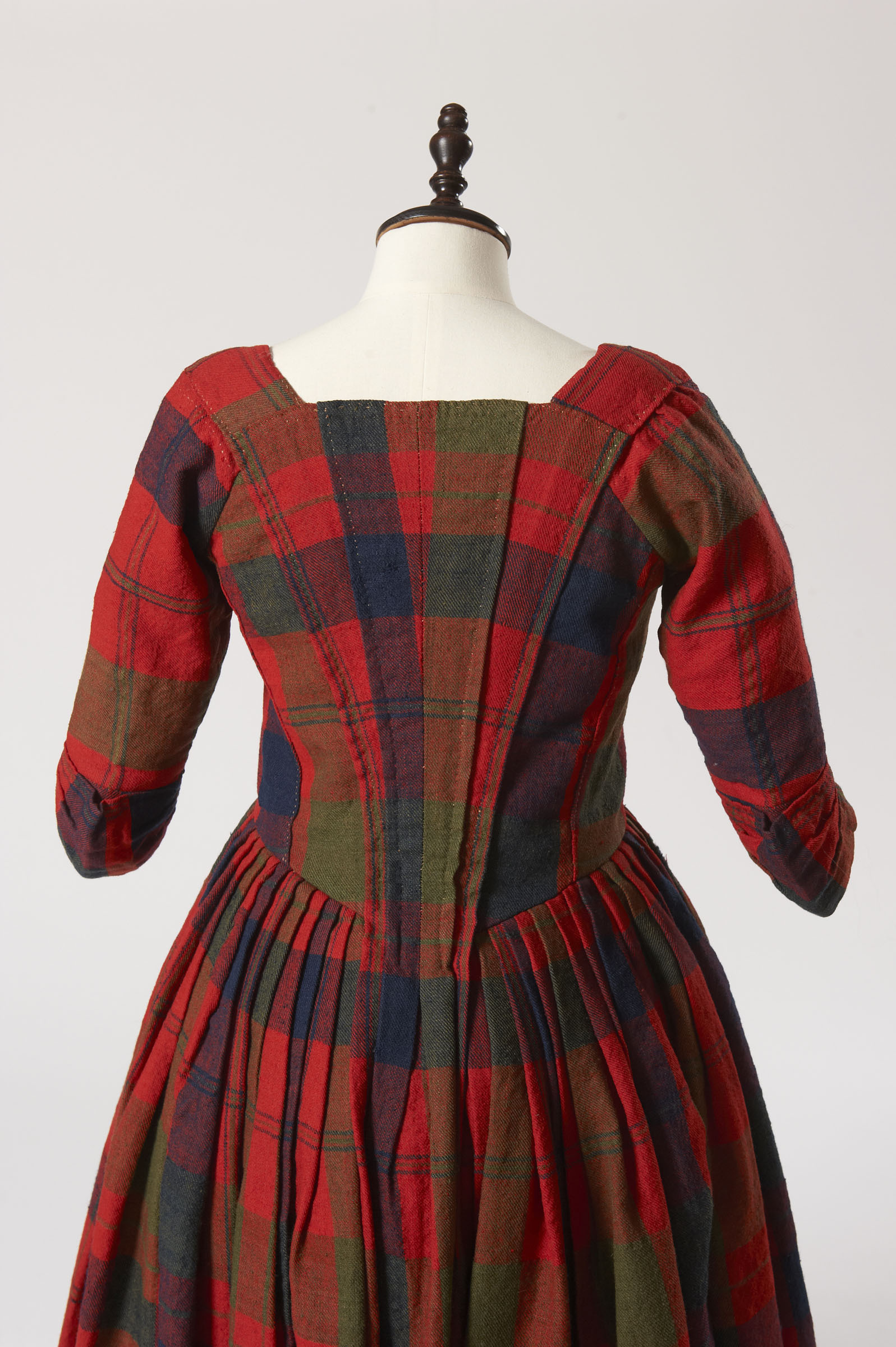
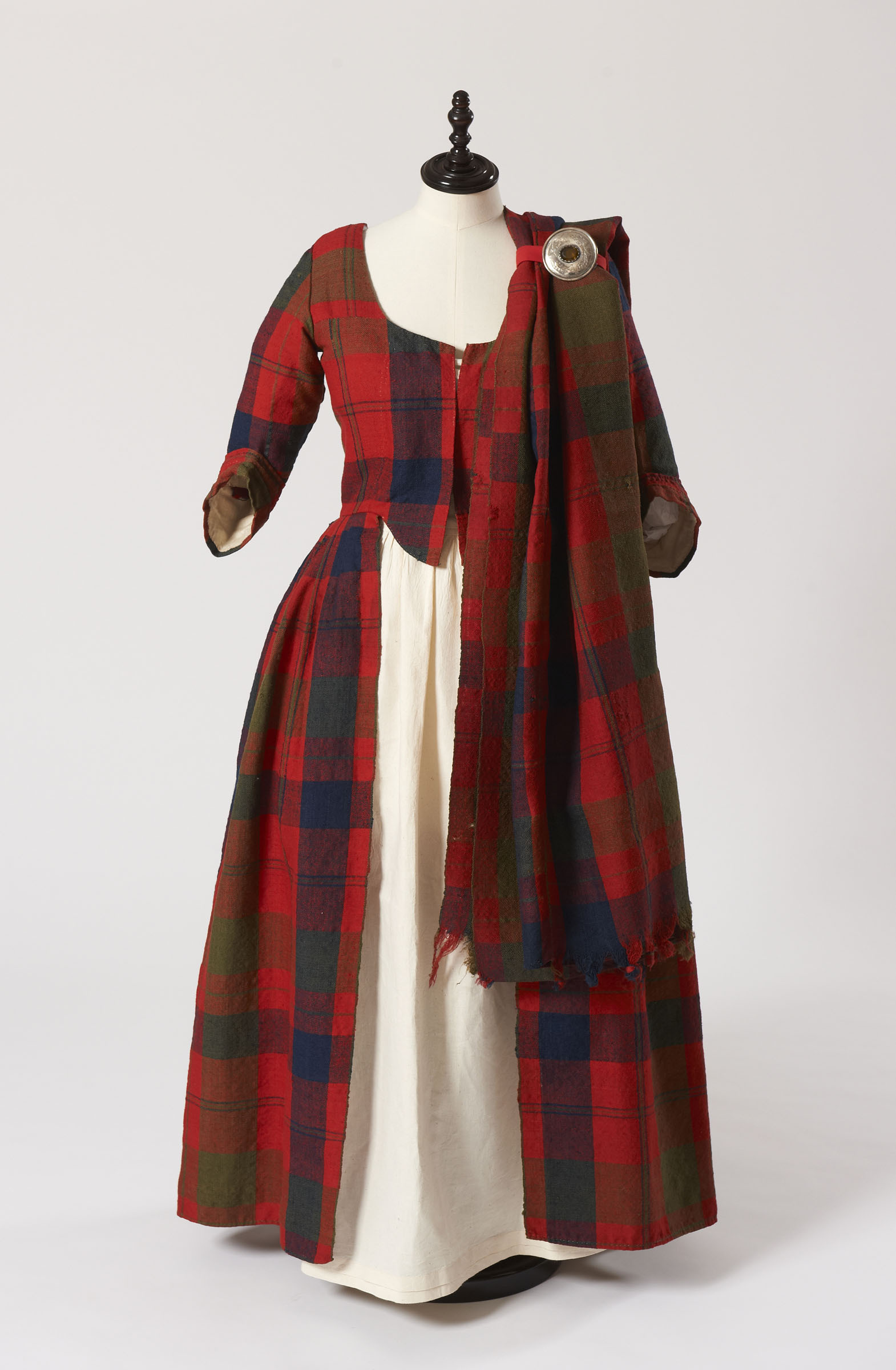
This beautiful tartan gown was worn by Isobel (Isabella) MacTavish at her wedding in January 1785. The groom was Malcolm Fraser and they were married at Dores, a small town on the shores of Loch Ness. Isabella and Malcolm moved from Dores to Kiltarlity parish, north-west of Inverness, where they raised their family.
The gown has been worn by at least three more brides during its history and is now owned by Isabella's great-great-great-granddaughter, who has kindly had the gown on loan to Inverness Museum since 1984. It is the oldest known example of a woman's tartan gown and one of the museum's most popular exhibits.
The 1746 Dress Act
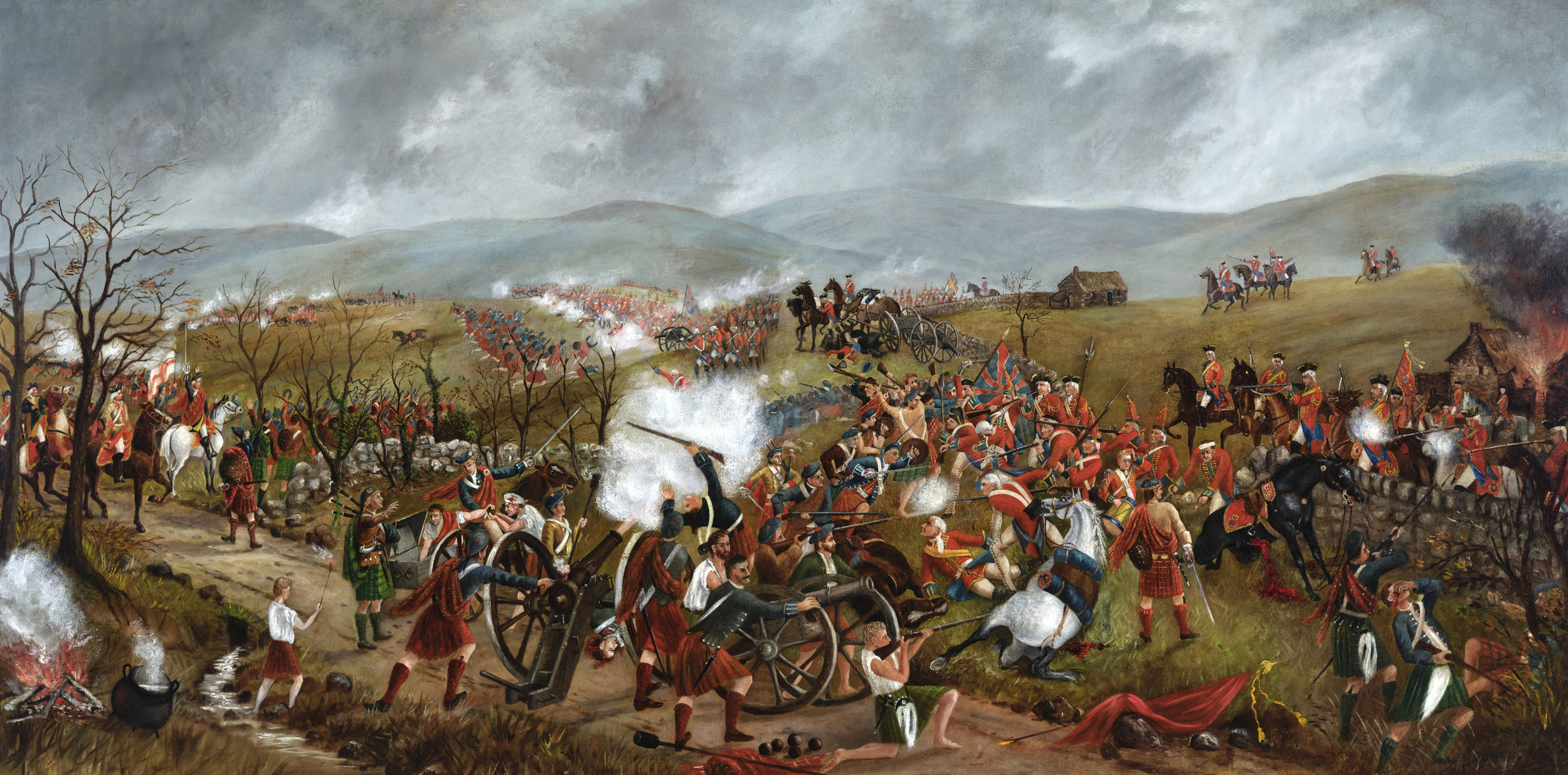
Following the defeat of the Jacobites at Culloden, the 1746 Dress Act was passed, banning men and boys in the north of Scotland from wearing traditional Highland dress. Only soldiers in the army's Highland Regiments were allowed to wear the kilt. Although women were still allowed to wear tartan, the Act had a devastating effect on the manufacture of tartan. Perhaps this dress signifies the early resurgence of tartan following the Repeal of the Dress Act in 1782.
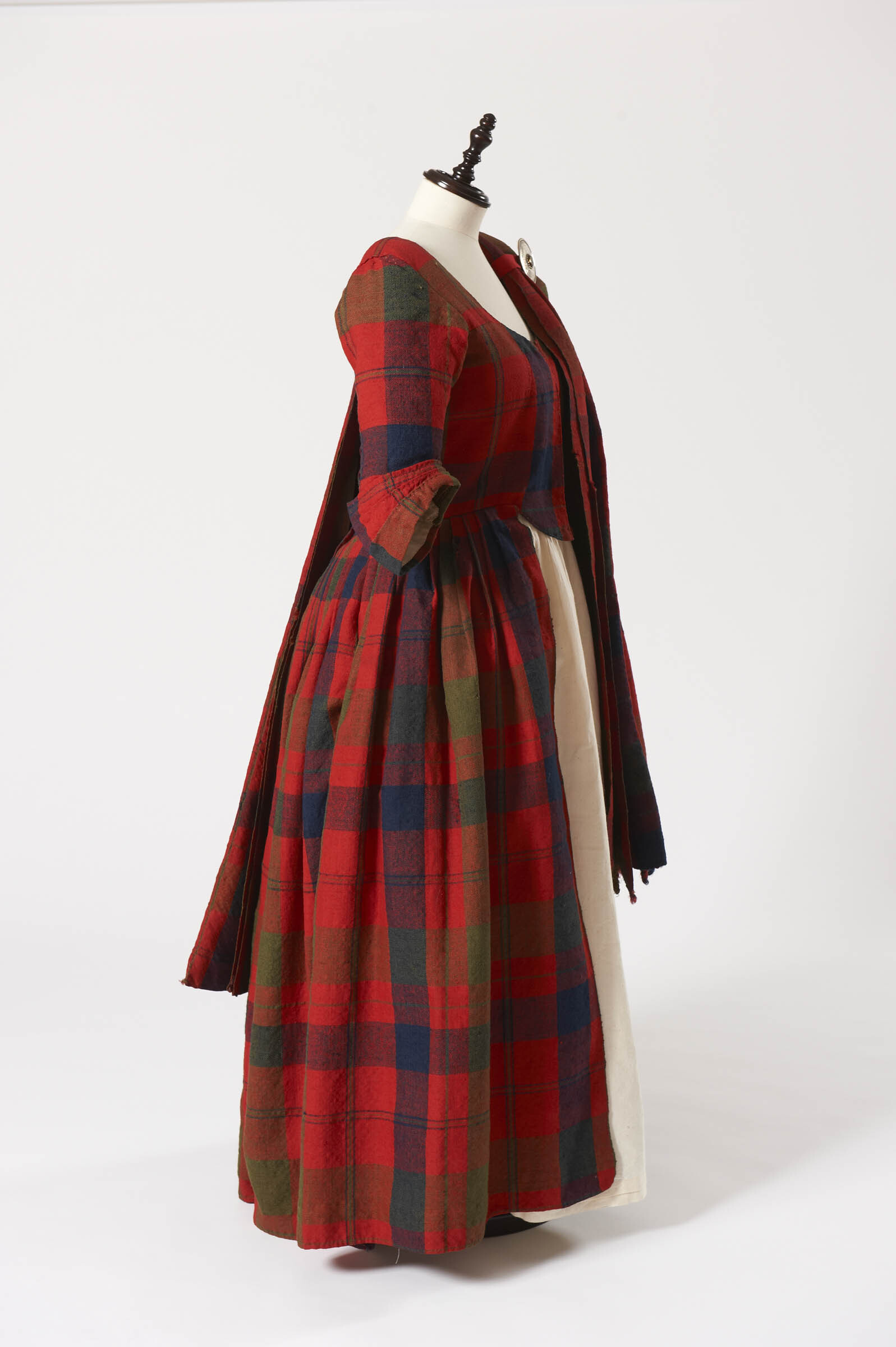
The gown is in the style of the 'Robe à l'Anglaise' or 'English nightgown' - a fitted style which originated in England and became fashionable across Europe in the mid 18th century - but is the only known tartan example. Because of its rarity and historical significance, the gown has been shown in many exhibitions, most recently in Tartan at V&A Dundee. In 1918 a replica was made for Fort Augustus Abbey and this is now in the collection of the West Highland Museum, Fort William.
The Isabella Project
In 2019, 'The Isabella Project' - a project led by Rebecca Olds of Timesmith - brought together a team of historical dressmakers who re-created this iconic gown at a public event at the National Museum of Scotland (NMS). At the time, the original dress was on temporary display in the Wild and Majestic: Romantic Visions of Scotland exhibition at NMS in Edinburgh.
The research undertaken by The Isabella Project team revealed the construction techniques and the skills of the mantua-makers (a female-dominated trade) of the time. In the tradition of the mantua-makers who tailormade their garments to fit the wearer, the team created a gown that perfectly fitted their model, rather than an identical clone of the original. The replica gown was loaned to IMAG and displayed alongside the original during 2020. Two members of the team, Lauren Stowell and Abbey Cox from American Duchess, produced a blog on their website with a downloadable pattern and short documentary.