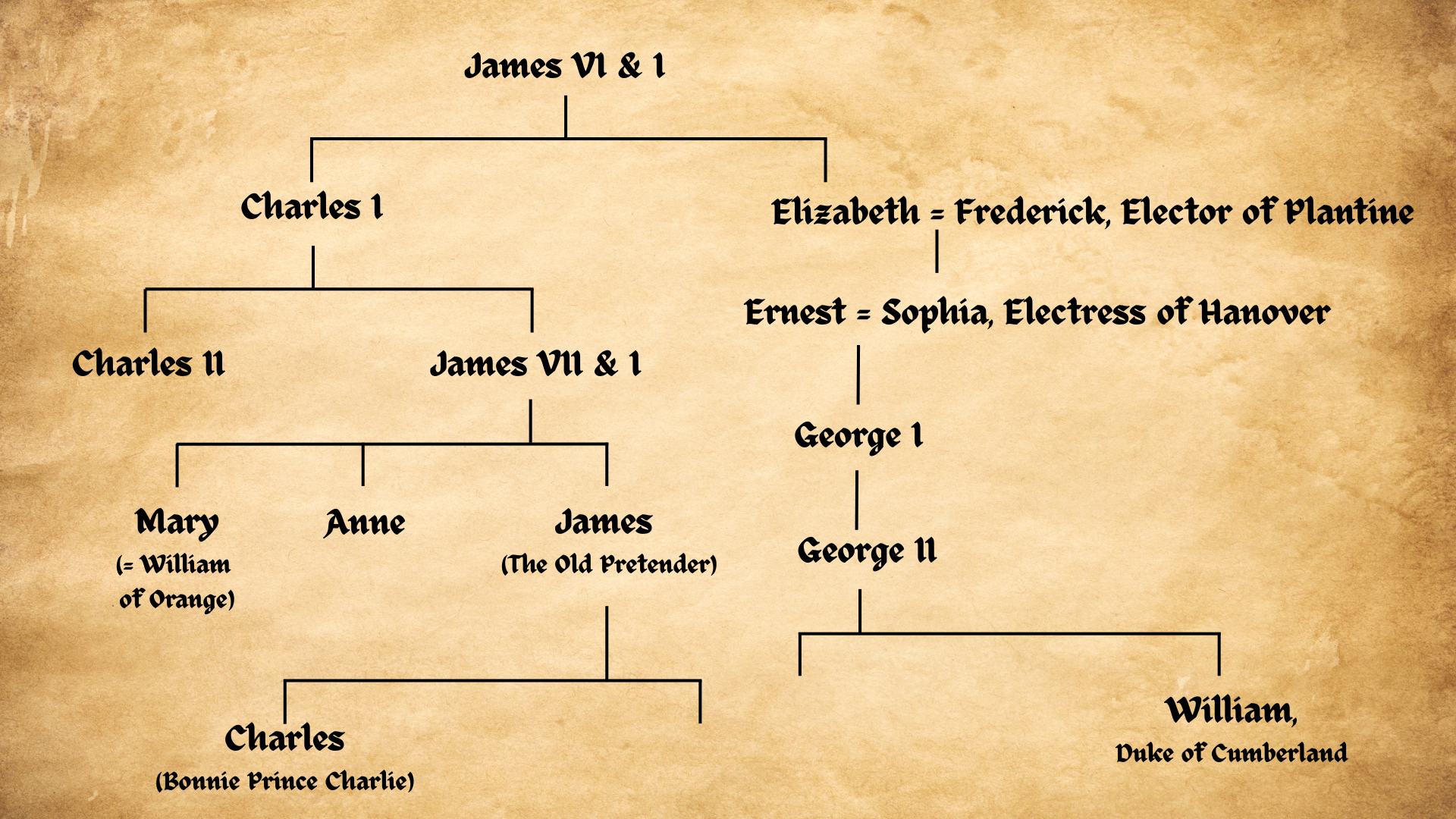








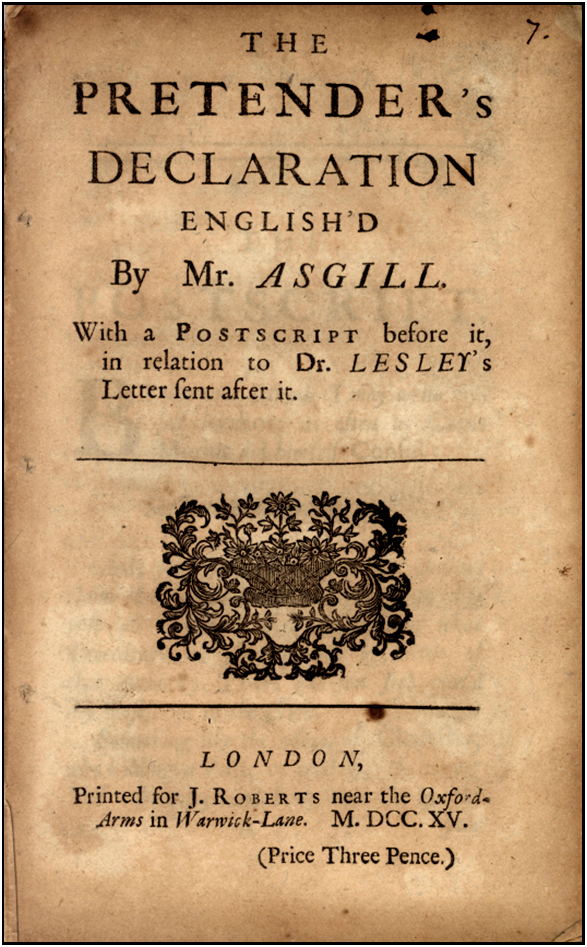
On 1st August 1714 , Queen Anne died with no heir. The Act of Settlement meant that the throne passed to her 3rd cousin George Ludwig, Elector of Hanover, who became King George I. Catholic claims to the throne were dismissed and those claiming were labelled Pretenders’ (from the French for ‘claimants’). Support for the ‘rightful King James VIII & III’ was widespread but was strongest in the Highlands of Scotland. The established Church feared the possibility of
another uprising and town councils began to prepare for trouble.
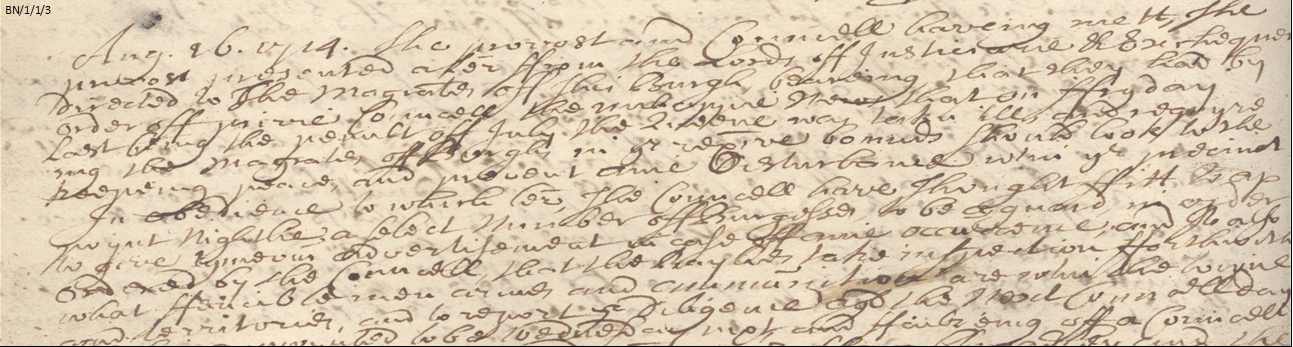
Aug 16 1714. The Provost and Council having met, the Provost presented a letter from the Lords of Justiciary and Exchequer directed to the magistrates of this burgh bearing that they had by order of privy council, the unhappy news that on Friday last, being the penultimate of July, the Queen was taken ill, and requiring the magistrates of burghs in their respective bounds should look to the keeping peace and prevent any disturbance within their precinct… The entry ends by concluding that a guard will be mounted and an inspection made of fencible men, arms and ammunition within the town and territories.
The entry ends by concluding that a guard will be mounted and an inspection made of fencible men, arms and ammunition within the town and territories.
On George’s ascension to the throne John Erskine, the Earl of Mar, arranged the production of a congratulatory address to ingratiate himself with the new King. The 102 Heads of Clans who signed the address proclaiming loyalty included many who would shortly turn against the new monarch. Mar’s flattery was in vain and he was overlooked for a role in office. Disappointed and offended, he switched sides and led Scottish support for the exiled ‘King James’, organising “The Great Hunt” - a meeting of high ranking Jacobite supporters through which to plan an uprising. The event led to the raising of King James’ standard in Braemar on 6th September 1715 - commonly seen as the start of the rising.
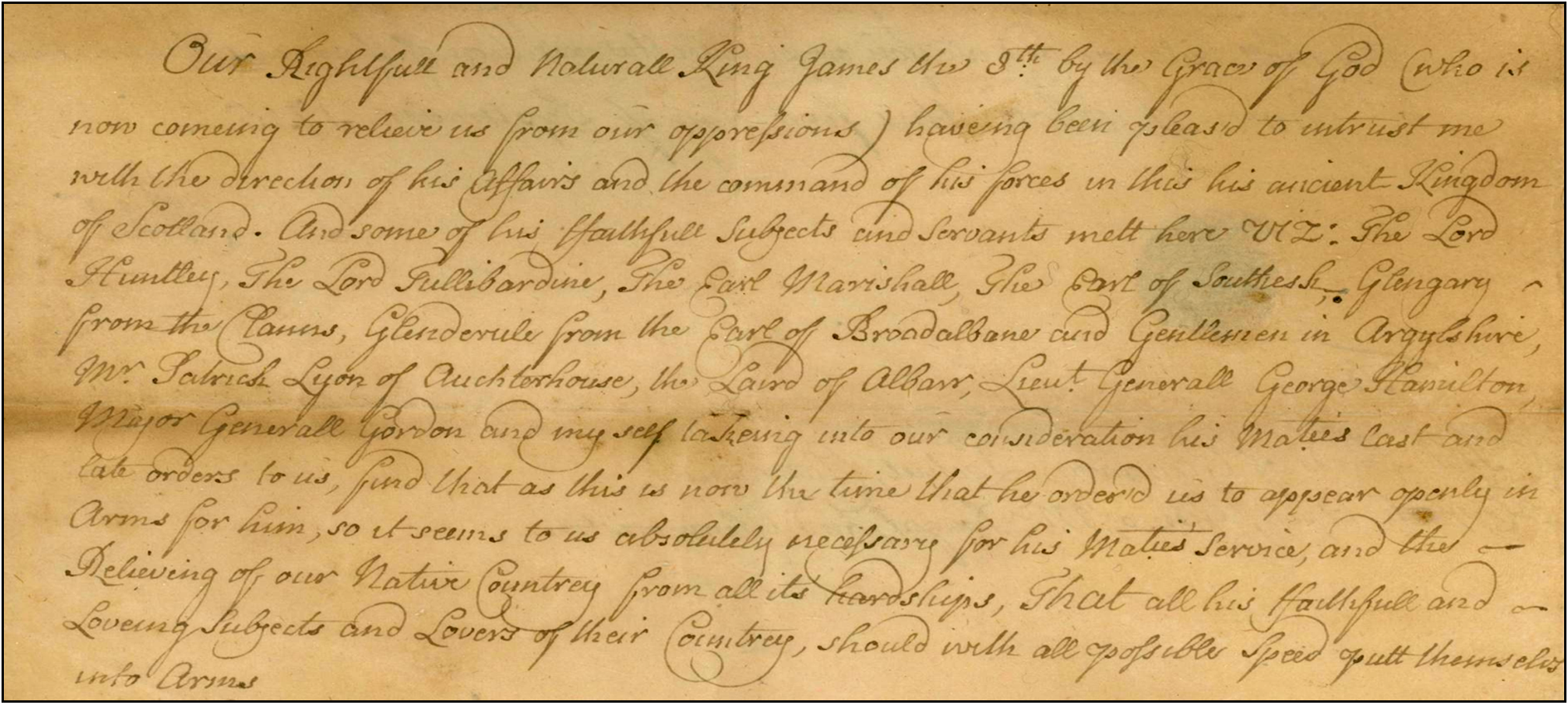
Our rightful and natural King James the 8th by the Grace of God (who is now coming to relieve us from our oppressions) having been pleased to entrust me with the direction of his affairs and the command of his forces in this his ancient Kingdom of Scotland...so it seems to us absolutely necessary for his Majesty’s service, and the relieving of our native country from all its hardships, that all his faithful and loving subjects and lovers of their country should with all possible speed put themselves into arms.
Mar’s campaign started successfully with strong Jacobite support. However...his ineptitude as a military leader meant that weeks were spent travelling through the country indulging in minor skirmishes and unsuccessful attempts to take targets including Edinburgh Castle. The time wasted allowed the Hanoverian army (under the Duke of Argyll) time to prepare for the battle which finally occurred at Sheriffmuir.
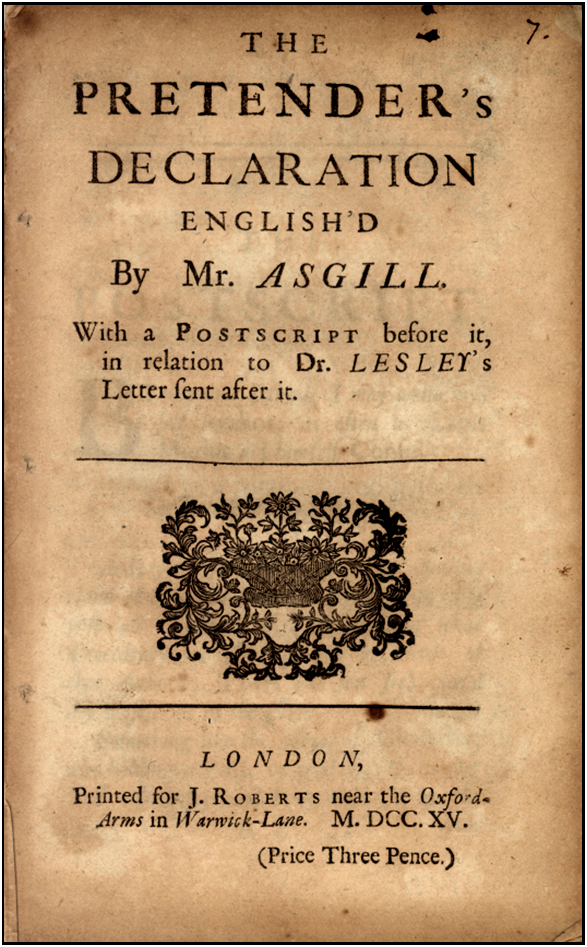
The Battle of Sheriffmuir on 13th November again showed Mar’s lack of military skill. The advantage of higher numbers was wasted and, although the battle was inconclusive, the Jacobite advance was halted. In England the forces sent by Mar to rally Jacobite support (under the command of Brigadier Mackintosh of Borlum) found themselves surrendering in the disastrous battle of Preston - a government victory which led to the capture of hundreds of Jacobites.
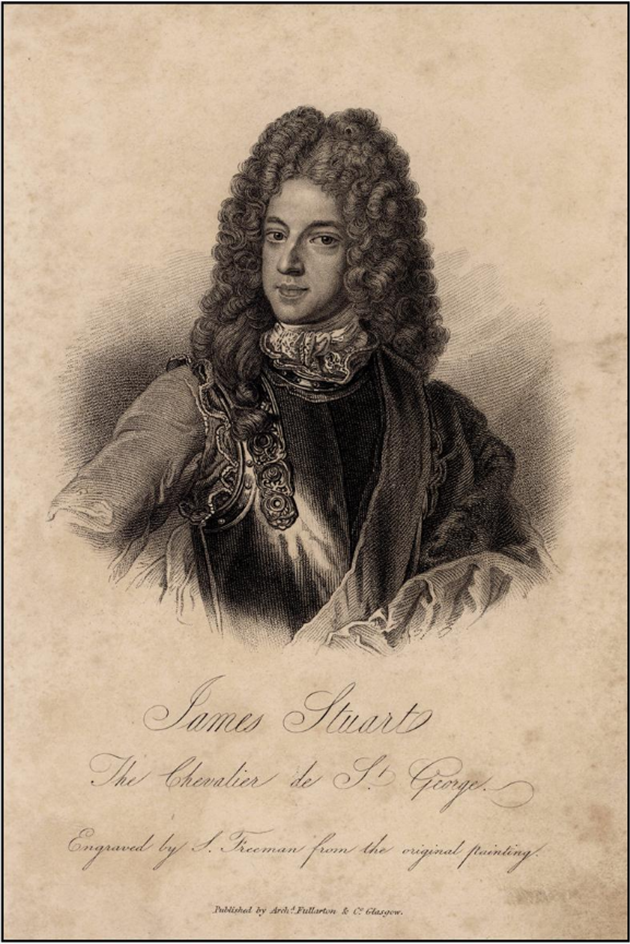
When the Old Pretender finally landed in Scotland the rising was already over and he left within weeks, leaving those who had supported him to face execution, transportation and the forfeiture of estates and titles.
The 1715 rebellion is now largely remembered for the battles of Sheriffmuir and Preston but the Highlands also played a vital role on both sides of the cause...