





In the aftermath of the rising Inverness Town Council was inundated with claims for damages and reimbursement from residents who had been deprived of everything from shoes and wigs to swords and vegetables during the turmoil and in 1716 the magistrates who had been so ineffectual in confronting the Jacobite garrison were all replaced.
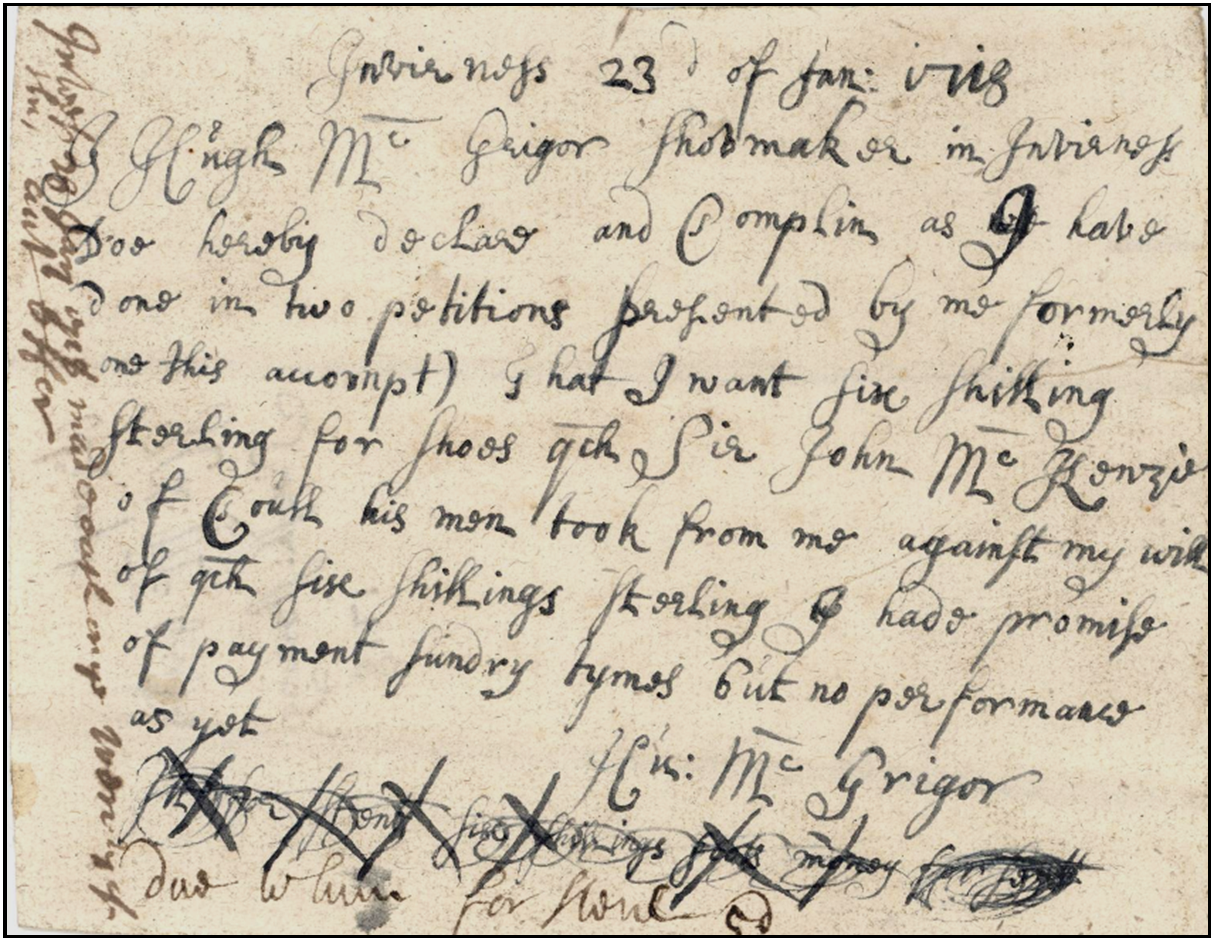
I Hugh McGrigor shoemaker in Inverness do hereby declare and complain as I have done in two petitions presented by me formerly on this account that I want six shillings sterling for shoes which Sir John McKenzie of Coul his men took from me against my will of which six shillings I had promise of payment sundry times but no performance as yet.
The ’15 had a far gentler aftermath than the ‘45 was to have but there were still many who were executed or imprisoned for supporting the Stuart cause. Numerous Jacobites had their lands forfeited and their titles attainted and the fear of history repeating itself was to lead many to change their allegiances over the following years. Catholics across the country continued to be viewed with fear and suspicion and the government issued advice on being aware of the rise of ‘popish seminaries’.
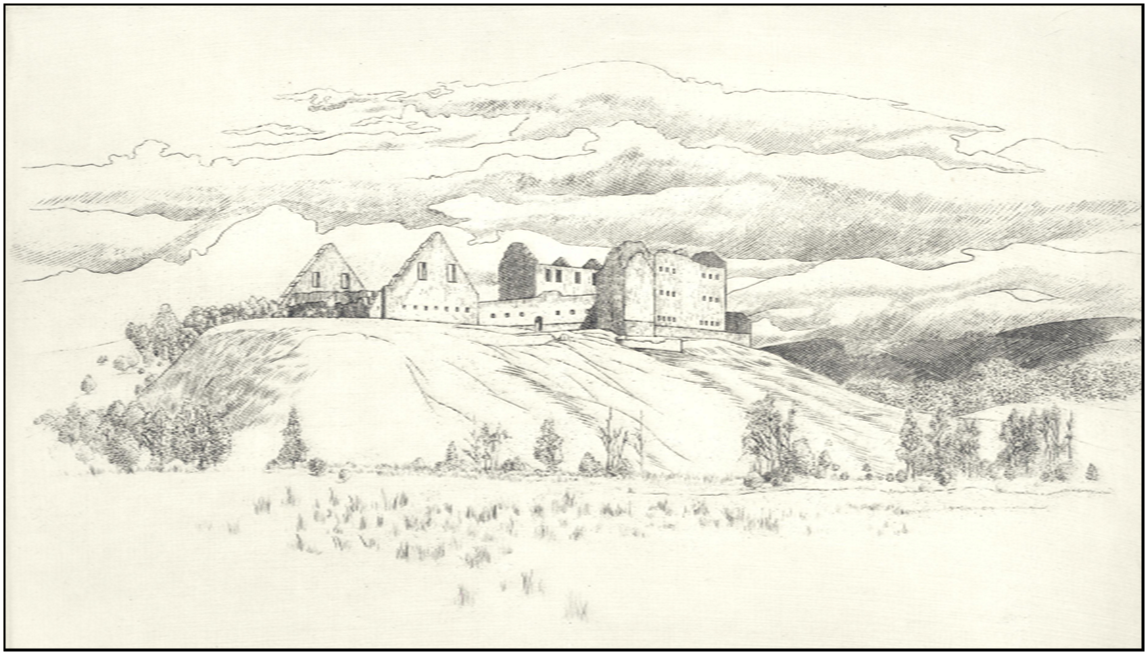
The government entered into a programme of fort building and strengthening. New garrisons, such as Ruthven Barracks, were established and existing strongholds including Inverness Castle were renovated and garrisoned by government soldiers. The Disarming Act of 1716 was the first step to demilitarise the clans, a process which gained rigorous momentum following the Battle of Culloden. The Indemnity Act of 1717 led to a general pardon for hundreds of Jacobites but came too late for those who had paid the ultimate price for the cause they believed in (or the cause their clan chief believed in).
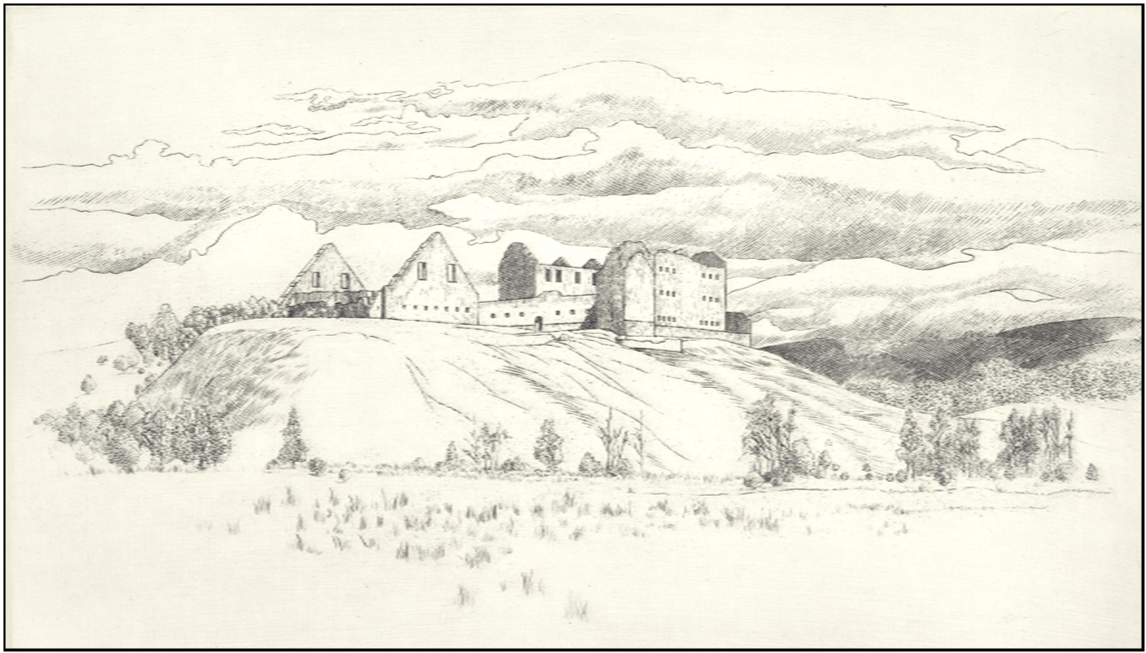
The 1715 uprising is now often overshadowed by the rising of 1745/6, but the events of 1715 were to have direct implications for the Jacobite cause in years to come. The established church rejoiced at the failure of the Jacobites to restore the Stuarts to the throne in 1715 but continued to be fearful of further risings. Dornoch Presbytery minutes for January 1716 record a prophetic fear that the issue tearing the country apart would yet lead to Scotland being left “desolate and a field of blood”. A prediction which was to come true on the battlefield of Culloden thirty years later.
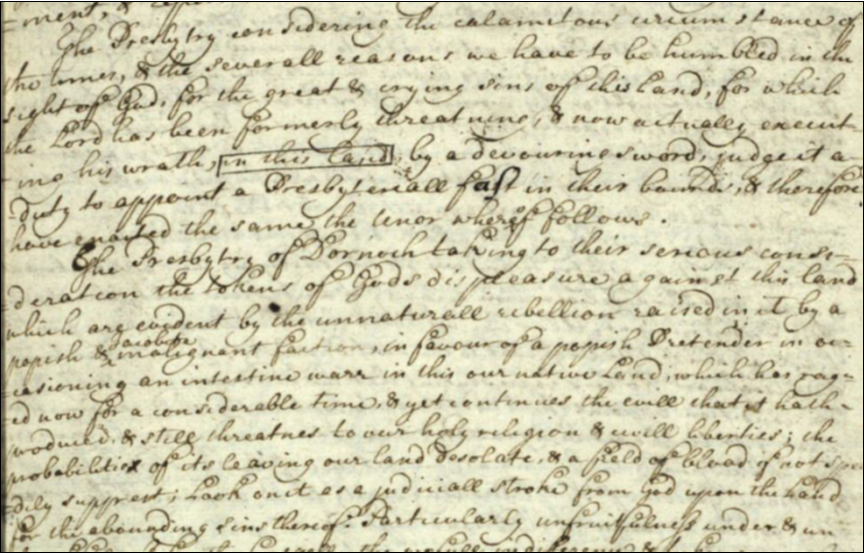
The Presbytery considering the calamitous circumstances of the times, and the several reasons we have to be humbled in the sight of God, for the great and crying sins of this land for which the Lord has been formerly threatening, and now actually executing his wrath in this land by a devouring sword, judge it a duty to appoint a presbyterial fast in their bounds, and therefore have enacted the same the tenor whereof follows. The Presbytery of Dornoch taking to their serious consideration the tokens of God’s displeasure against this land which are evident by the unnatural rebellion raised in it by a popish and Jacobite malignant faction in favour of a popish pretender in occasioning an intestine war in this our native land which has raged now for a considerable time and yet continues the evil that it hath produced and still threatens to our holy religion and civil liberties; the probability of its leaving our land desolate and a field of blood if not supressed; look on it as a judicial stroke from God upon the land for the abounding sins thereof…
The 1701 Act of Settlement (which was responsible for the Catholic Stuarts being bypassed for the throne) was amended in 2015 allowing Members of the Royal Family in line to the throne to marry Catholics but the Act has not been repealed, and it currently remains impossible for the monarch of the United Kingdom to be a Catholic.