





As the fight raged throughout Scotland, so it continued in Inverness. The Mackintoshes marched south to join the Earl of Mar leaving Sir John Mackenzie of Coul in charge of the garrison in Inverness. It is likely that the magistrates of the town council had Jacobite
sympathies - certainly they took no action to remove the garrison, angering Hanoverian
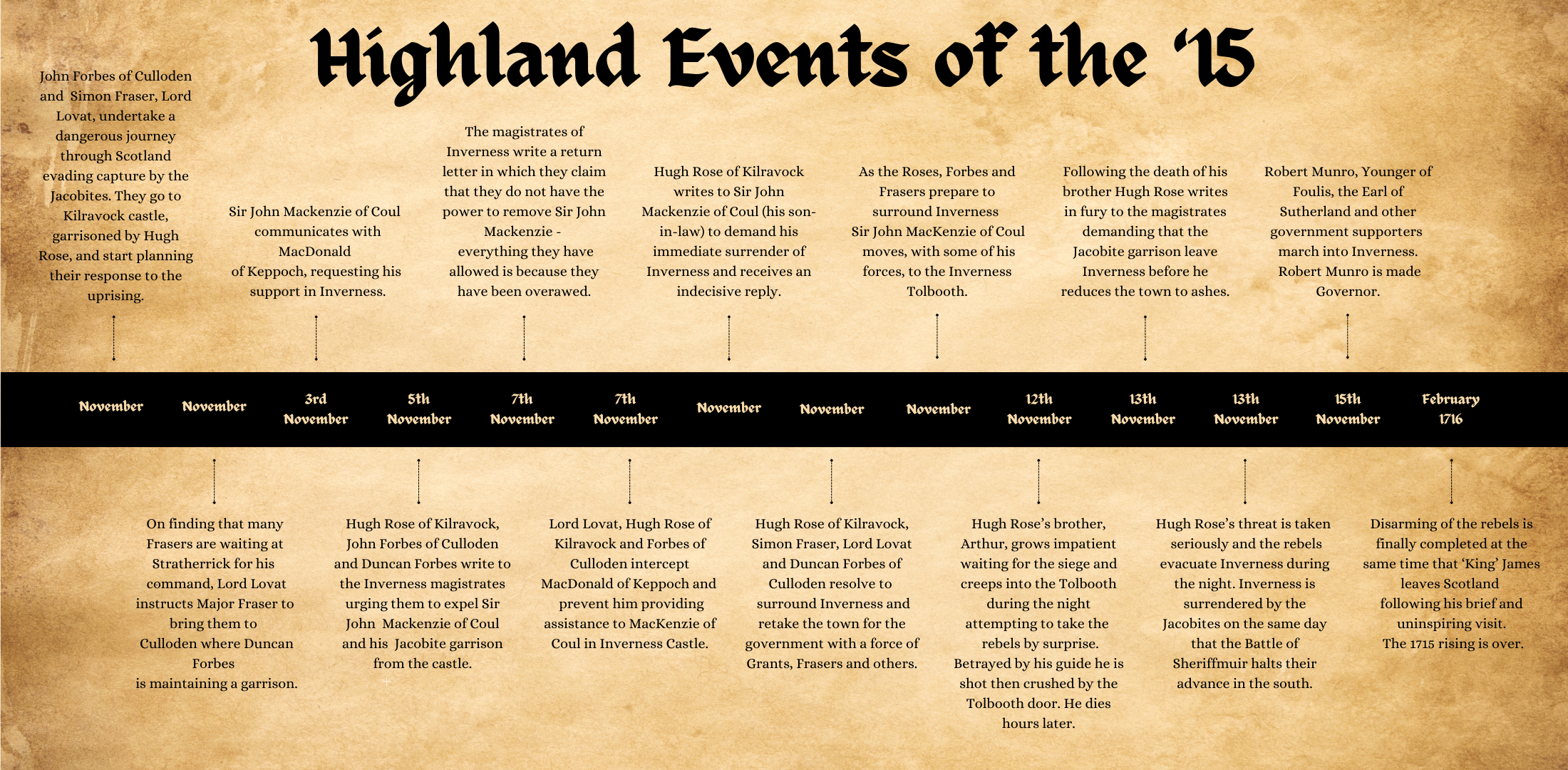
supporters. Hugh Rose of Kilravock, John Forbes of Culloden and Duncan Forbes threatened that if the situation was allowed to continue the magistrates would be viewed as “traitors and open enemies” of the King and would run the risk of being prosecuted with “fire and sword and the utmost vigour of war”. No action was taken by the magistrates...
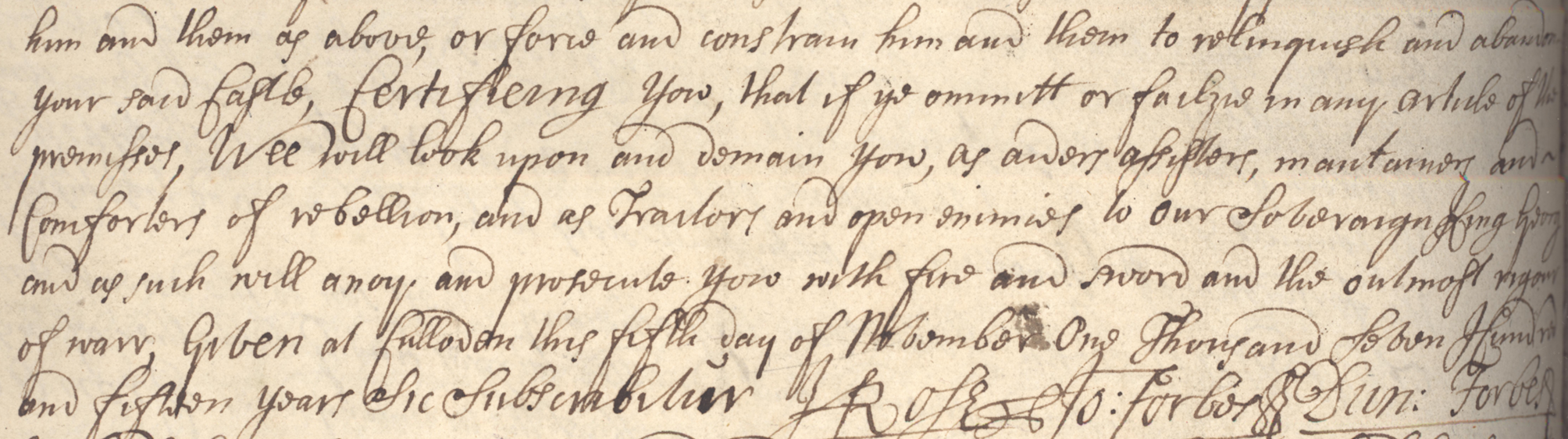
...or force or constrain him and them to relinquish and abandon your said Castle. Certifying you, that if you omit or fail in any article of these premises, we will look upon and demain you as aiders, assistors, maintainers and comforters of rebellion and as traitors and open enemies to our sovereign King George and as such will annoy and prosecute you with fire and sword and the utmost vigour of war…. Given at Culloden this fifth day of November One Thousand Seven Hundred and Fifteen Years. H Rose, Jo, Forbes, Dun. Forbes.
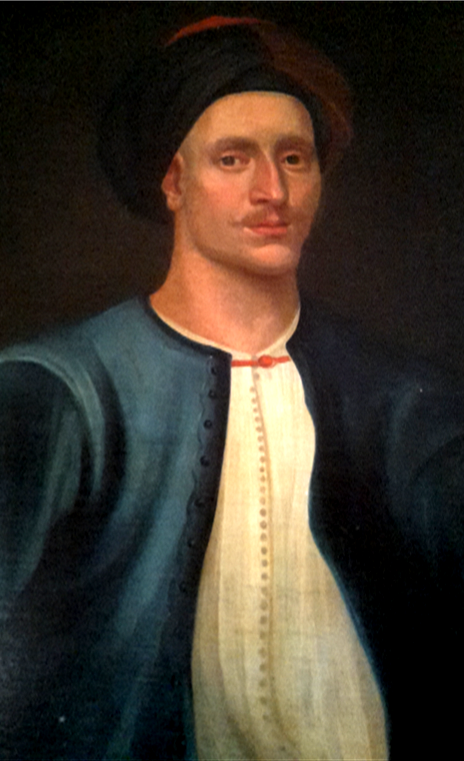
The 13th and 14th of November were to prove pivotal days for the 1715 uprising across the country. At Sheriffmuir forces under Argyll and Mar faced each other in battle; in Preston Brigadier William Mackintosh fought desperately against government troops; in Inverness matters came to a head. Angered by a lack of response from the magistrates Forbes of Culloden, Lord Lovat and Hugh Rose of Kilravock planned to surround the town and force out the Jacobite garrison. This plan, however, did not suit the hasty temperament of Hugh Rose’s brother Arthur who, on the night of 12th November seized a sentry guard and forced his way into the Tolbooth to attack the rebels. His element of surprise was short-lived as he was betrayed by his guide and fatally wounded.
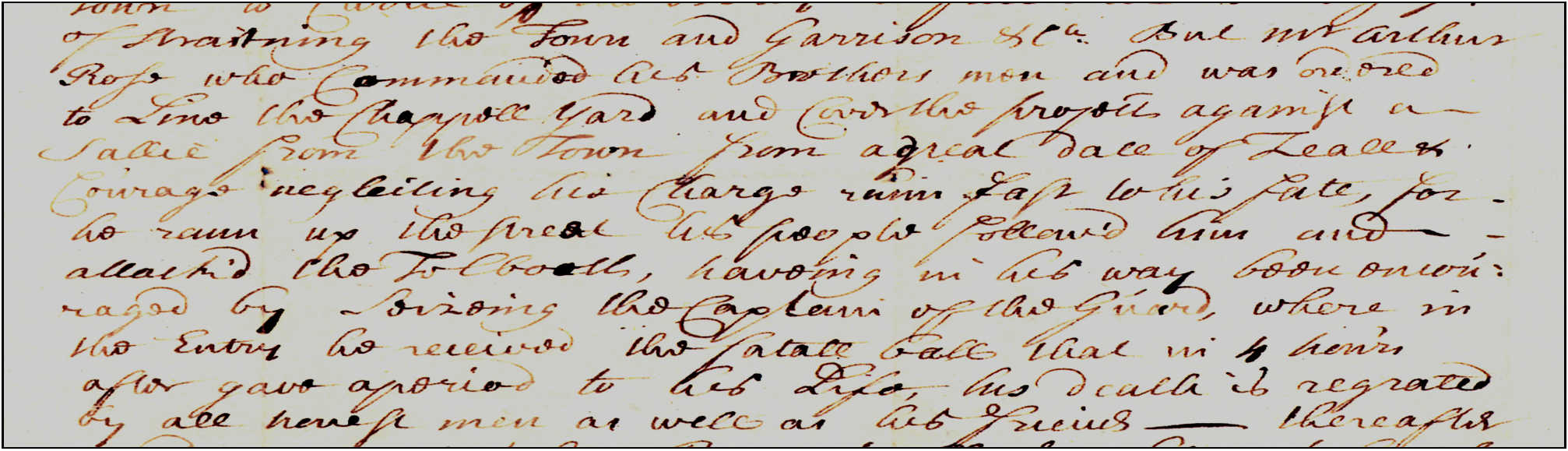
...Mr Arthur Rose who commanded his brother’s men and was ordered to line the Chapelyard and cover the prospects against a sallie from the town from a great deal of zeal and courage neglecting his charge ran fast to his fate, for he ran up the street, his people followed him and attacked the Tolbooth, having in his way been encouraged by seizing the Captain of the Guard, where in the entry he received the fatal ball that in 4 hours after gave a period to his life. His death is regretted by all honest men as well as his friends
The death of Arthur Rose brought about the end of the Jacobite garrison in Inverness. So enraged was Hugh Rose at the loss of his brother that he threatened to reduce Inverness to ashes if the Jacobites didn’t surrender. The garrison surrendered the next day and the Hanoverian supporters took over the town. The 1715 rising dissolved and a potentially perfect opportunity for the Jacobites was lost.
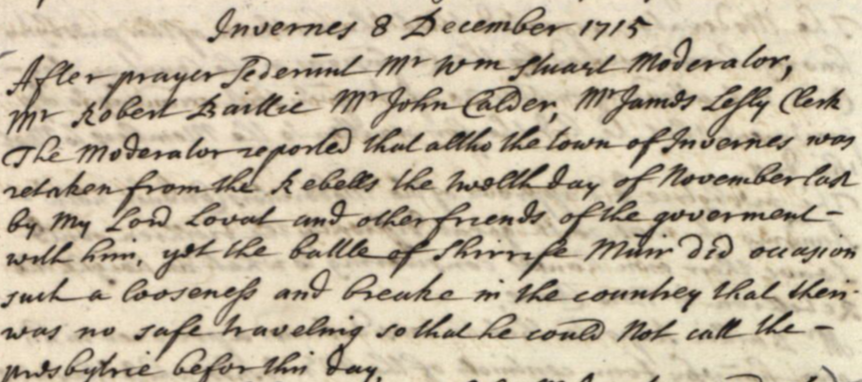
Inverness 8 December 1715...The Moderator reported that although the town of Inverness was retaken from the rebels the twelfth day of November last by my Lord Lovat and other friends of the government with him, yet the battle of Sheriffmuir did occasion such a looseness and break in the country that there was no safe travelling so that he could not call the presbytery before this day