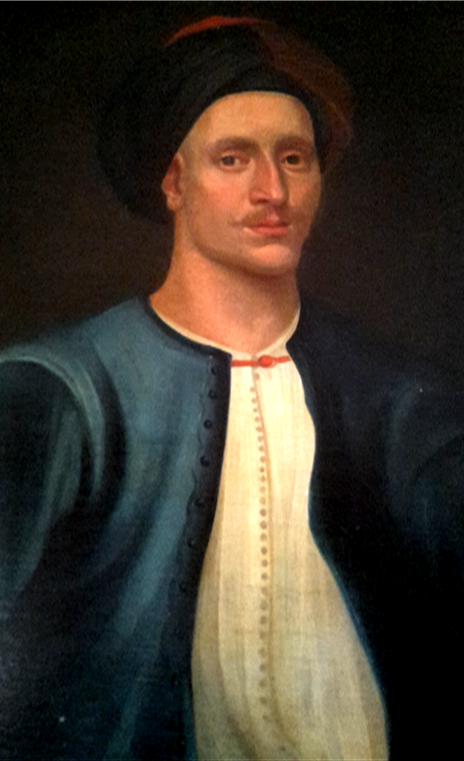



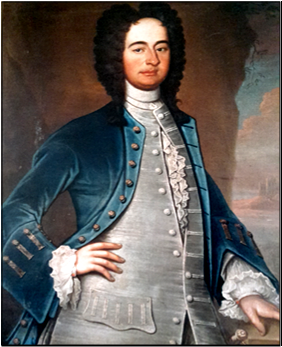
A painted portrait showing an individual standing in formal historical clothing. The person wears a blue coat with elaborate gold-trimmed buttonholes and cuffs, layered over a light-coloured waistcoat decorated with rows of buttons and ruffled fabric. The sleeves end in lace-trimmed cuffs. One arm is bent at the elbow with a hand resting on the hip, while the other arm hangs relaxed at the side. The background features a softly rendered outdoor landscape with muted tones, suggesting distant sky and terrain. The lighting highlights the textures of the garments, especially the rich blue fabric and intricate lace details.

Highlanders of the ‘15 - Hanoverian supporters

Highland Archive Service

Duncan Forbes of Culloden 

Duncan Forbes was born on 10th November 1685.  A second son, he inherited the title on the death of his brother John.  Both brothers were involved in the 1715 uprising, supporting the Hanoverian side.  Duncan Forbes married Mary, daughter of Hugh Rose of Kilravock and, a lawyer to trade, rose to become Lord President of the Court of Session.  A constant supporter of the Hanoverians he nevertheless entreated both sides to act with caution in anticipation of the 1745 uprising and despaired at the cruel treatment of the Highlanders following the Battle of Culloden. He died on 10th December 1747.
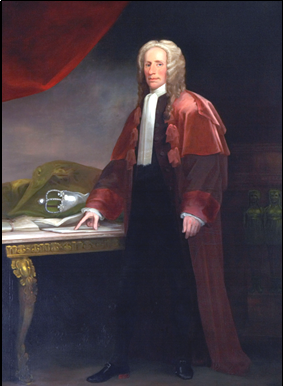
A full‑length painted portrait of an individual standing beside an ornate table. The person is dressed in formal historical attire that includes a long, flowing red robe with wide sleeves, a dark garment underneath, and a prominent white neckcloth. One hand rests on the tabletop, pointing toward an open book or document, while the other arm hangs at the side. The table is covered with a richly textured cloth, and a ceremonial object—possibly a glove or piece of regalia—rests on its surface. The background features deep, dark tones with a large sweep of red fabric draped overhead, creating a dramatic backdrop. The figure stands on a shadowed floor, and several glass bottles or containers are visible in the background to the right.
Duncan Forbes of Culloden

Simon Fraser, Lord Lovat 

Simon Fraser, was born in 1688.  He inherited the title from his brother through a contentious legal process and attempted to secure his claim on the estates through a forced marriage to the Dowager Lady Lovat.  His violent crimes led to his exile to the continent. Despite his Jacobite leanings he supported the Hanoverian side in the ‘15 to regain favour from the government. He gained the support of many Frasers who deserted Mar’s Jacobites to join him.  Famed for changing allegiances for his own gain Fraser sided with the Jacobites in the 1745 uprising and consequently was beheaded on Tower Hill on 9th April 1747.
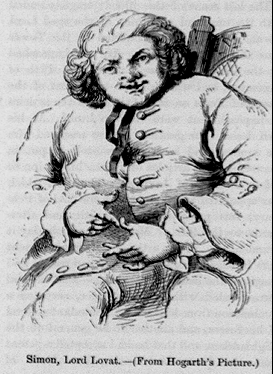
A black‑and‑white illustration showing an individual seated with hands clasped loosely at the waist. The person wears a long, buttoned coat with wide sleeves, decorated cuffs, and textured fabric. The hairstyle is voluminous and curled, drawn with bold ink lines. Behind the figure is a lightly shaded background rendered in cross‑hatching. Below the illustration, printed text reads: “Simon, Lord Lovat. — (From Hogarth’s Picture.)
Simon Fraser, Lord Lovat

Sir Robert Munro 24th Baron & 6th Baronet of Foulis

Born on 24th August 1684, Robert Munro was the eldest son of Sir Robert Munro, 5th Baronet of Foulis and Jean, daughter of John Forbes of Culloden.  Munro’s part in the 1715 uprising led to his appointment as a Commissioner for the survey and disposal of forfeited estates following the rising - a role he occupied from1716-1724.  Sir Robert Munro found military success late in life, leading his regiment to fame at the Battle of Fontenoy and finally dying at the Battle of 
Falkirk, fighting the Jacobites during the rising of 1745/6.
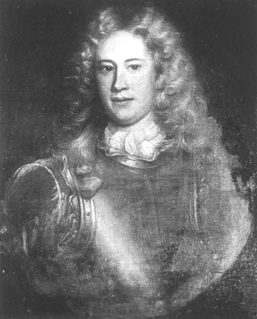
A monochrome painted portrait showing an individual from the chest upward, dressed in historical attire. The person wears a suit of armour with a smooth, rounded breastplate that reflects light, creating bright highlights and deep shadows. A large, voluminous wig with long curled hair frames the head and shoulders. At the neckline is an ornate white cravat tied in a full, gathered style. The background is dark and textured, with soft tonal variations that emphasise the illuminated armour and fabric in the foreground.
Sir Robert Munro, 24th Baron and 6th Baronet of Foulis

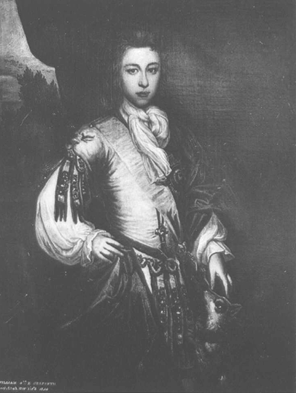
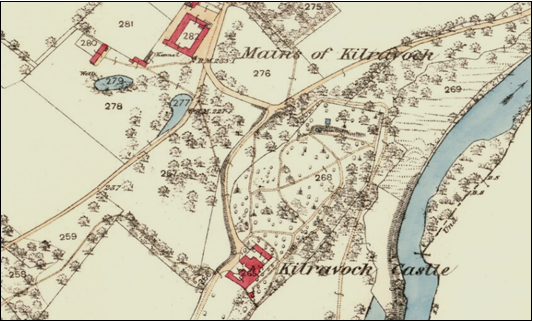
Hugh Rose, 15th Baron of Kilravock 

Hugh Rose was born in January 1663.  A Sheriff Principal for Ross and a member of parliament, 
he was one of the 82 members of parliament who voted against the 1707 Union of Scotland and 
England.  Despite this he supported the Protestant succession and not the Stuarts. During the ‘15 he ensured that Kilravock Castle was a safe haven for Hanoverian supporters and it was one 
of few such places not to be attacked by the Jacobites.  Hugh Rose died at Kilravock in 1732 after five reportedly happy marriages. 
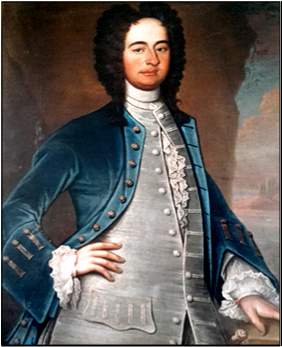
A painted portrait showing an individual standing in formal historical clothing. The person wears a blue coat with elaborate gold-trimmed buttonholes and cuffs, layered over a light-coloured waistcoat decorated with rows of buttons and ruffled fabric. The sleeves end in lace-trimmed cuffs. One arm is bent at the elbow with a hand resting on the hip, while the other arm hangs relaxed at the side. The background features a softly rendered outdoor landscape with muted tones, suggesting distant sky and terrain. The lighting highlights the textures of the garments, especially the rich blue fabric and intricate lace details.
Hugh Rose, 15th Baron of Kilravock