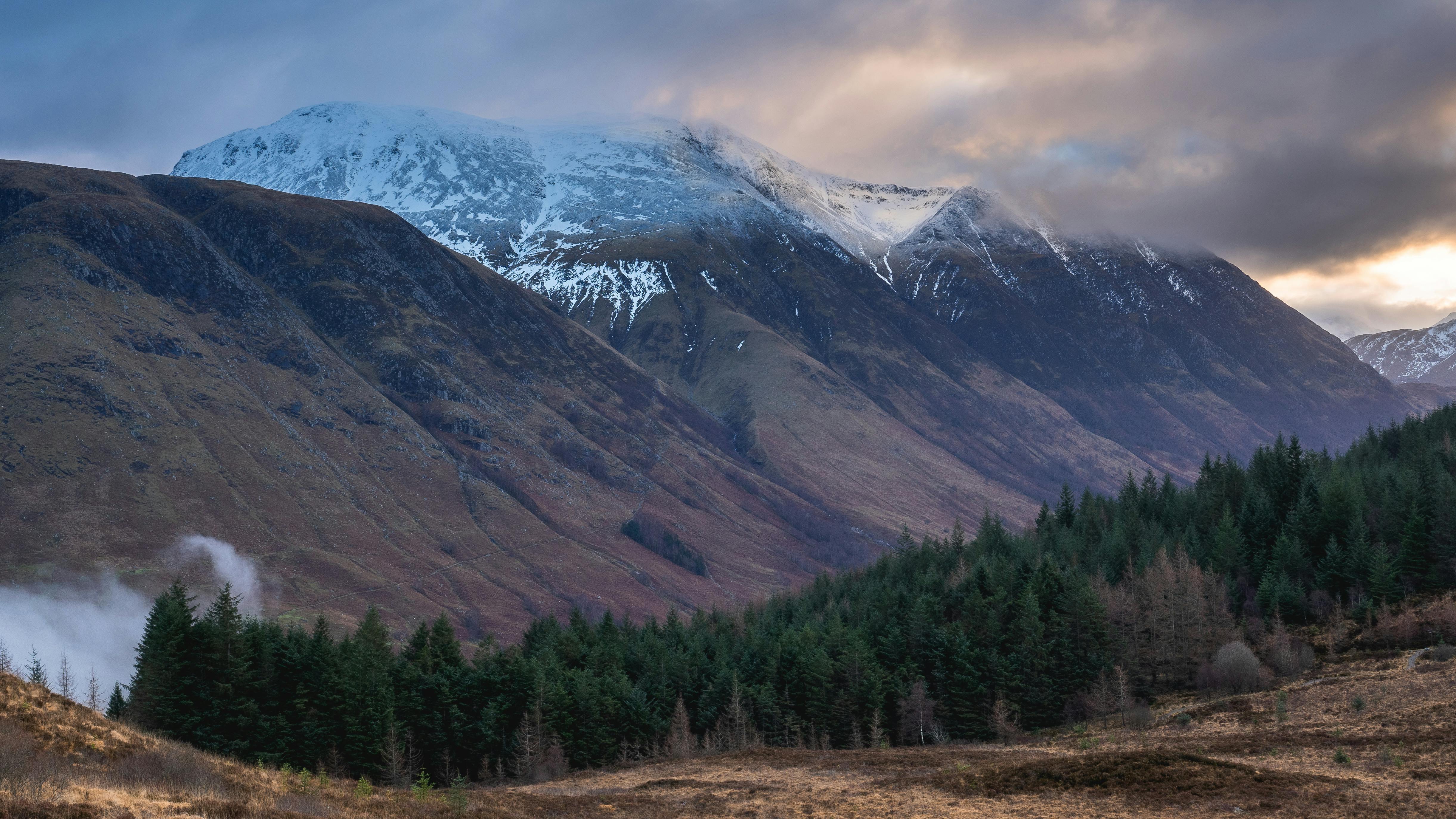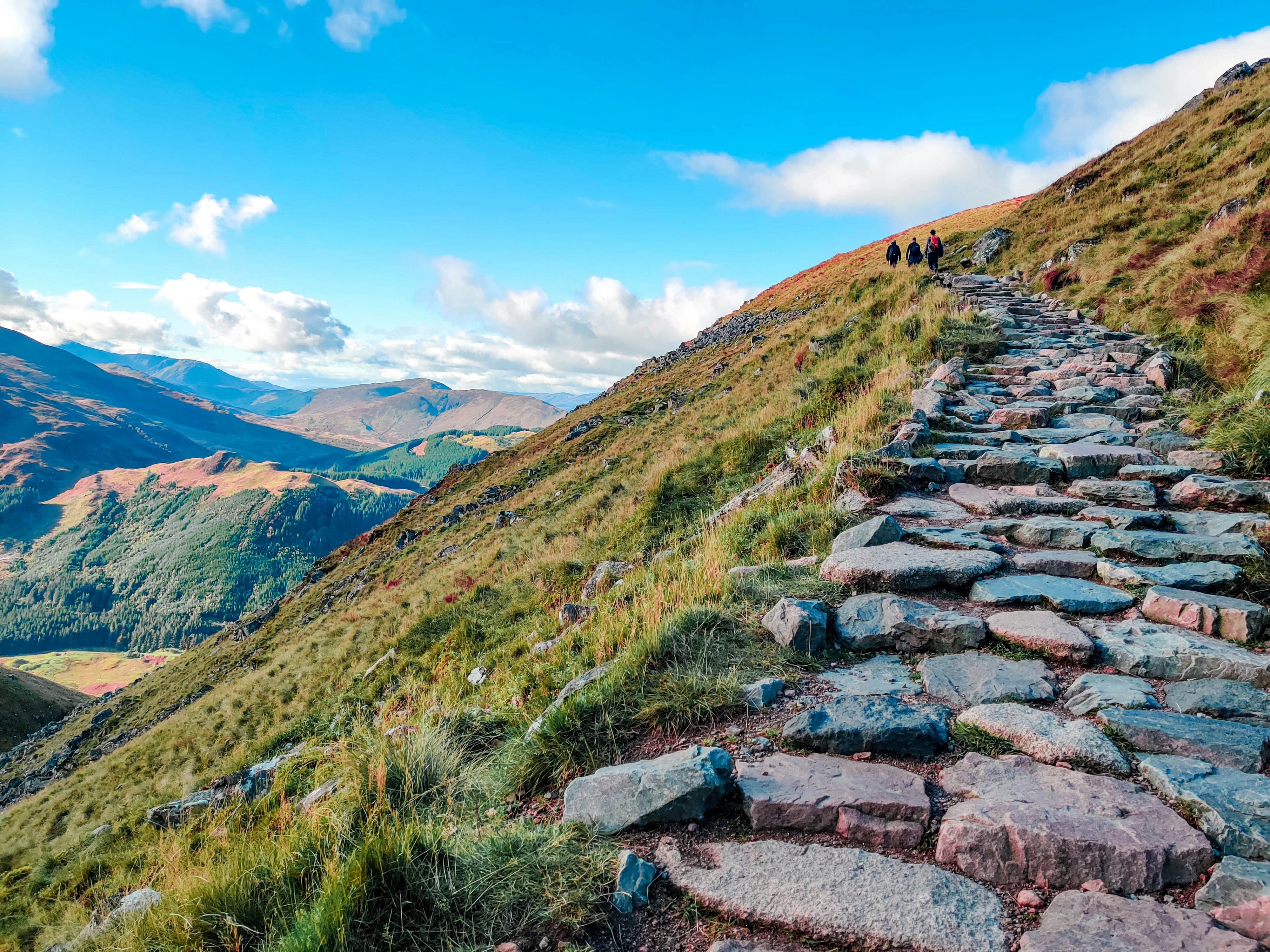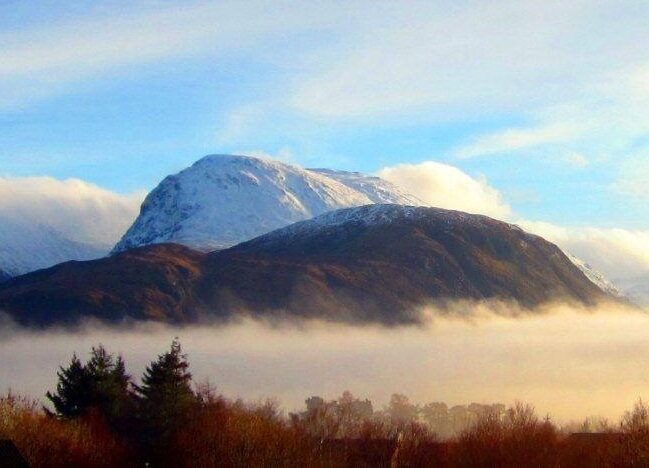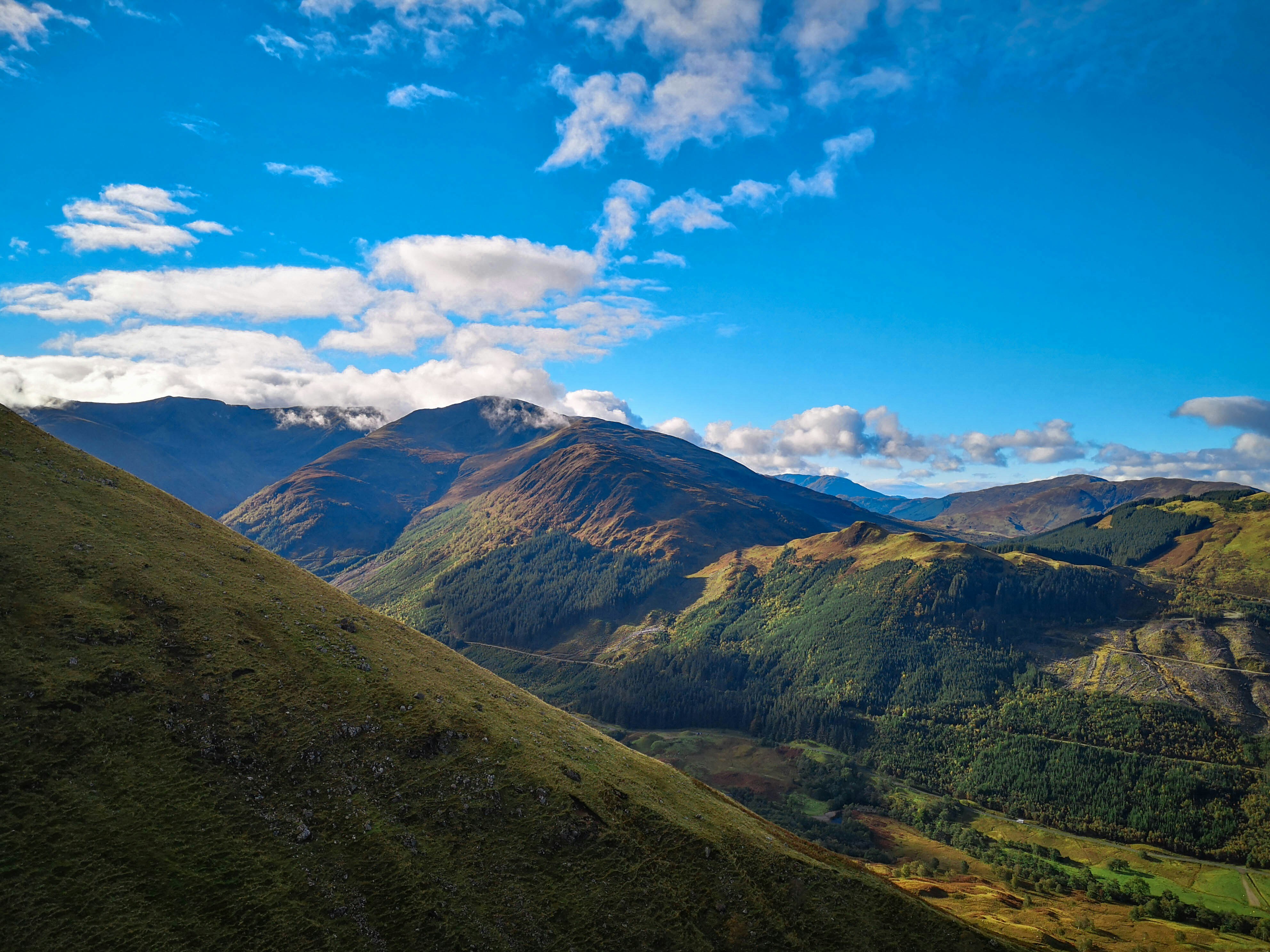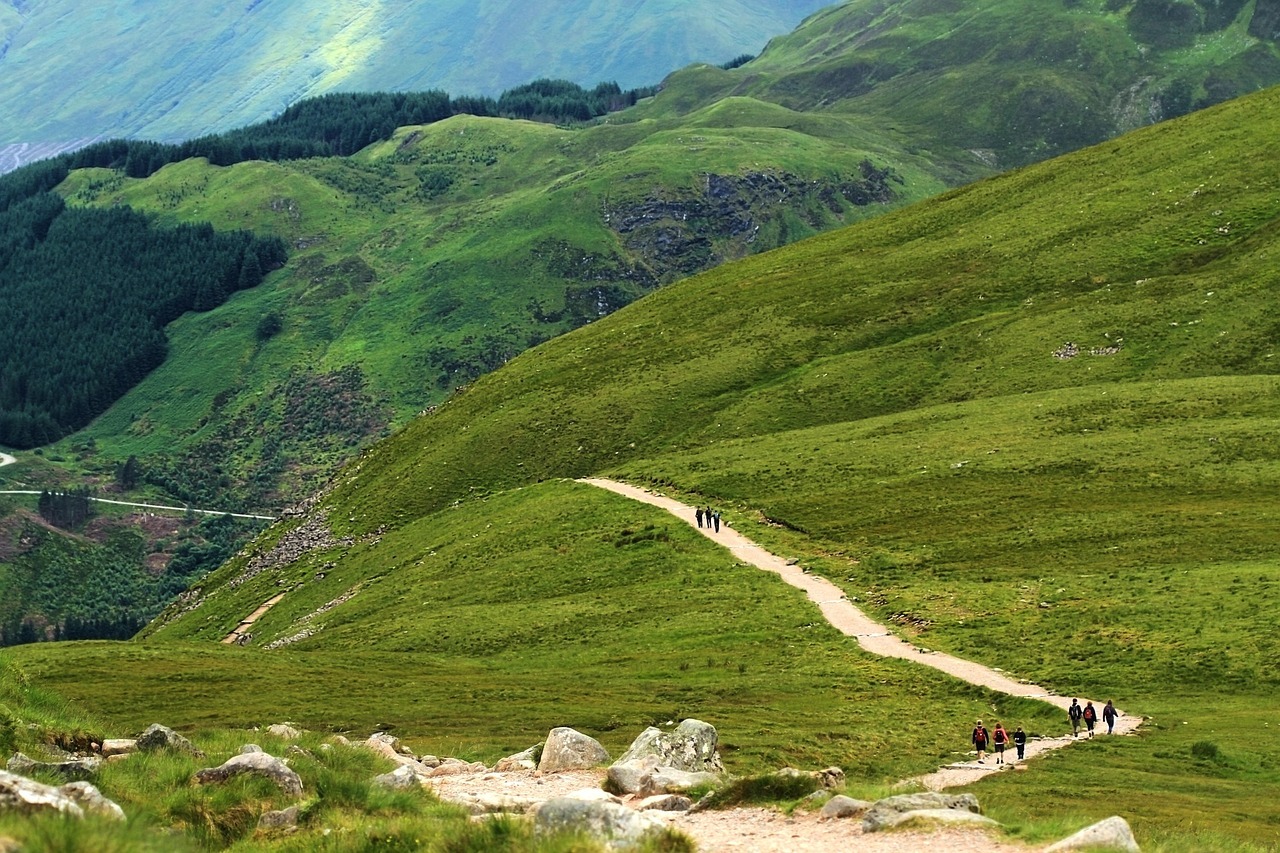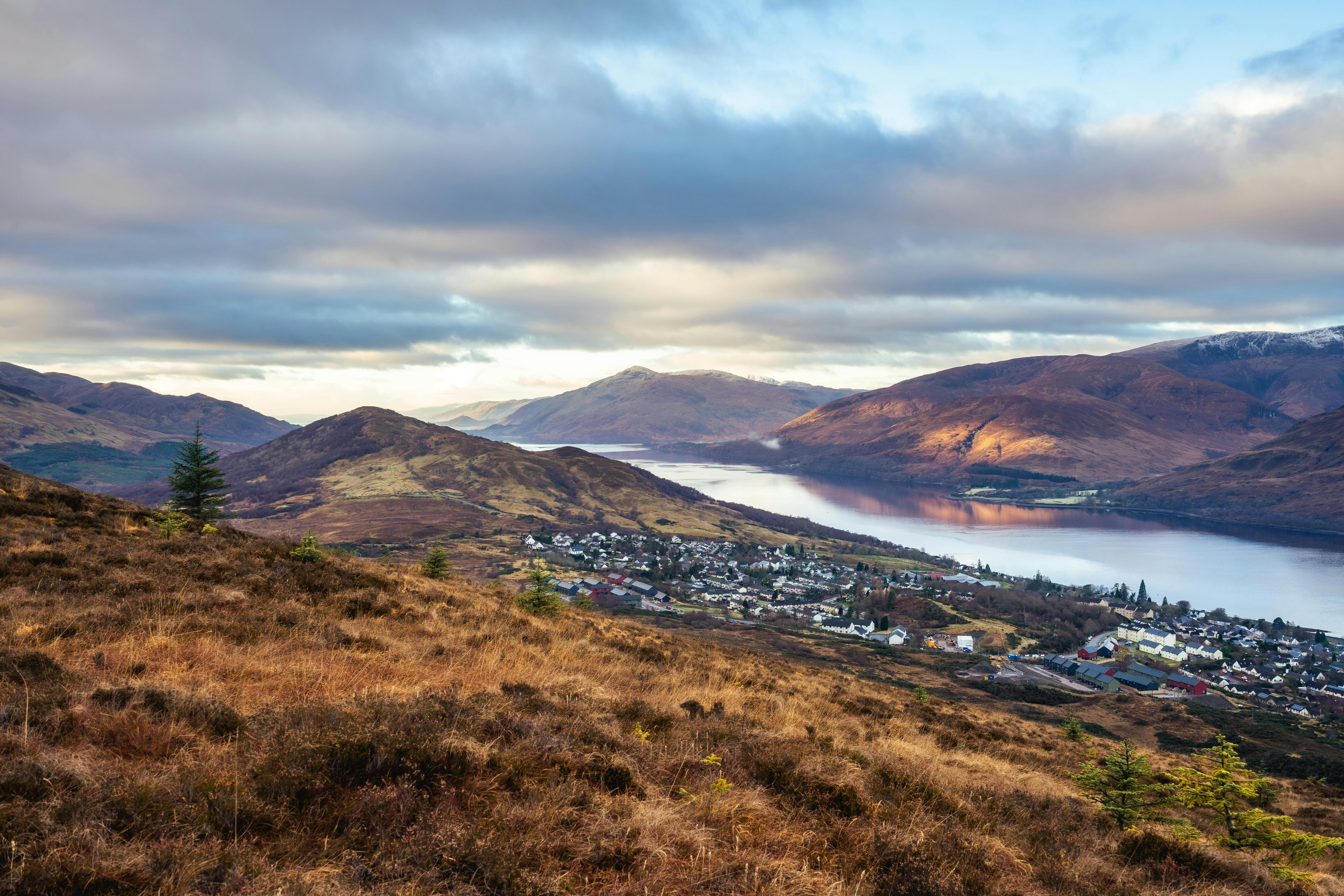








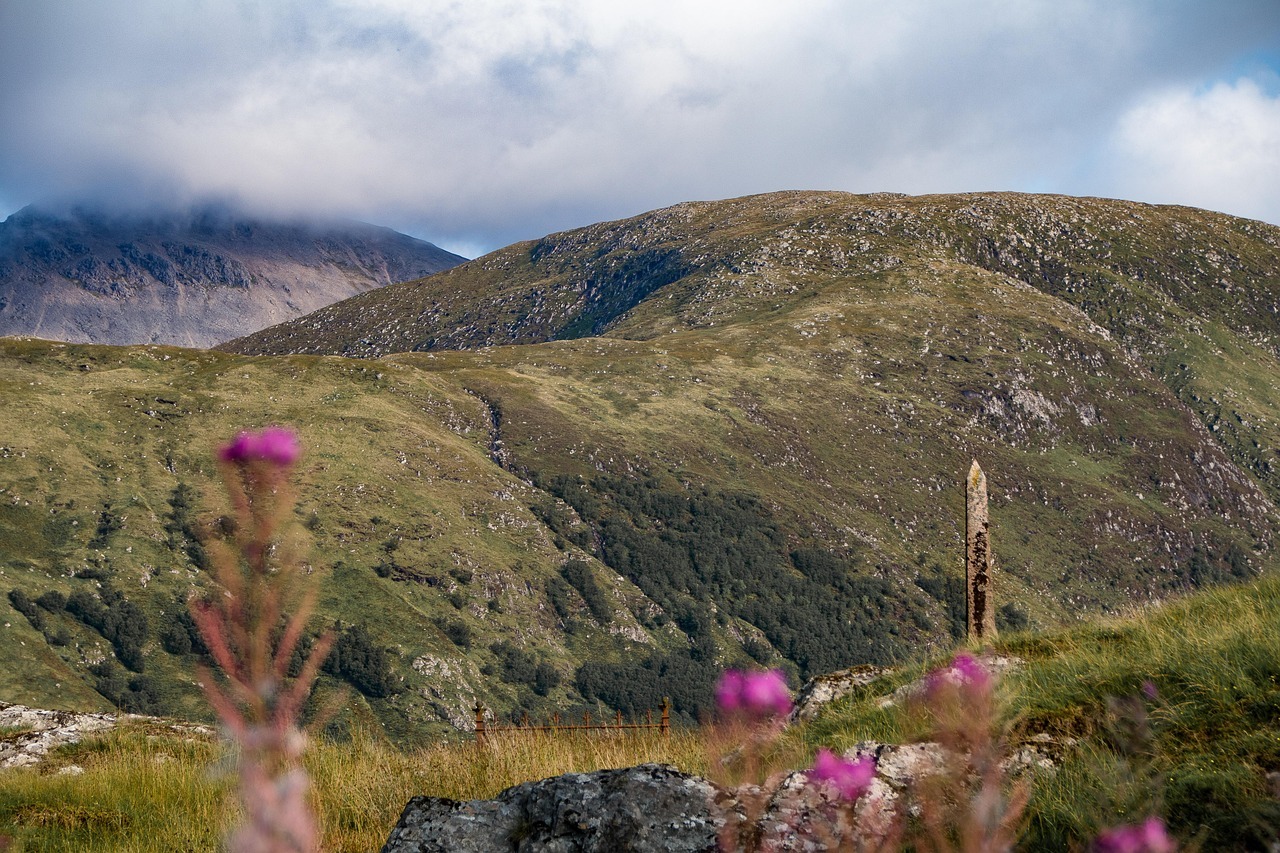
Glen Nevis is not only one of the most beautiful places in the Highlands—it is also a geologist’s paradise. The glen is rich in rock formations, glacial features and dramatic landforms that together tell a story stretching back hundreds of millions of years. A series of key stopping points throughout the glen help explain how ice, oceans, magma and mountain‑building shaped the landscape we see today.
Roaring mill – Scotland’s oldest rocks in the glen
Around 5 km into the glen, steep slabs of metamorphosed sandstone can be seen on the left-hand side of the road. Known locally as the Roaring Mill because of the rushing water nearby, these rocks began as sandy sediments on the edge of an ancient ocean. They were later compressed and altered during the continental collisions that built the Caledonian mountains. At around 700 million years old, they are the oldest rocks in Glen Nevis.
Lower falls – Where rivers carve through ancient dykes
The twin cascades of Lower Falls, around 7.5 km up the glen, formed where the River Nevis exploited two volcanic dykes cutting through the granite of Mullach nan Coirean. These dykes were created when magma forced its way into existing rock fractures after the surrounding granite had cooled and crystallised. The result is a dramatic meeting of water and ancient volcanic activity.
Polldubh crags – Ice‑scraped schist cliffs
On the slopes to the left of the glen lie the Polldubh crags, popular with climbers and striking for their geological history. These crags are made of mica schist, once muddy seafloor sediment that was transformed by immense pressure and heat during mountain building. Later, glacial ice scraped across the rock, leaving polished surfaces and visible grooves. Look closely and you can see the folded textures created during metamorphism.
Rock sheep (roches moutonnées) – The work of passing glaciers
Further along the glen you’ll see several classic roches moutonnées, known locally as “rock sheep.” These rounded outcrops were shaped as glaciers moved over them, creating a smooth upstream slope where ice pushed across the surface and a steeper, plucked face where blocks of rock were torn away. They are some of the clearest glacial features in the area.
The waterslide – A window into a magma chamber
At the end of the Glen Nevis road, look left to see the impressive waterslide, where water rushes more than 350 m down wide granite slabs on the southern flanks of Ben Nevis. A careful short climb of around 60 m reveals a remarkable boundary:
- the pool lip is made of schist,
- while the slabs above it are formed from the inner granite of Ben Nevis.
This marks the ancient edge of the Ben Nevis magma chamber—a rare chance to see such a geological boundary exposed at the surface.
An Steall falls and the hanging valley
A short walk from the upper car park leads through a dramatic gorge and suddenly opens into a wide natural amphitheatre. Here you’ll find An Steall, a spectacular waterfall plunging 120 m (390 ft) in a single drop, making it Scotland’s second‑highest waterfall. The falls spill from Coire a’ Mhail, a superb example of a glacial hanging valley—a smaller side valley carved less deeply than the main glen during the Ice Age.
More to discover
Beyond these well‑known features, Glen Nevis is full of geological surprises:
- the large glacial erratic known as the Wishing Stone
- the pale summit of Stob Bàn (“white peak”), whose schist gleams like snow in certain light
- boulder fields, glacial moraines and ancient rock contacts hidden in the landscape
A whole world of geological history is waiting to be found—just keep your eyes open as you explore.