





Perhaps the most durable physical legacy of the 1872 Act is the abundance of school buildings it produced. Buildings which changed the built environment of Scotland, and which are still readily identifiable to this day.
Compulsory education vastly increased the numbers of pupils attending school, creating an urgent need for both the expansion of extant schools and the creation of thousands of new schools and schoolhouses to accommodate teachers.
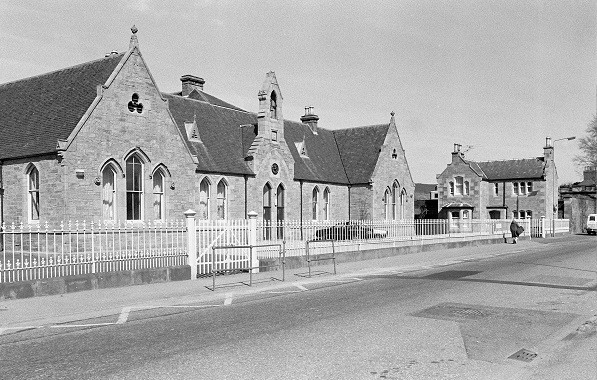
Merkinch Primary School, 1986. Photo credit The Highland Council Planning Dept.
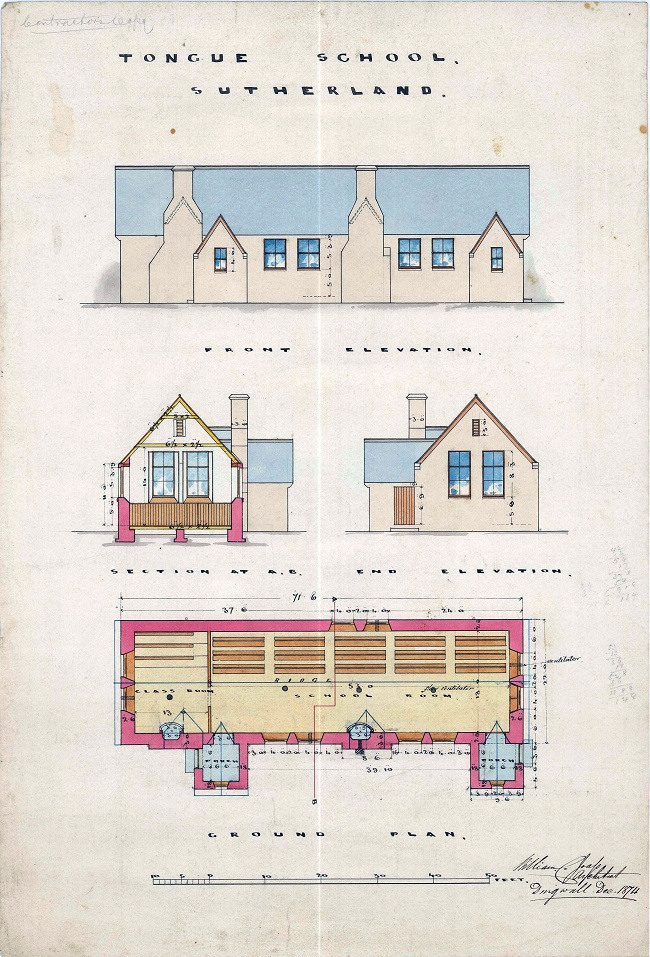
Architectural drawing of Tongue School, Sutherland by Dingwall architect William C. Joass. 1874
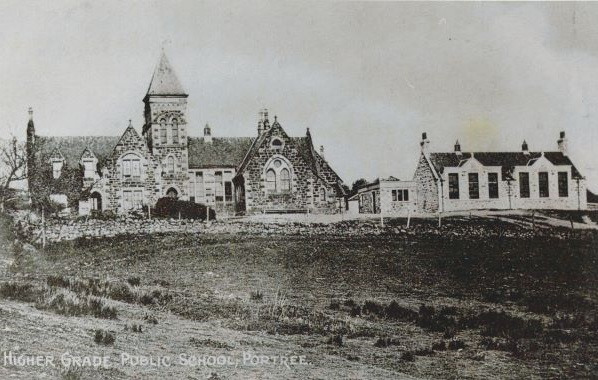
The original Portree High School with teachers accommodation
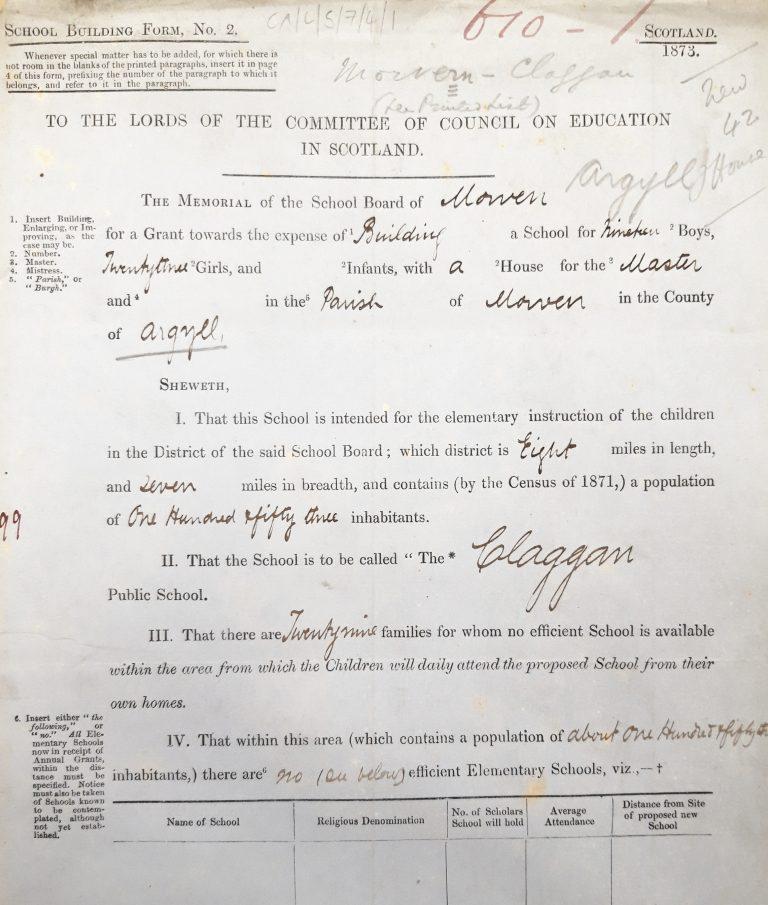
Application to build Claggan Public School 1873
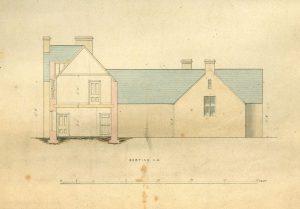
Architectural drawing of Plockton High School
In the Highlands, one of the names most synonymous with this frenzy of design and construction is Alexander Ross who came to be known as ‘The Christopher Wren of the Highlands’ because of his outstanding architectural achievements.
At an early age, Ross came to Inverness with his father, who was also an architect. They lived in Church Street, where his father had his business office and Alexander attended Dr Bell’s Institution in Farraline Park. When Ross was 19, his father died, and at the age of 20, he became an architect in the family business.
Over the following decades Ross became factor to the MP for Ardross, Sir Alexander Matheson, who had bought the Muirtown Estates and became responsible for the development of the area between Muirtown and St. Andrew’s Cathedral, as well as the building of Union Street.
In 1881 he became a member of Inverness Town Council, and from 1889-1895 he held the position of Provost.
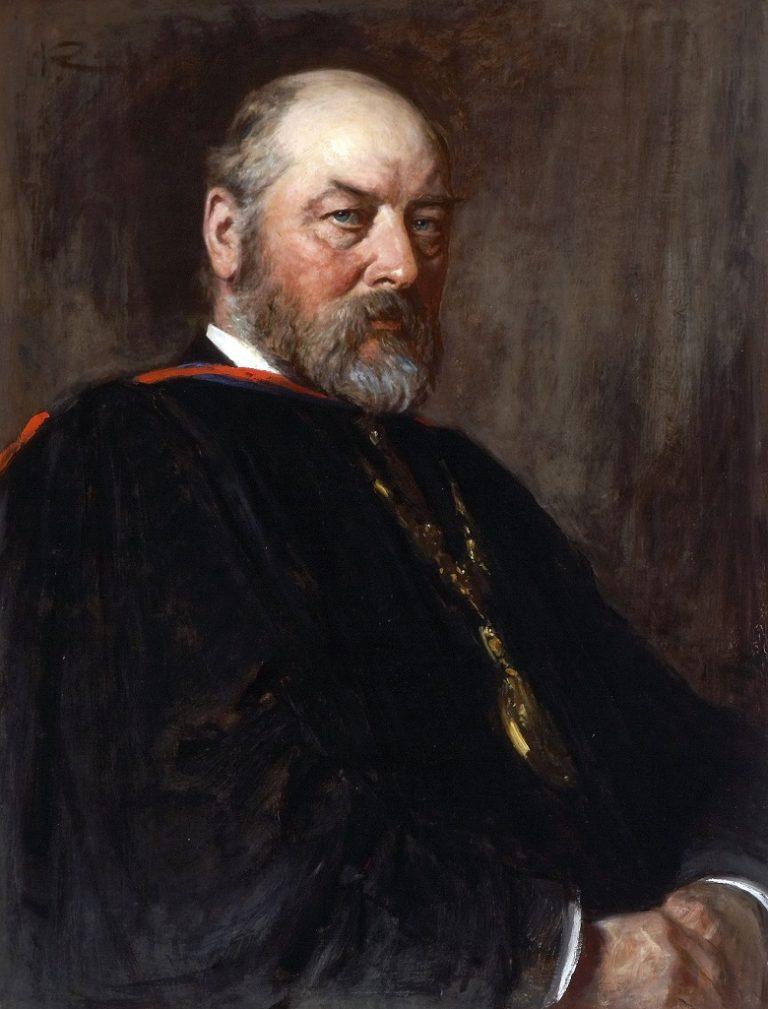
Dr Ross was responsible for the design of various cinemas, houses, castles, and churches throughout the Highlands including St Andrew’s Episcopal Cathedral. In addition, it has been claimed that he was responsible for the erection of around 450 schools following the Education Act – from the Hebrides to Moray and everywhere in between. Dr Alexander Ross died in 1925, leaving behind an extraordinary legacy. More information about his career and his impact on the built heritage of the Highlands can be found here.