



Early Days: 1825 – 1835
Inverness Museum started life as part of the ‘Northern Institution for the Promotion of Science and Literature’ in 1825. Its first premises were in Inglis street, Inverness. The founder was a young Inverness solicitor called George Anderson. The first curator was Robert Naughten, Inverness jeweller and silversmith, whose work now features in the collection.
Early contribution to the collections included a pair of Bishop's gloves found in a Crypt at Fortrose and a medallion of Prince Charles for 1745, as well as the more unusual – including the skin of a boa constrictor 24 feet long! In 1835, Hugh Miller, writer and geologist from Cromarty presented “a beautiful and extensive collection of rocks, minerals and fossils from the neighbourhood of Cromarty”.
The Institution held its final meeting in 1835. Over the next 40 years, the museum collections moved, firstly to the Inverness Royal Academy, the the Mechancis Institute, and then the Town Hall.
Inverness Museum : 1876 – 1960
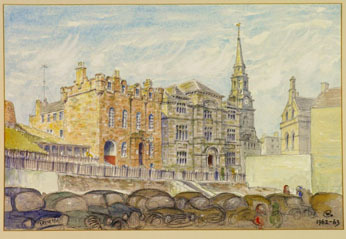
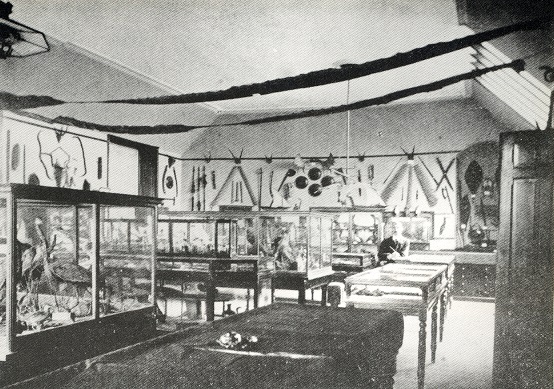
In 1876 The Inverness Scientific Society and Field Club took responsibility for the surviving museum collections. The collections were by this time in a rather sad state and were in need of a permanent home. Land in Castle Wynd, then called Exchange Place, was donated by the Town Council and money was raised by public subscription for a new building. Contributors included Joseph Mitchell (of Highland Railway fame) and Queen Victoria (who donated £50, approx. the equivalent of £6,600 today). Local architect, Alexander Ross, was commissioned to design the building, which was completed in 1881.
The Inverness Fine Arts Exhibition opened in October of that year. It was so popular that it remained open until December, receiving 7000 visitors. The building was opened on a permanent basis in 1882 and housed the art school and library as well as the museum.
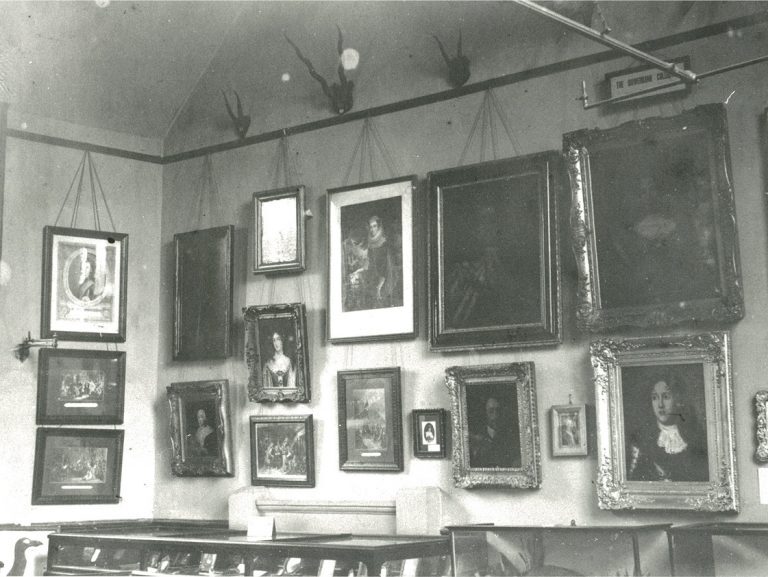
In 1905, the museum hosted a Highland & Jacobite Exhibition with almost 1500 items lent by families from all over Scotland. Interestingly, the list includes ‘Isabella Fraser’s Tartan Wedding Dress & Plaid’ which can usually be found in the upstairs gallery at the museum today!
Thomas Wallace became curator in 1907 and he was appointed to run the museum as a Highland and Jacobite collection.
1960s to present
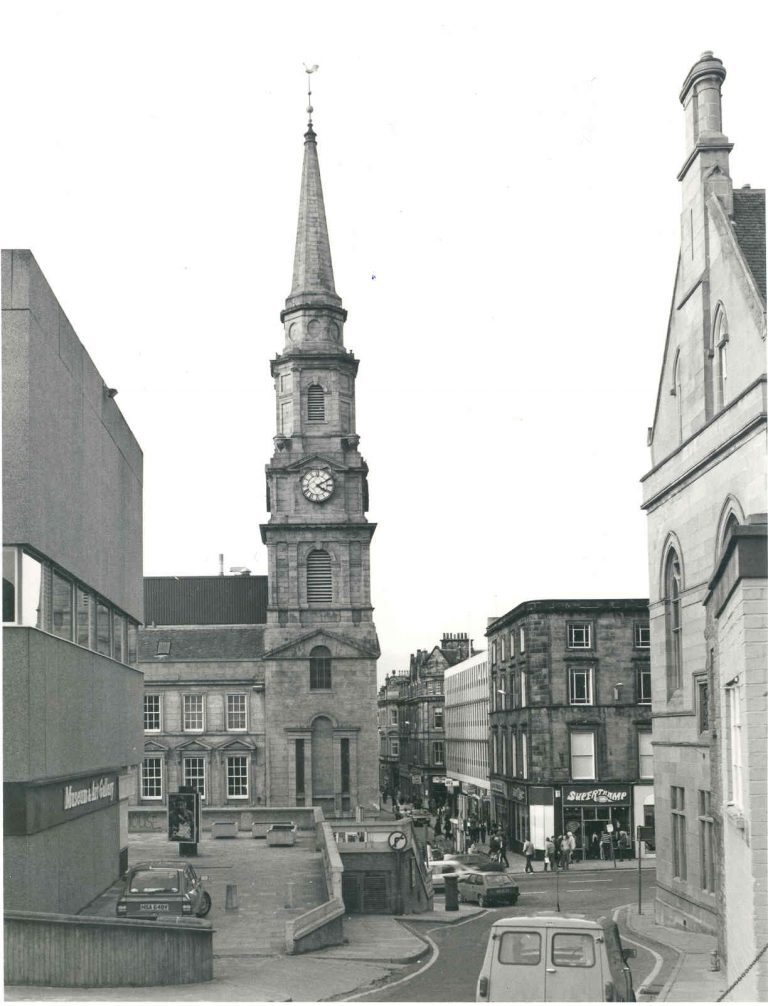
The Castle Wynd and Bridge Street area was cleared for re-development in 1963, and the current complex was built. The museum was housed, along with the town’s library, in a Modernist building of concrete and glass.
Between 1963 and the present day, there have been two major redevelopments to improve the museum. The first, in 1982, incorporated a café, new permanent galleries for the collection and new art galleries for temporary exhibitions. The second refurbishment, in 2007, was completed to coincide with the Year of Highland Culture.