







Introduction
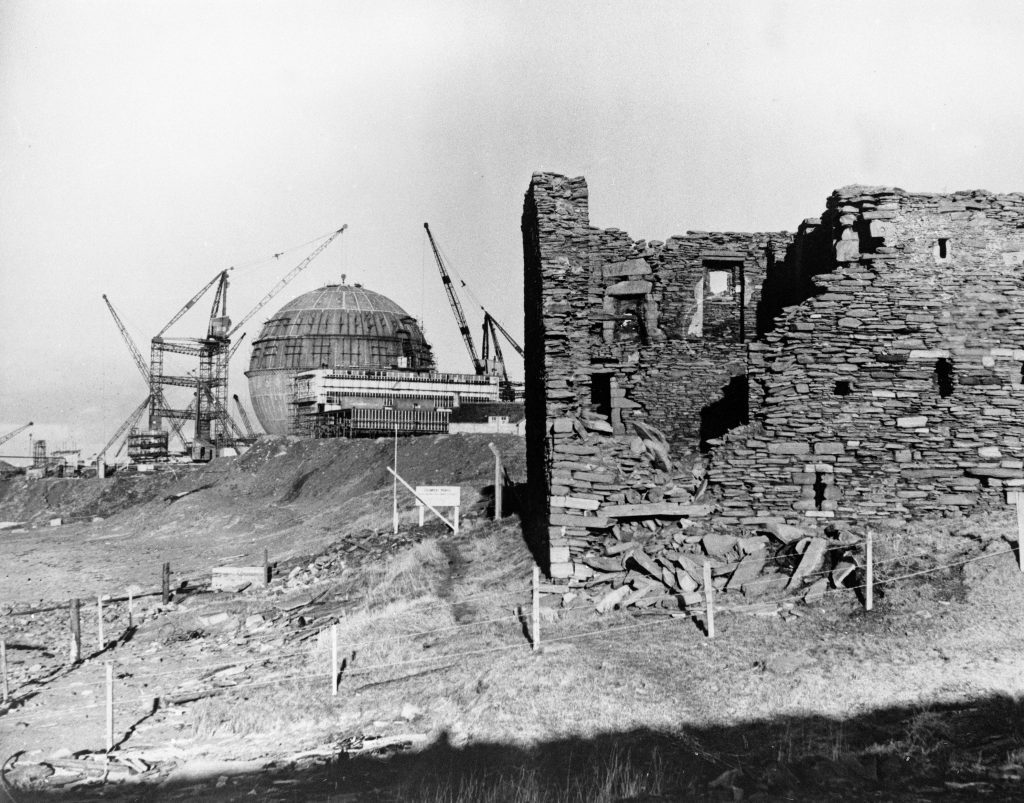
In 1954, Dounreay in Caithness, on the north coast of mainland Scotland, was chosen as the site for a new type of nuclear reactor. The aim of the project was to assess the effectiveness of fast breeder reactors in generating power for electricity. It was a huge undertaking that would require a sizeable labour force to be imported into the sparsely populated county.
The decision to site the project in Caithness was a great boon for the area. As a county that relied on farming and fishing for its employment, modernisation meant jobs had become scarce. Stephen Cashmore explains that:
‘Caithness had long been exporting its finest product- people. Dounreay, it was hoped, was about to change all that. It did that and more, bringing back homesick exiles and introducing a new breed of Caithness resident- the “Atomics”.’[1]
The building of ‘atomic’ housing was vital to the fast breeder reactor programme at Dounreay. Without the allure of modern, attractive houses at reasonable rents, drawing skilled workers to the far north would have been near impossible, given the perception of the area as bleak and remote.
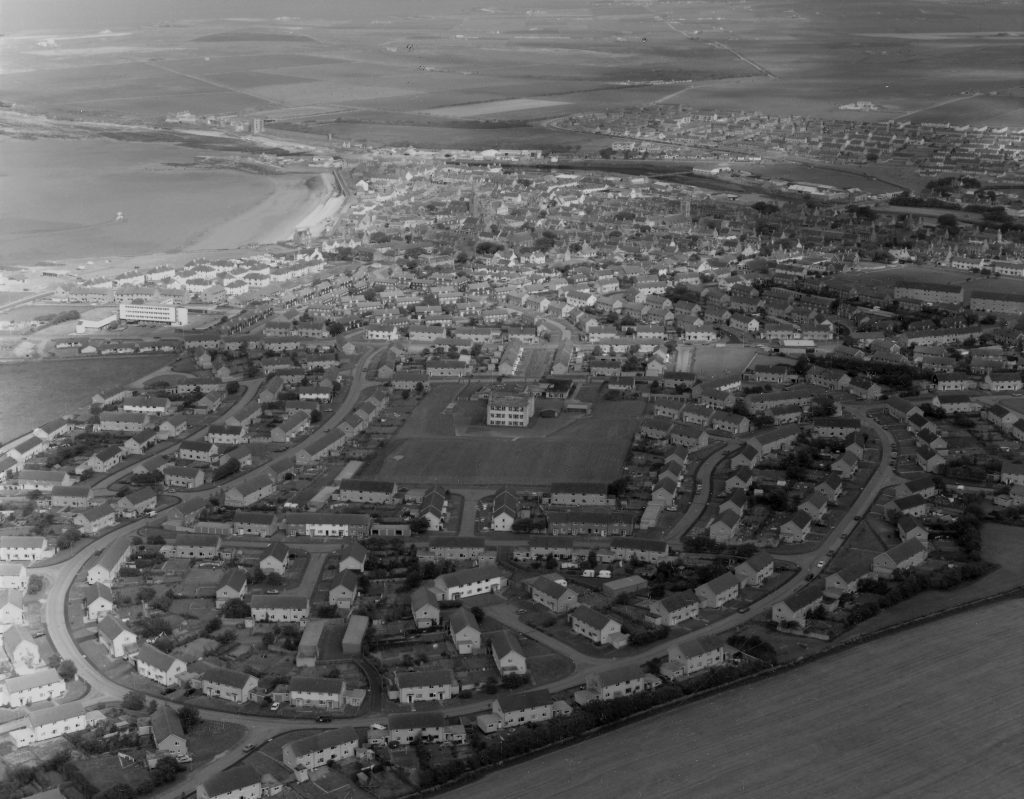
Throughout this exhibition we’ll be showcasing high resolution photographs from the air, ground and inside of some of the houses themselves, exploring wonderfully detailed architectural plans, displaying the Dounreay Householders Handbook in its entirety and hearing the recollections of those who lived and worked in Thurso in excerpts from the Dounreay Oral History series.
There is much to see and hear so please take your time, browse at your leisure and explore the fascinating history of the ‘atomic’ houses.
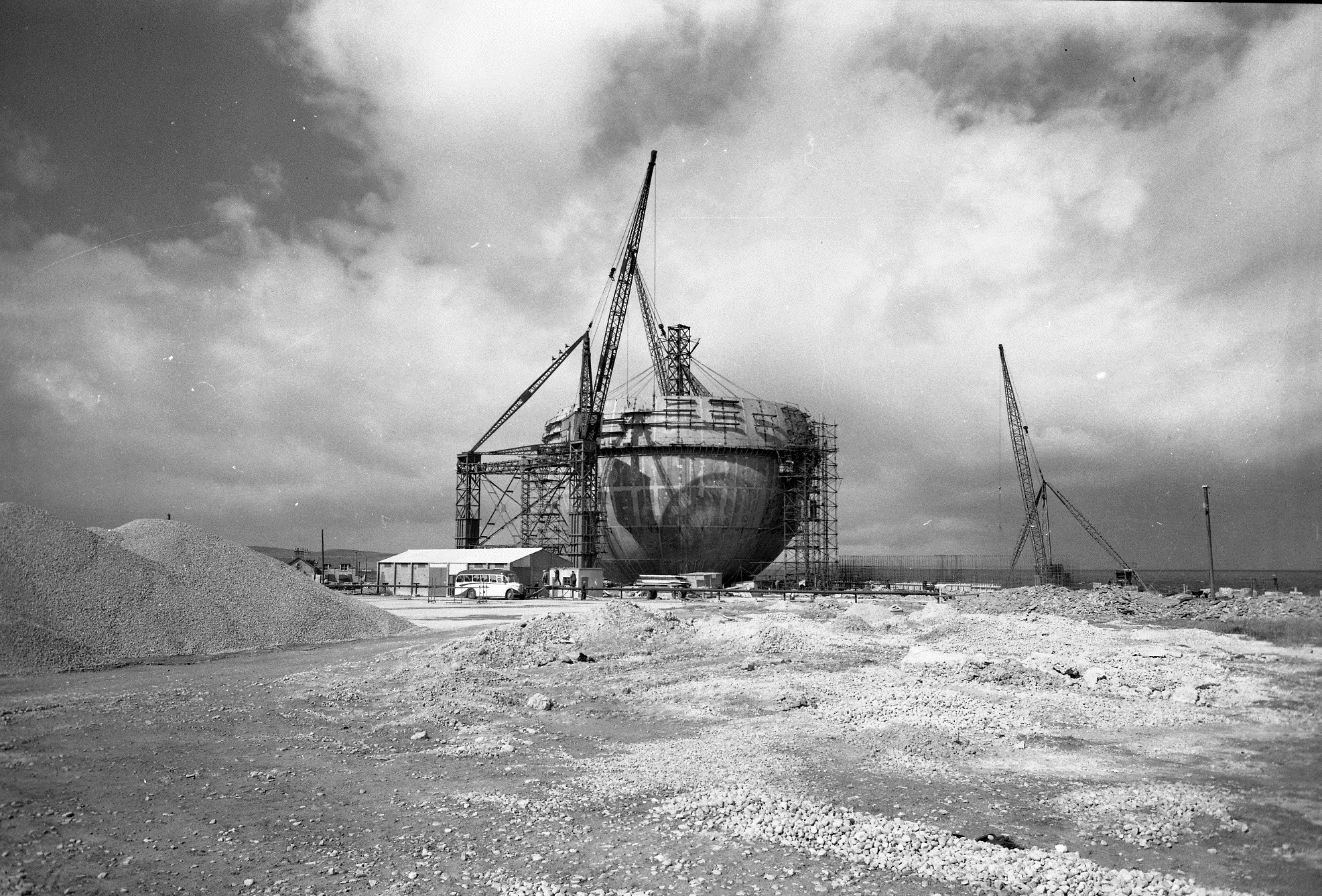
First impressions
Explore atomic housing in Caithness through images, oral histories and stories from Dounreay workers
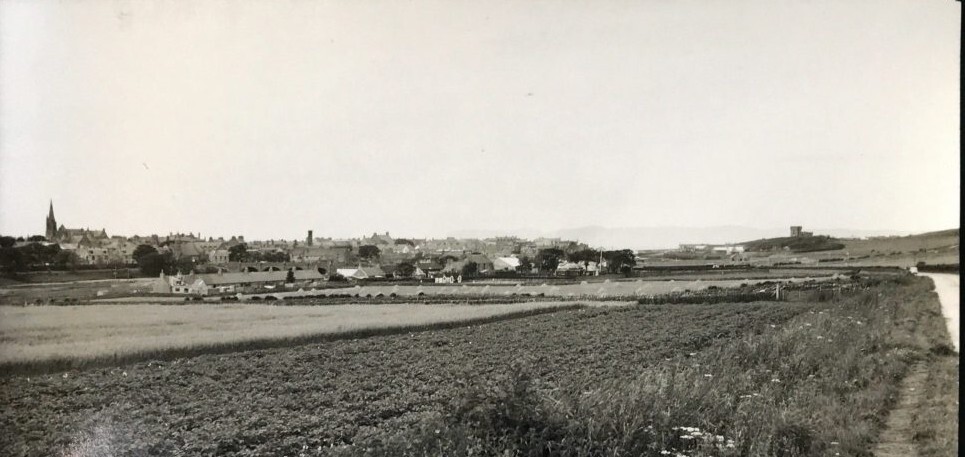
Thurso pre construction
Discover Dounreay householders handbook with advice, local services and daily life in atomic homes
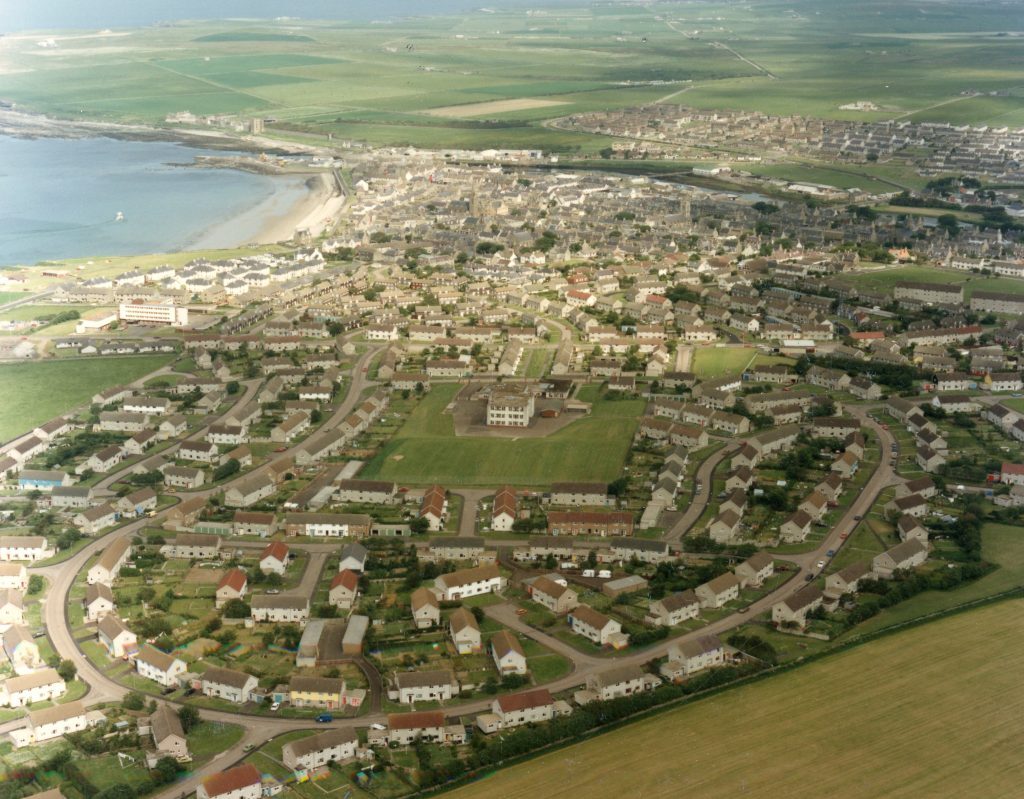
Thurso post construction
Explore memories, records and stories that reveal daily life and community in Dounreay housing
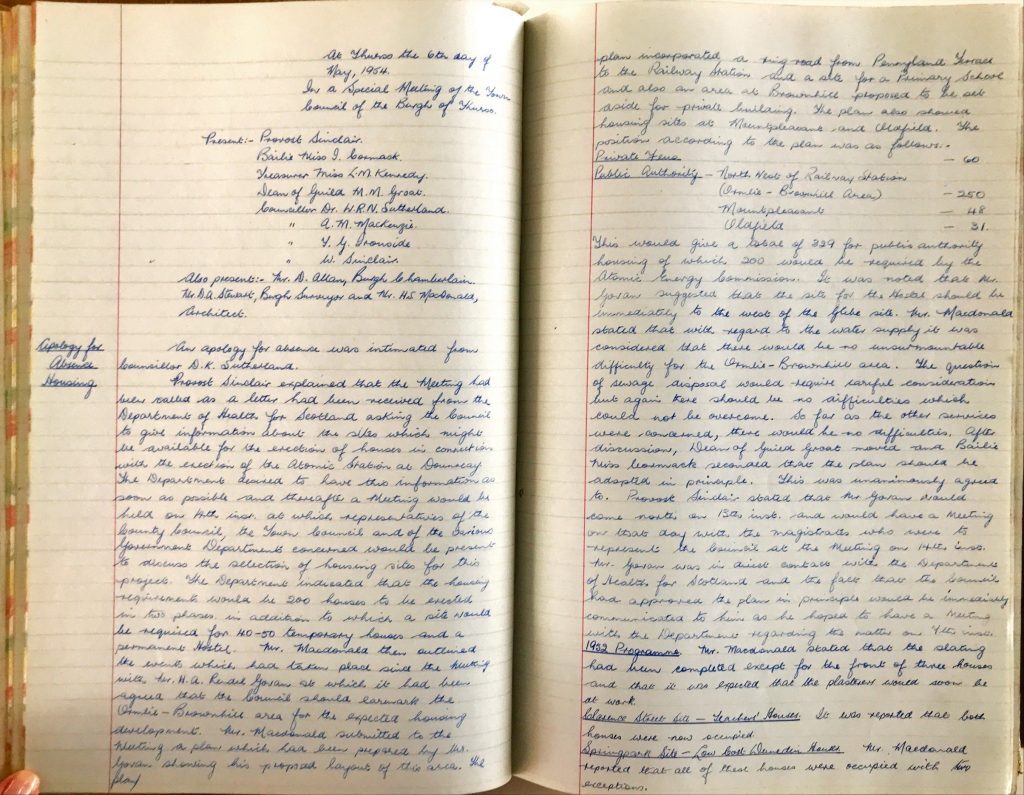
Burgh of Thurso Minutes 6th May 1954
Explore Thurso council minutes showing early support for UKAEA housing plans in Caithness
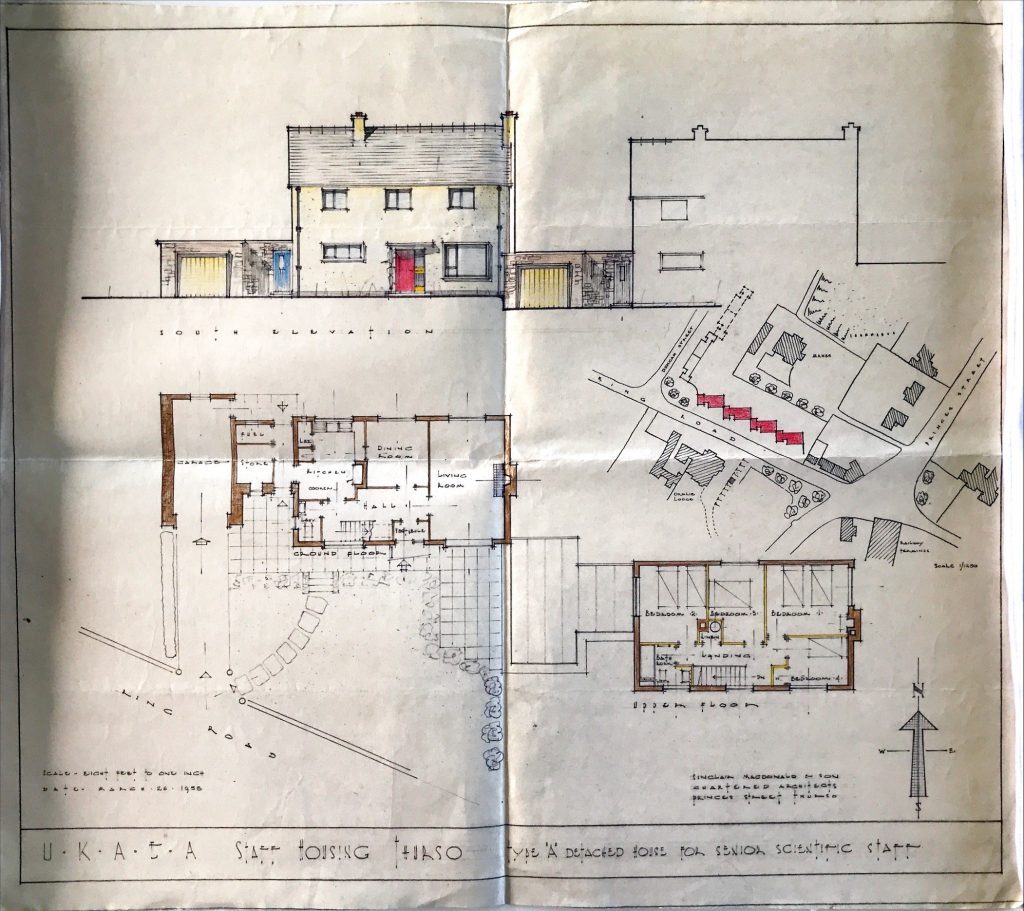
Architectural plans - Sinclair Macdonald & Son
Explore architectural plans and design for Dounreay atomic housing by Sinclair Macdonald & Son
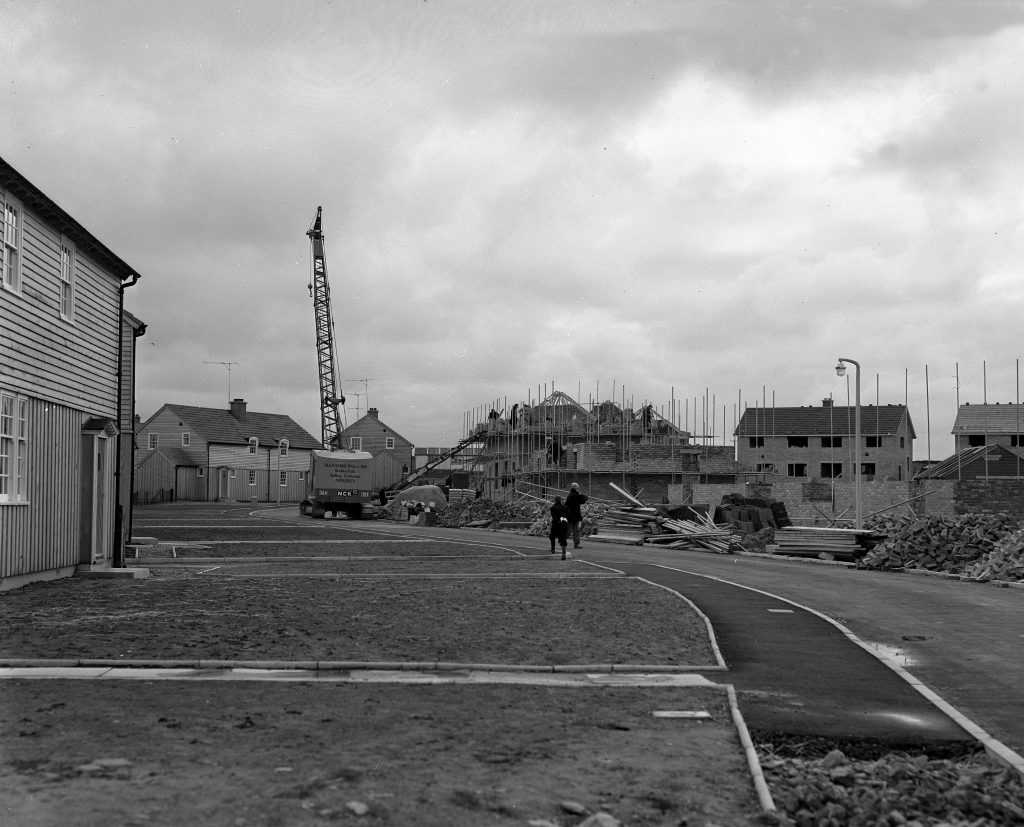
Building works - construction begins
Learn how Dounreay housing construction began, with rapid building of homes for workers in Caithness
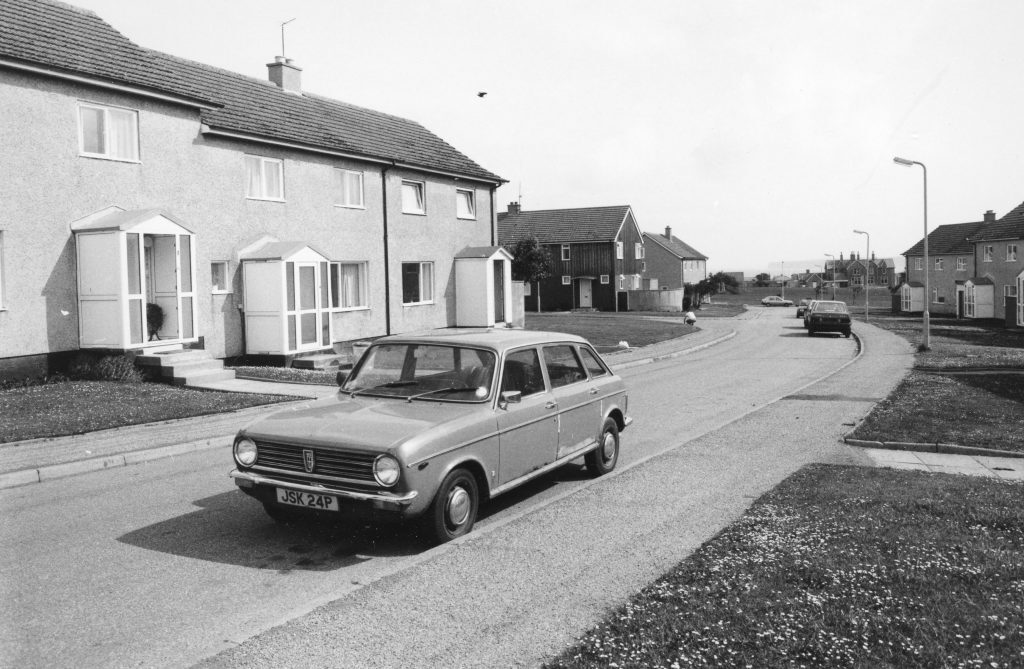
Exterior photographs
Explore expansion of Dounreay housing, with new estates, services and community growth in Caithness
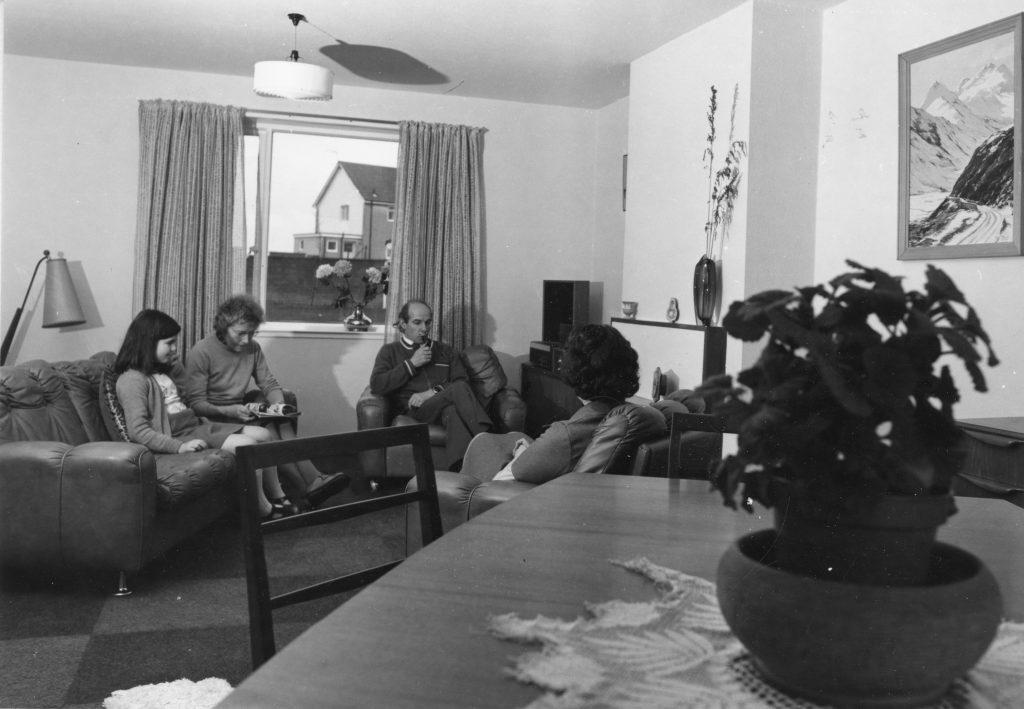
Interior photographs
Explore interior photos of Dounreay homes showing living spaces and daily life in new housing estates

Dounreay Householders Handbook
Explore photos and accounts showing life in Dounreay housing, from interiors to community spaces
Dounreay's legacy
Explore later years of Dounreay housing, with changes to homes, communities and daily life