






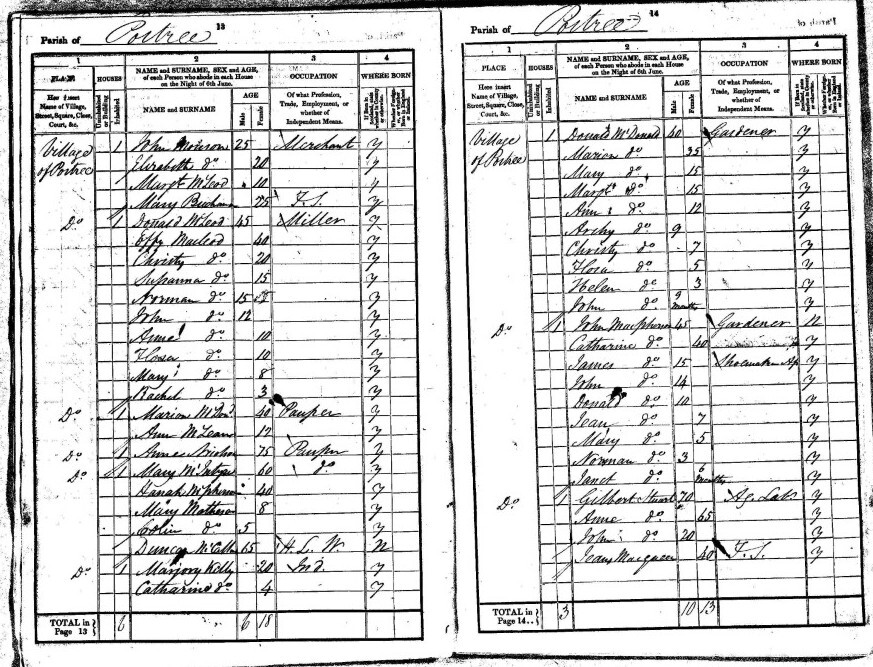
The census records information on the country's population and has been taken every ten years since 1801, with the exception of 1941. The returns of most use to the family historian are those from 1841 onwards.
Date and location coverage
All four of our archive centres hold census records on microfilm for the 1841-1901 censuses. The 1911 and 1921 censuses for Scotland are exclusively available at ScotlandsPeople. Some earlier census have survived for certain parishes, for example the parish of Moy & Dalarossie for 1821 and 1831.
What can these records be used for?
The census is essentially a snapshot of the people in a household on a given night and as such can provide details of a particular family and anyone else who happens to be in the house at the time, for example, servants, lodgers, or visitors. Census records can be used, not only to further your search for direct ancestors, but also to broaden your knowledge of the wider family and to bridge the gap between statutory and OPR records. They can also give an indication of how the family lived. Geographic mobility can be tracked through the given birthplaces, and social mobility through addresses and occupations. plus ages, occupations, marital status, and place of birth. Later ones (from 1881 onwards) ask if the person could speak Gaelic.
Access and restrictions
All the census returns from 1841-1921 can be viewed. There is a 100 years restriction on more recent census returns.
Copies and photography
Copies are possible (charges may apply). It is not possible to take photographs of the documents when on screen.
What next?
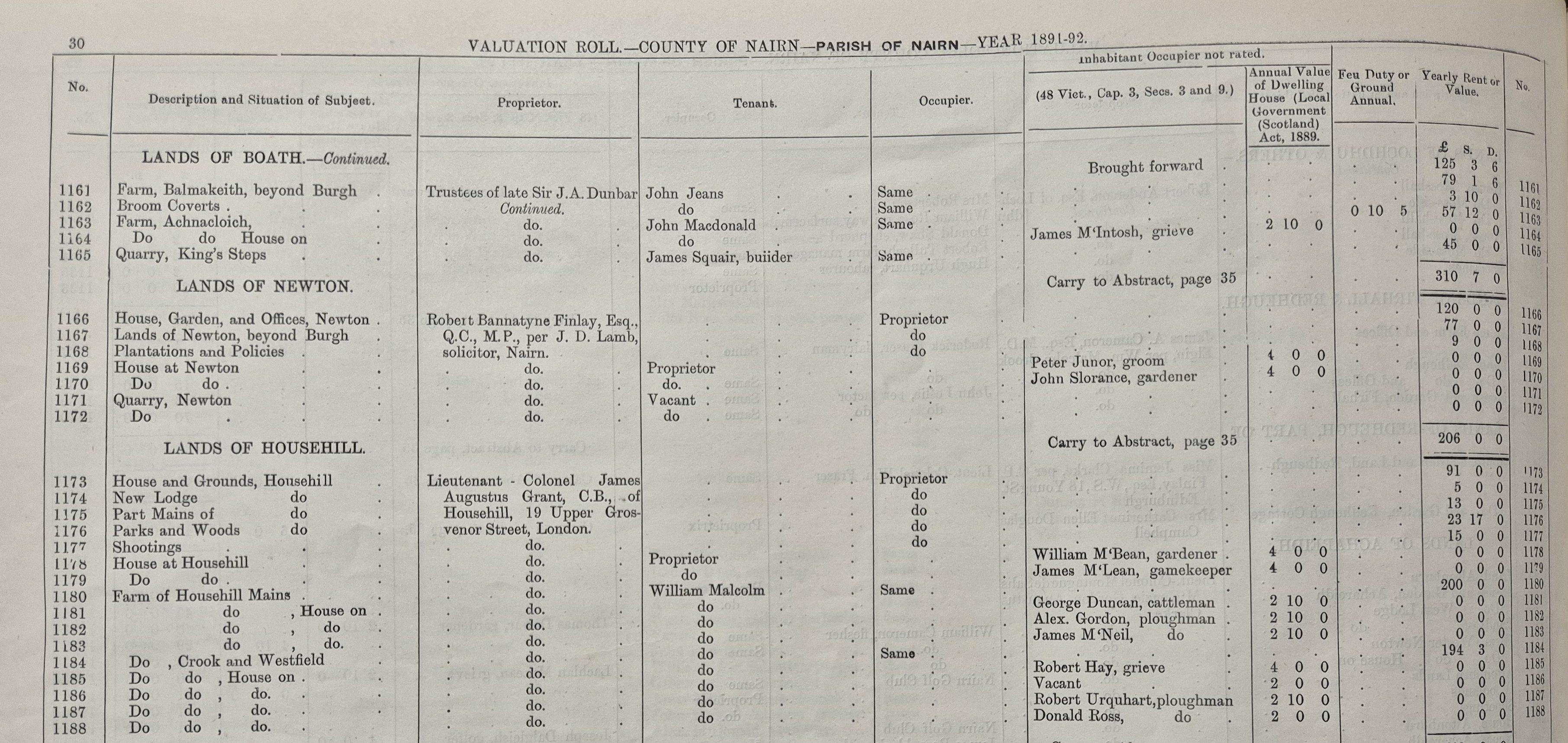
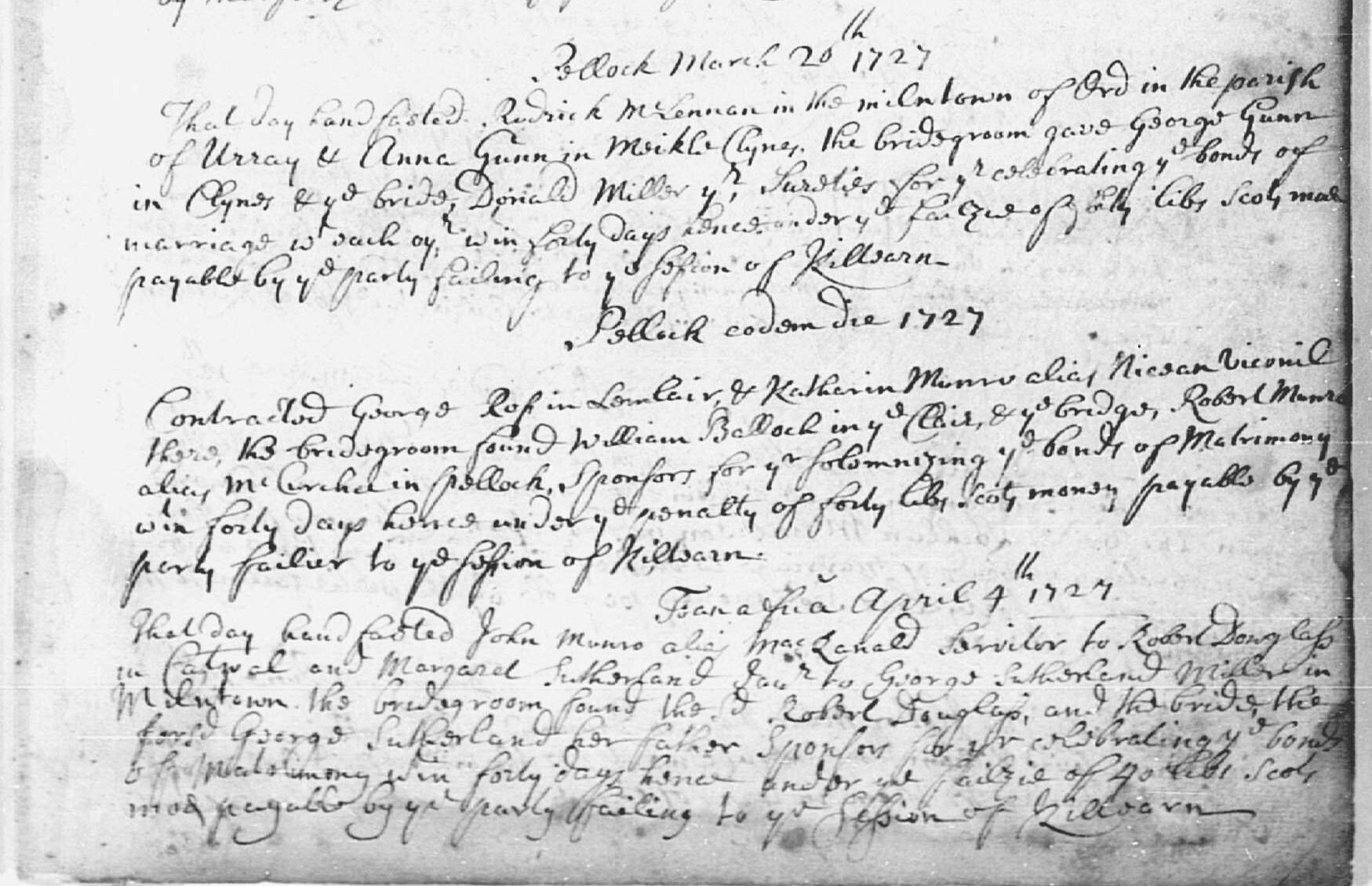
Check out the address where the family were living during a census in the Valuation Rolls. These are held in the archive for local counties and some are available on ScotlandsPeople for other areas of Scotland. If located family members in 1841 and 1851 census, look at the Old Parish Register and Kirk Session records for that particular parish.