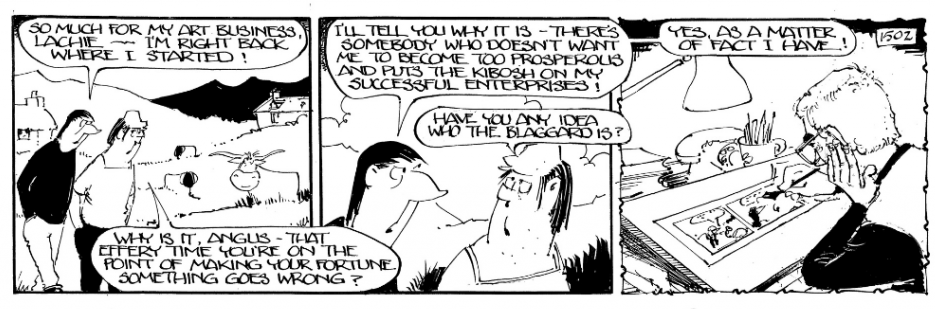





Ewen Bain was raised in a Gaelic speaking household. He was a fluent speaker of the language and had a deep knowledge and understanding of Gaelic history and culture. Gaelic flows through the adventures of Angus Og. The stories appeared in an English-language newspaper and as such the characters speak primarily in English. However, Bain had a great ear for accents and represents Hebridean English through the use of eye-dialect e.g. ‘chust’ instead of ‘just’, ‘effery’ in place of ‘every’ and occasionally in a sentence structure that suggests an English translated from the Gaelic.
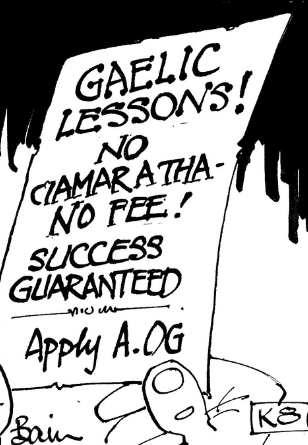
You are left with the feeling that if you were not in the room Angus and his friends would be speaking Gaelic, indeed, at that time it was often considered rude to speak Gaelic in front of those who did not have it and so this reflects just what might have happened should any of Angus’s readers have met a company of ‘real life Gaelic speakers’ in the 1960s.
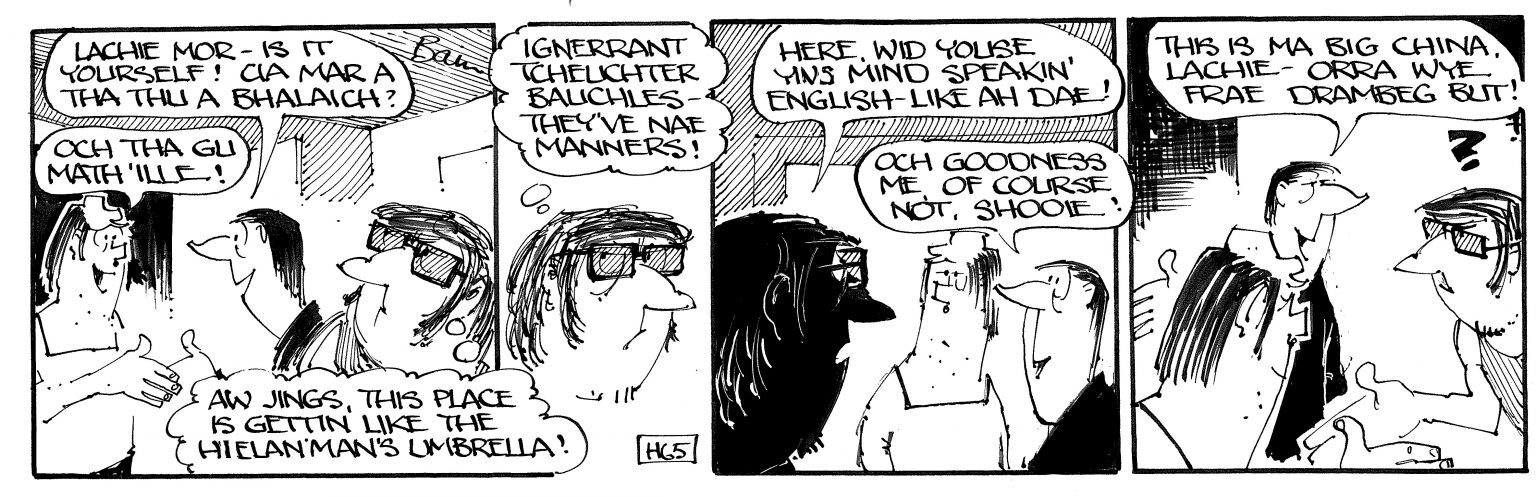
Ewen Bain reflected many contemporary Gaels experience and frustration as a product of an education system designed to discourage the use of Gaelic. On being asked why he, himself fluent in Gaelic, did not produce a Gaelic cartoon strip he stated that he was one of those illiterate Gaels referred to by Johnson in his 1775 ‘journey to the western isles’ ” the Earse never was a written language…and the sounds of the highlanders were never expressed by letters”. Bain describes himself as ‘an illiterate Gael, unable to spell in Gaelic’. Frustrating indeed to be so proficient in the written word and unable to communicate using that medium in your own language. There remains throughout a sense of confidence and pride in the language, Gaelic words and phrases appeared regularly in the strips and in doing so brought the language to a whole new audience.
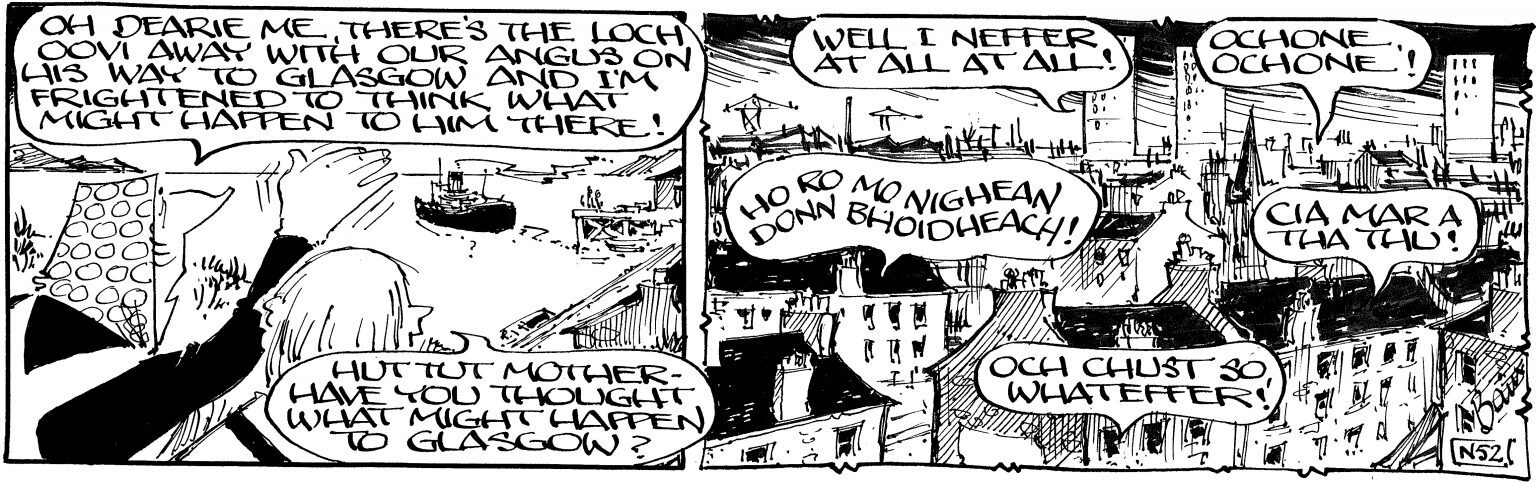
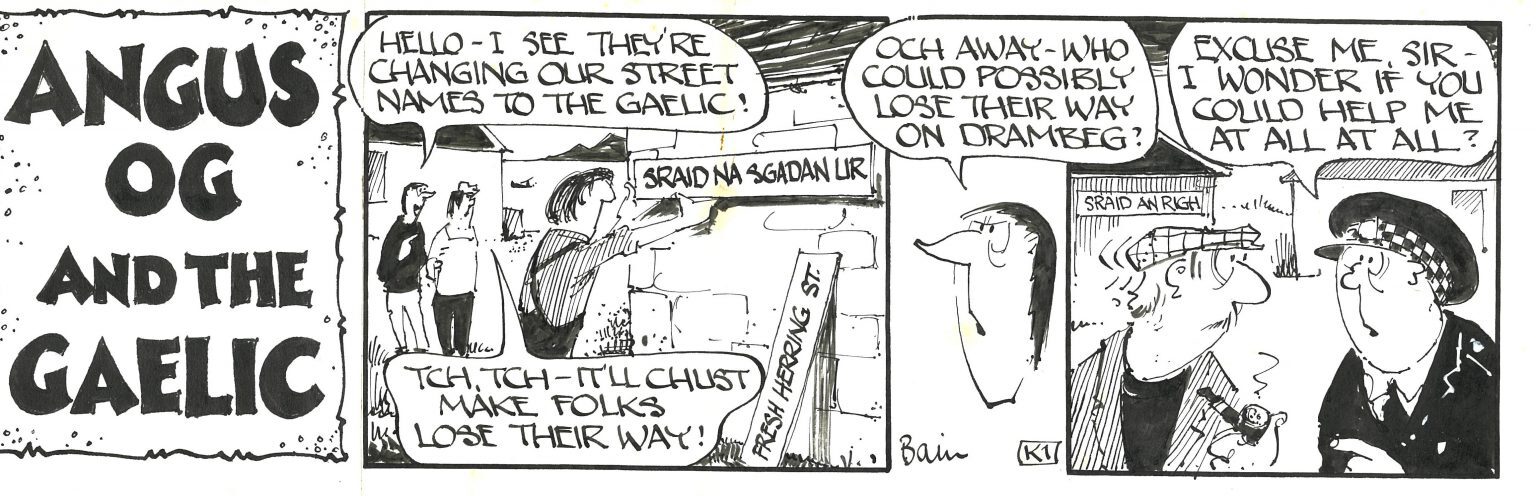
During Bain’s lifetime perceptions of the Gaelic language shifted. Language activists explored new ways to raise the profile of the language and encourage young people to learn and use Gaelic even as the number of speakers declined. A growing awareness of the potential loss of culture and identity alongside the language and its association with an emerging Scottish national identity only enhanced efforts which included the introduction of Gaelic media, road signs and language learning programmes and the opening of the Gaelic college Sabhal Mòr Ostaig. These developments are all reflected in the cartoons. Bain, whilst he may not have described himself as a Gaelic activist, was informed about the position of Gaelic language in Scotland, he quotes accurately the number of Gaelic speakers in Scotland from census figures 1961 and appeared in one of the first Gaelic TV programmes for children as the wizard ‘buids’ in bzzz! His use of Gaelic words, phrases and ideology throughout the Angus Og adventures arguably brought Gaelic language in a fun and affectionate way into the households of many who had rarely, if ever, encountered the language before and demonstrated its vitalness to the cultural identity of the highlands, islands and Gaelic diaspora.
Share your thoughts with us using our short online survey or by emailing us.