






Skye and Lochalsh Archive Centre

Angus Og and the ceilidh

Cèilidh (noun) visit

Cèilidh (noun) a social event with Scottish or Irish folk music and singing, traditional dancing, and storytelling.
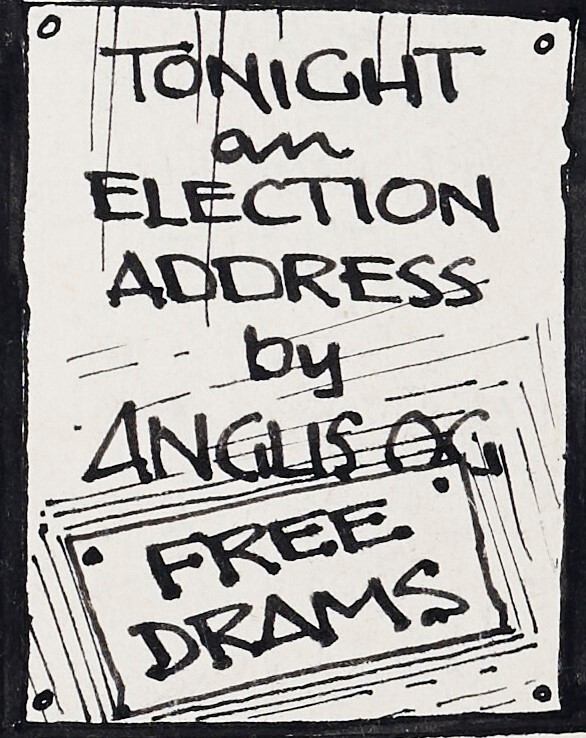
A black-and-white cartoon image of a hand-drawn poster. The poster reads:
“TONIGHT an ELECTION ADDRESS by ANGUS OG” in large, bold letters. Below this, a smaller sign is attached at an angle with the words “FREE DRAMS” written on it. The overall style is sketchy and humorous, suggesting that the promise of free drinks is being used as an incentive to attract people to the election address.
Angus Og and the Election

Angus Og was written at a time when Gaelic culture was moving beyond the ceilidh house, village and music halls to radio and tv, blending with other musical styles and reaching wider audiences across Scotland. Although the first Gaelic radio transmission was in 1923 by the mid 1950s Gaelic radio only totalled 90 minutes per week. Beyond coverage of the mod the first truly Gaelic TV show was Se Ur Beatha in 1964.
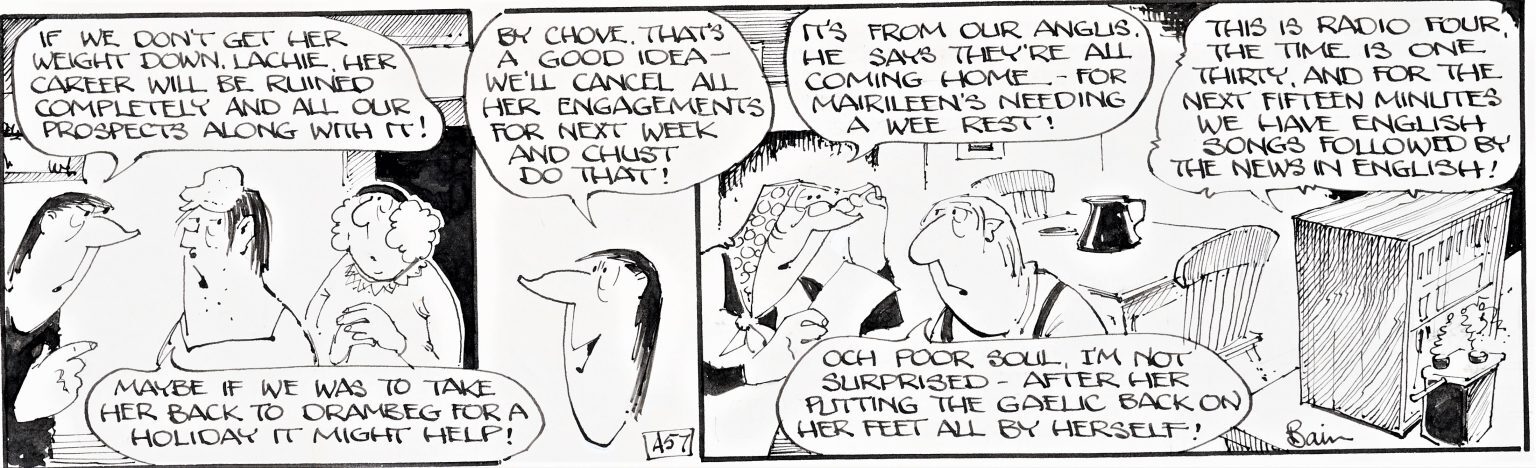
A black-and-white cartoon strip featuring four panels with several characters in conversation. In the first panel, two characters discuss someone’s health and career, saying: “If we don’t get her weight down, Lachie, her career will be ruined completely and all our prospects along with it!” Another character suggests, “Maybe if we was to take her back to Drumbeg for a holiday it might help!” In the second panel, a character enthusiastically responds, “By Chove, that’s a good idea! We’ll cancel all her engagements for next week and chust do that!” The third panel shows two characters reading a note: “It’s from our Angus. He says they’re all coming home—for Mairileen’s needing a wee rest!” One character comments, “Och poor soul. I’m not surprised—after her putting the Gaelic back on her feet all by herself!” The final panel shows a radio announcing: “This is Radio Four. The time is one-thirty, and for the next fifteen minutes we have English songs followed by the news in English!” The cartoon humorously contrasts local concerns about a woman’s health and Gaelic revival with the dominance of English-language media.
Angus Og Takes a Trip

Ewen Bain had a rich, deep knowledge of Gaelic music and history which you can see reflected in the wide range of songs and stories in the adventures of Angus Og. He even draws music accurately so the tune can be played from the cartoon illustration. Contemporary stereotypes informed by the music hall experience are reflected with hee-drum-ho typification.
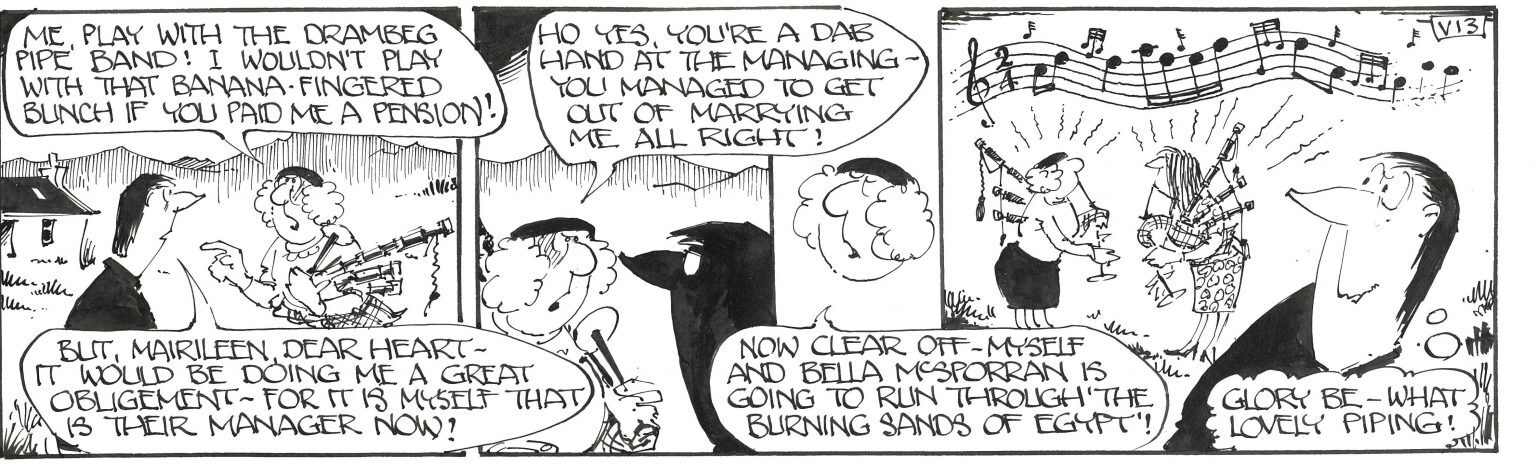
A black-and-white cartoon strip with three panels. In the first panel, a character angrily says, “Me, play with the Drambeg Pipe Band! I wouldn’t play with that banana-fingered bunch if you paid me a pension!” Another character responds, “But, Mairileen dear heart—it would be doing me a great obligement—for it is myself that is their manager now!” In the second panel, the first character sarcastically replies, “Ho yes, you’re a dab hand at the managing—you managed to get out of marrying me all right!” In the third panel, two characters stand playing bagpipes while musical notes float above them, and another character says, “Now clear off—myself and Bella McSporran is going to run through ‘The Burning Sands of Egypt’!” A fourth character watches and comments, “Glory be—what lovely piping!” The cartoon humorously portrays tension about joining a local pipe band, with exaggerated dialogue and a comedic twist about managing and playing music.
Angus Og and the Pipe Band

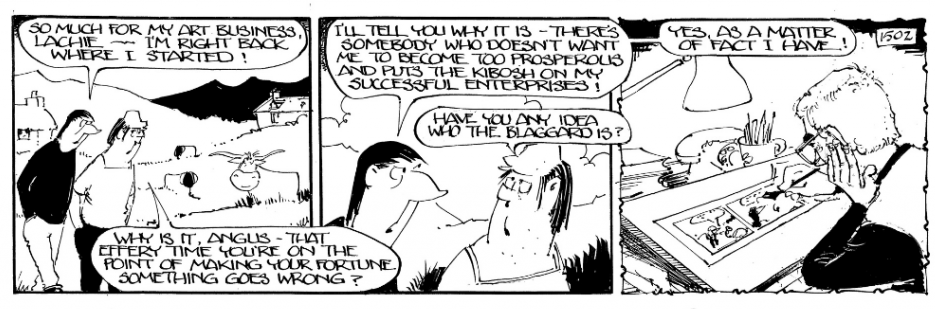
Bain reflects frustrations at the lack of Gaelic broadcasting, spotlights and celebrates Gaelic music and culture and explores the tension between ceilidh and church all whilst poking fun in his usual affectionate way!
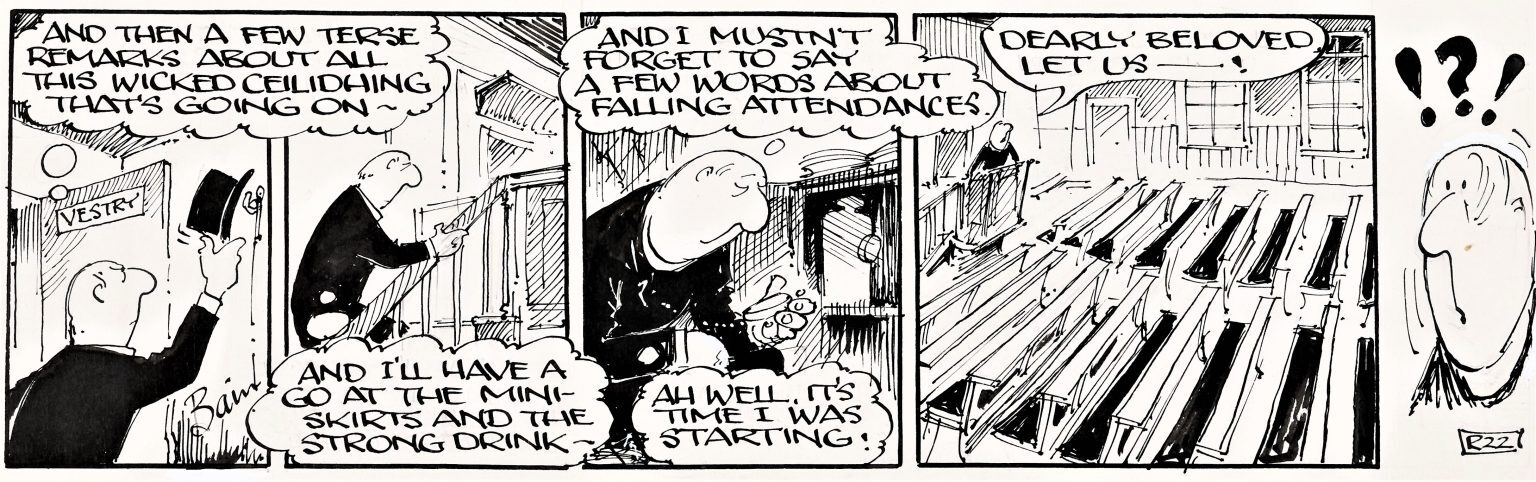
A black-and-white cartoon strip with four panels. In the first panel, a man in a church vestry holds a hat and thinks to himself: “And then a few terse remarks about all this wicked ceilidhing that’s going on—” In the second panel, he continues thinking: “And I mustn’t forget to say a few words about falling attendances!” He adds aloud, “And I’ll have a go at the mini-skirts and the strong drink.” In the third panel, he walks to the pulpit and begins, “Dearly beloved let us—” but the church pews are completely empty. The final panel shows his shocked face with large punctuation marks (?!), emphasizing surprise. The humor lies in the minister preparing a stern sermon about modern behaviors, only to find no congregation present.
Angus Og and the BST

The original island influencer, Angus Og appeared in the biggest selling newspaper of the day and was an introduction to island life for many people. Do you think media portrayal of Gaelic culture has changed people’s perception of island life? Share your thoughts with us using our short online survey or by emailing us.