

Rèisimeidean, rathaidean-iarainn is rìoghalachd — Races, regiments and royalty
The time from the 1860s to the 1920s was possibly the high point of the Northern Meeting Games.
The new railways to the Highlands meant that people could now travel here more easily from further south for holidays. Special excursion trains from surrounding areas each day of the Games helped boost audiences further.
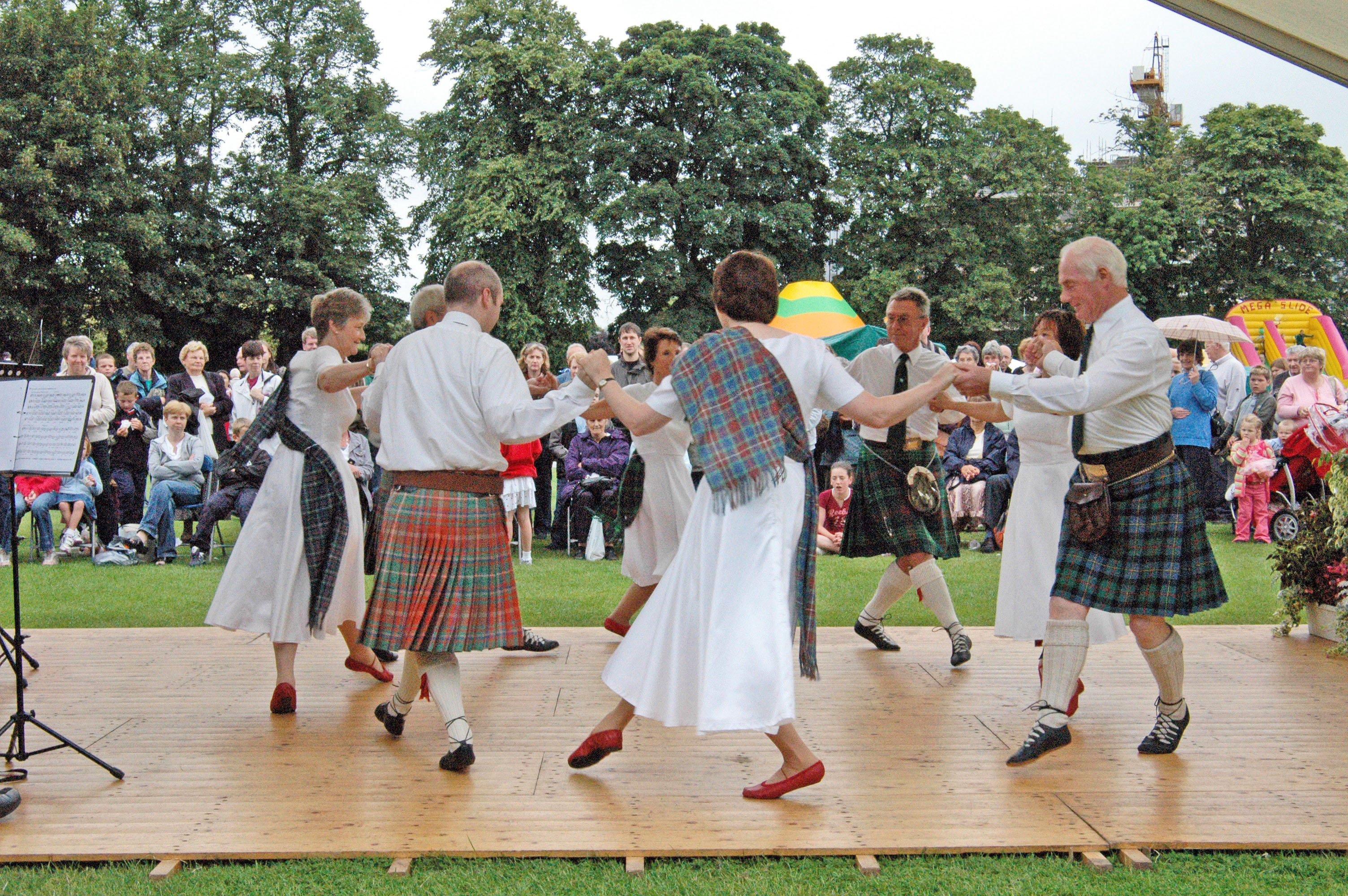
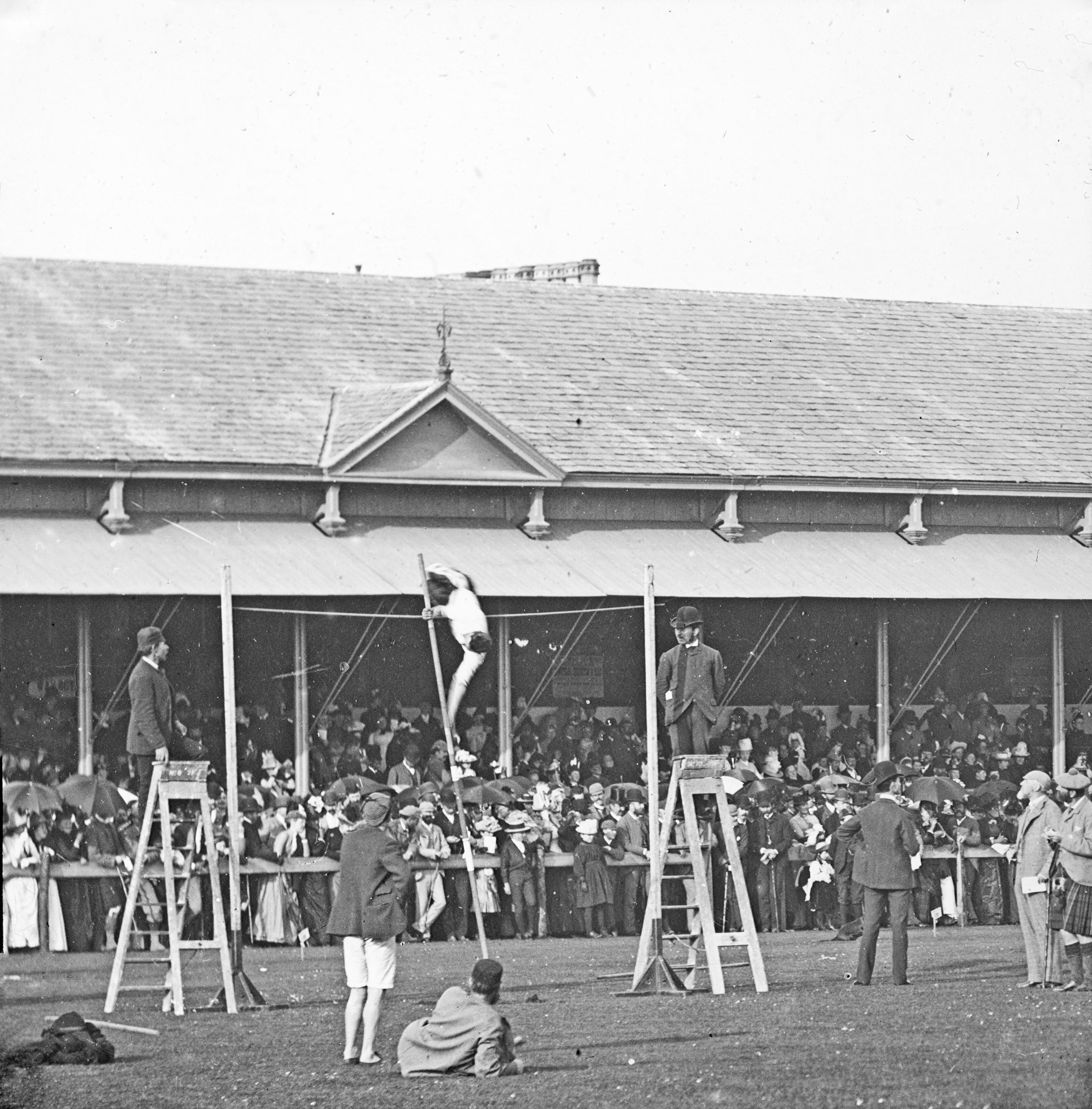
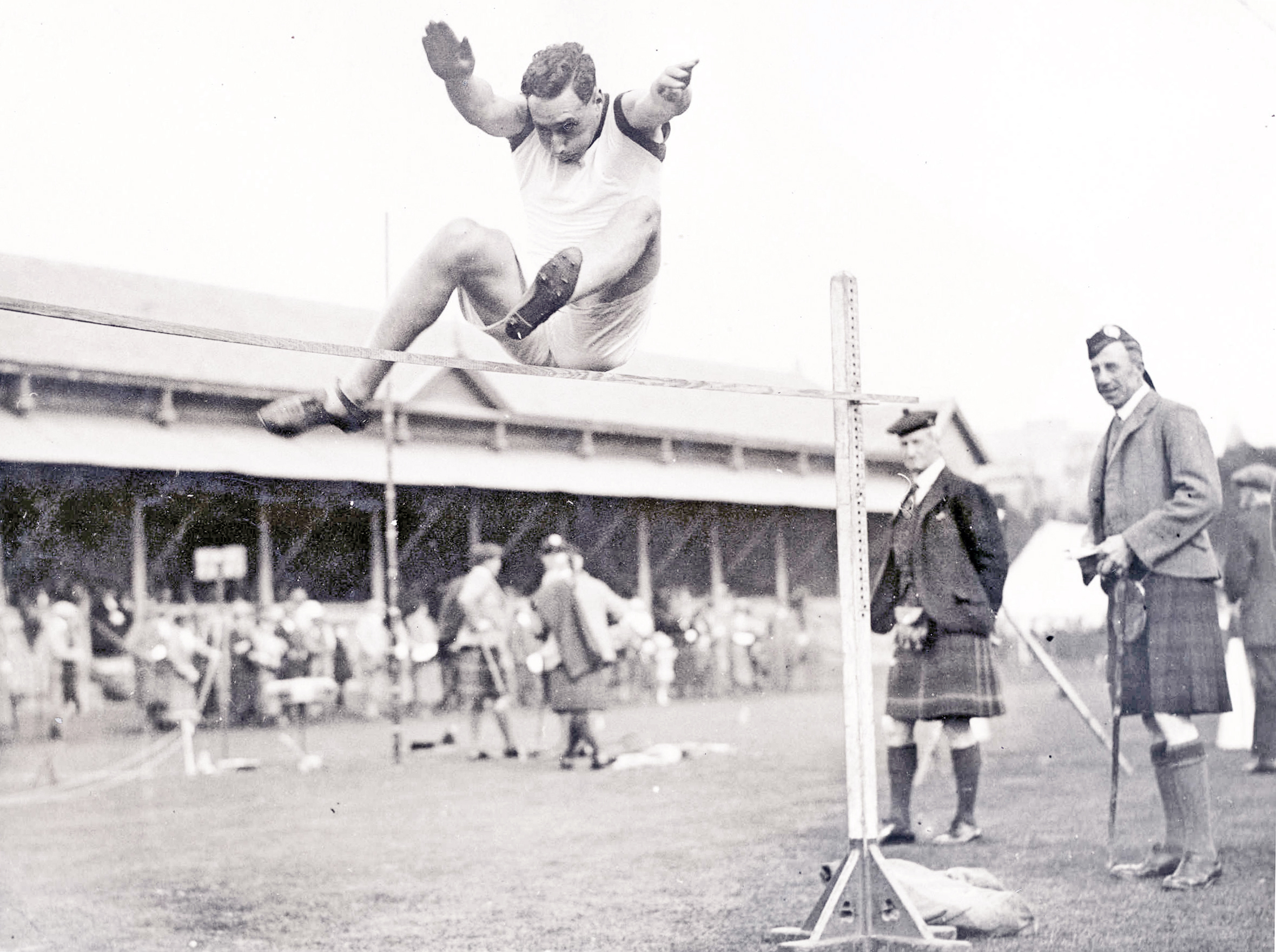
The new purpose-built Park made it much easier to run traditional Games events - such as throwing the hammer, putting the stone, tossing the caber, long jump, high jump, pole vaulting, racing, Highland dancing and piping.
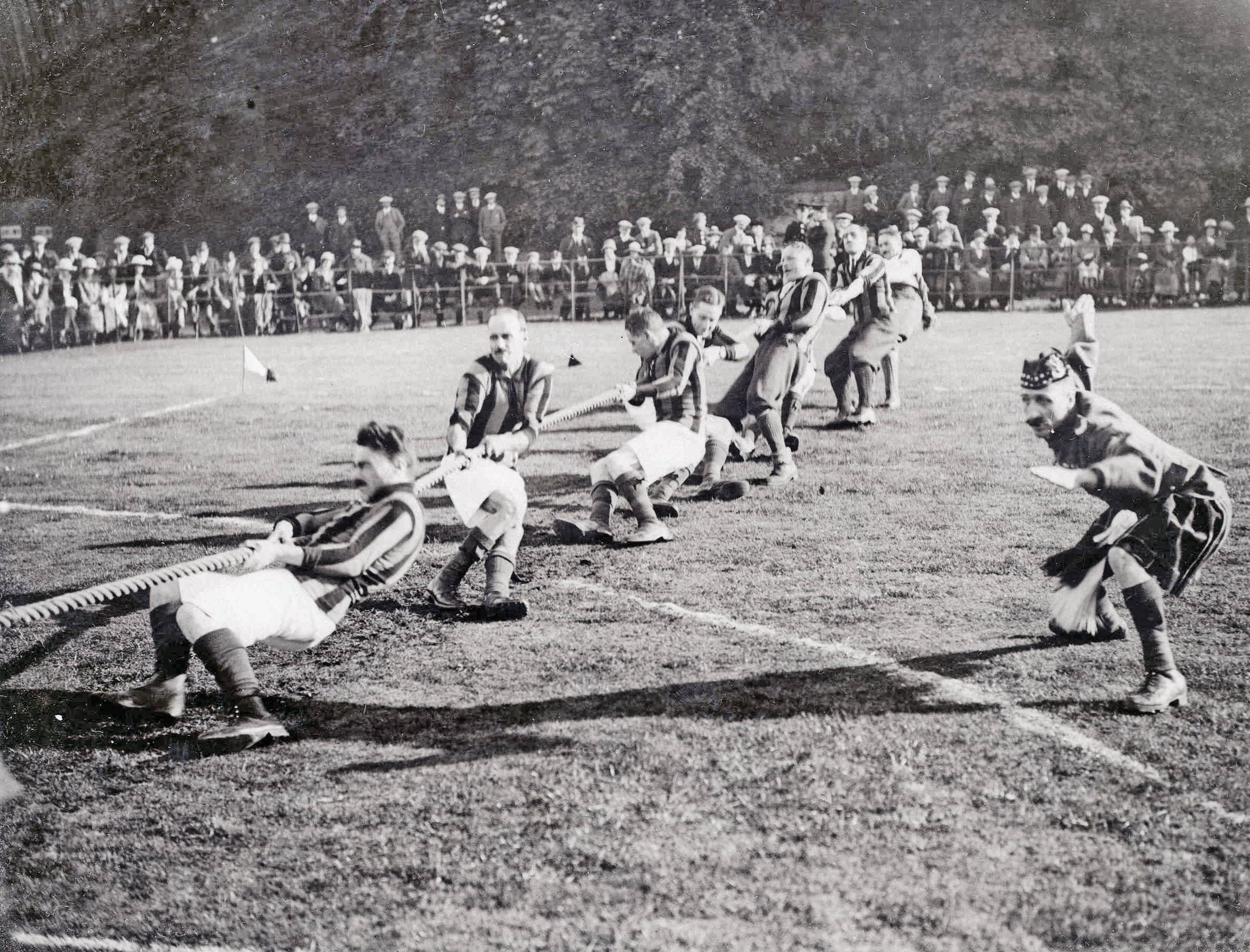
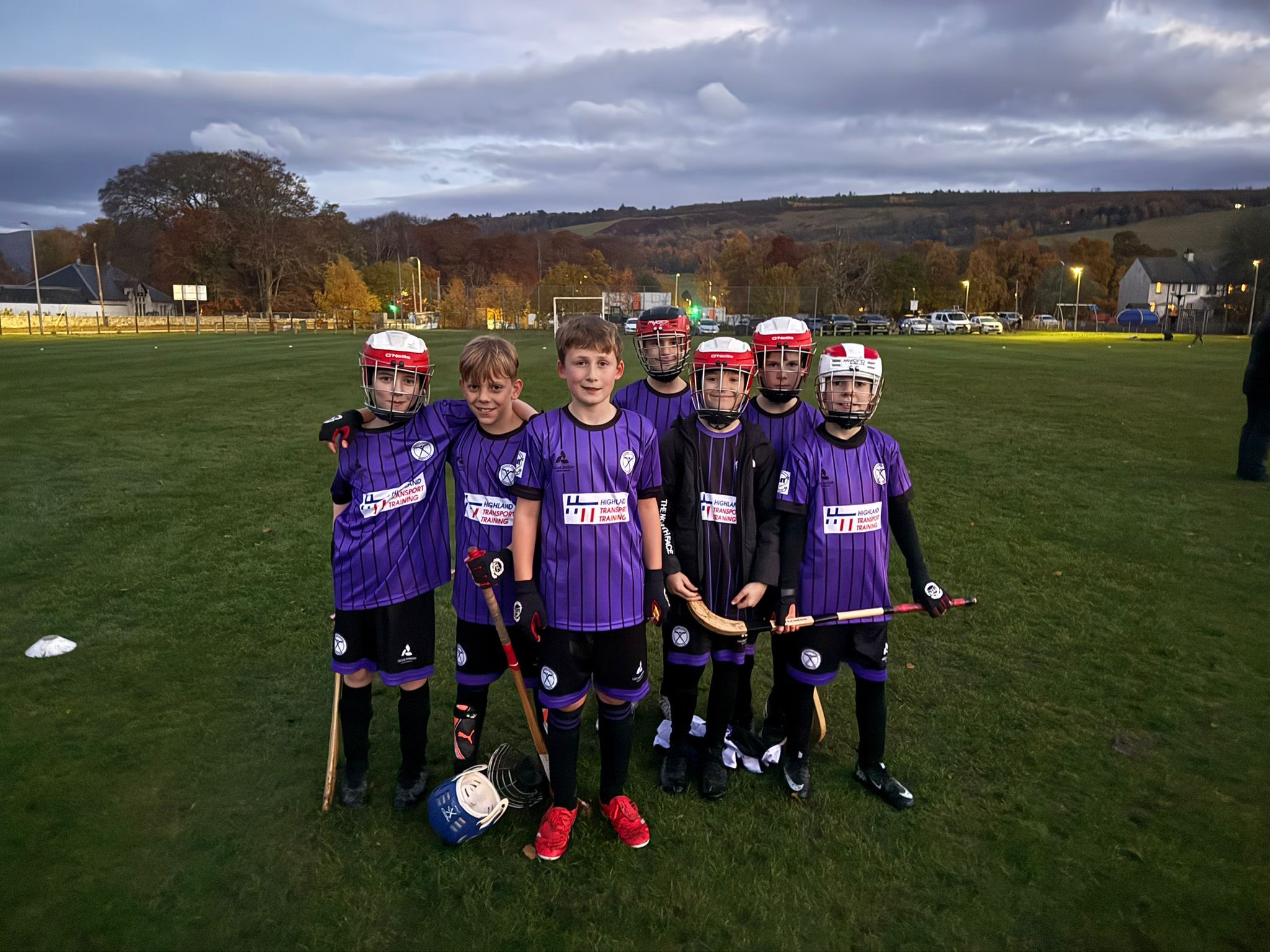
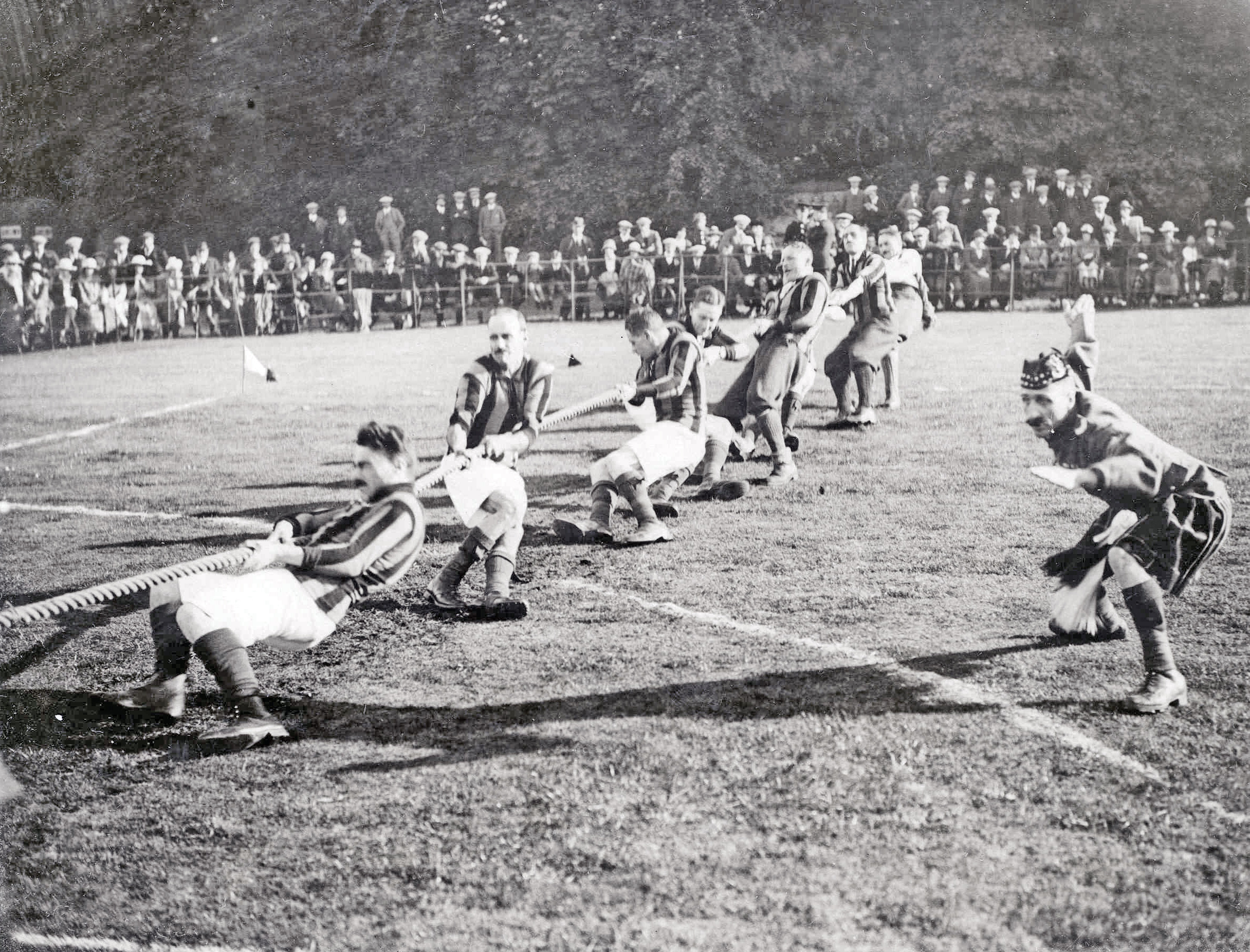
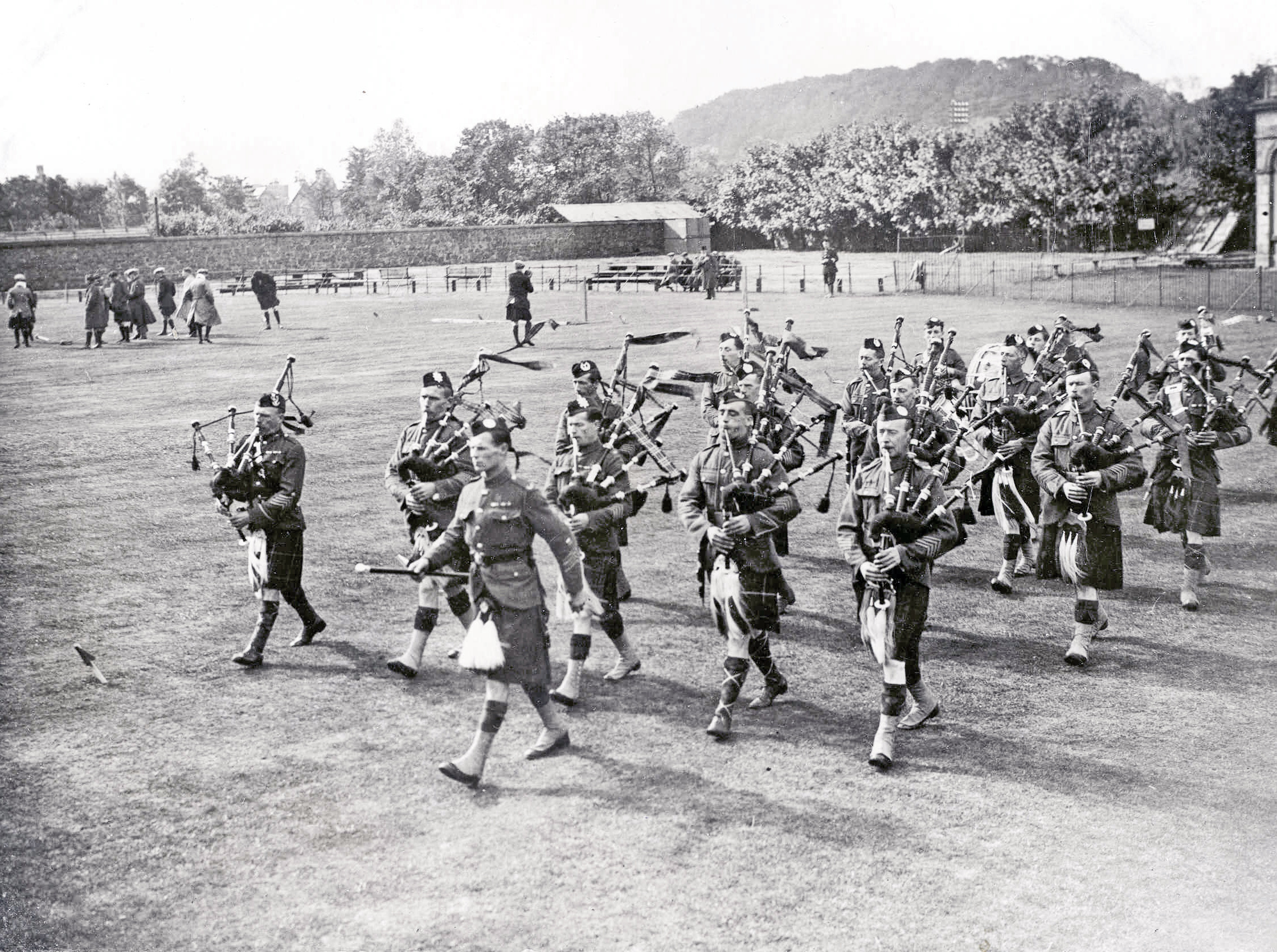
However, to keep the crowds coming, the Games Committee also introduced new features. In the 1870s, performances by regimental pipe bands and military drill displays were introduced and became very popular. Later innovations included bicycle races, tugs-of-war, shinty, gymnastic displays by local school children, Scoutcraft displays by local scout troops - even Japanese ju-jitsu!
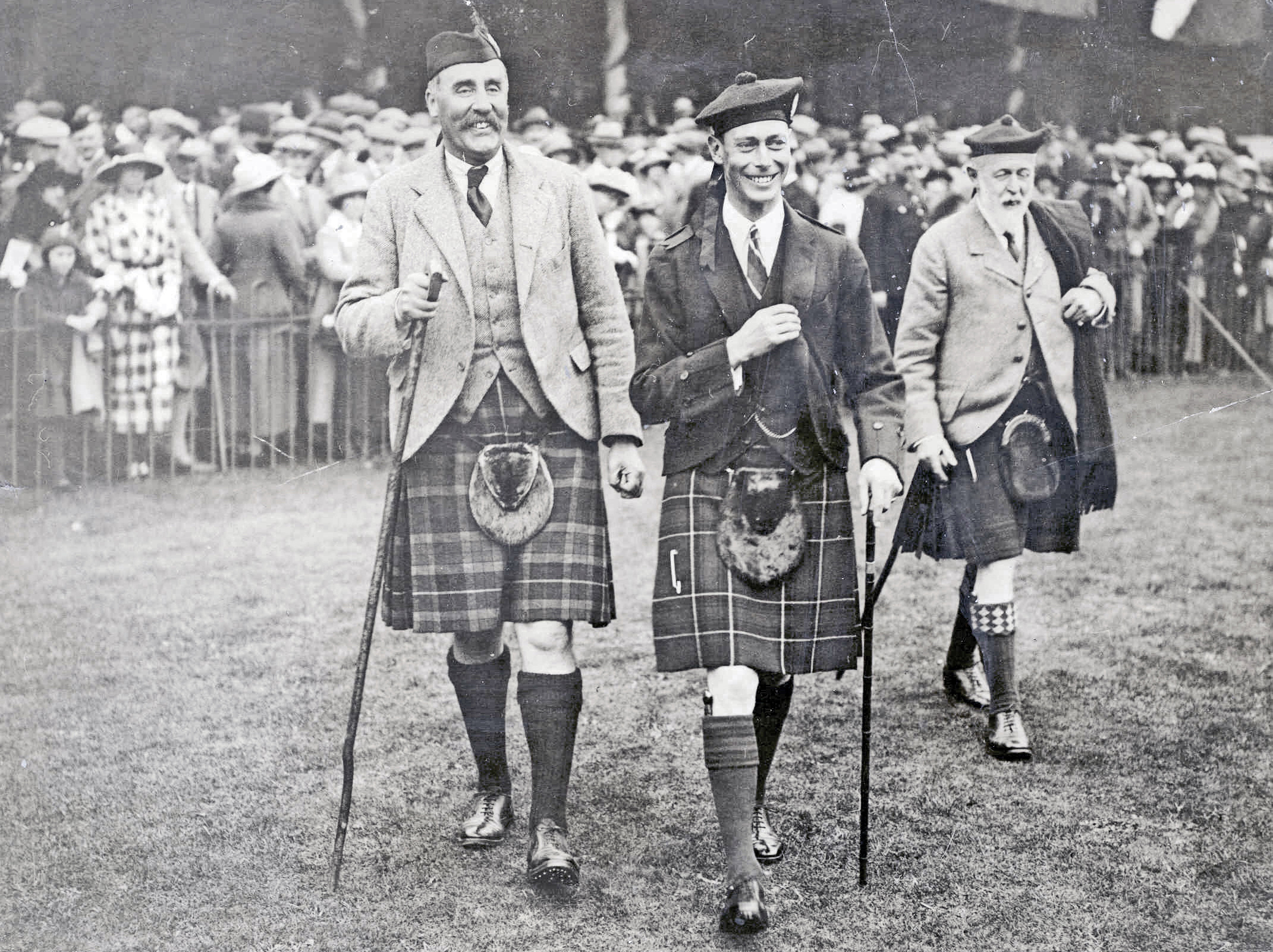
By the 1920s, the Games were a well-established feature of the Highland social calendar - popular not only with locals but also the many wealthy people who flocked to the North every summer. Northern Meeting guest lists were like an international celebrity listing, with royalty, aristocrats, clan chiefs, senior military figures and millionaires as well as famous actors, writers and artists.
Snapshots of the Golden Era
These images from the Am Baile archive capture the Northern Meeting Games at their height — from the competitions on the field to the social spectacle in the stands.
The West Pavilion, visible in the background, was built in 1891 to encourage more people to attend even if the weather was wet. It was demolished in the 1940s, but the new community pavilion completed in 2025 stands on roughly the same site.
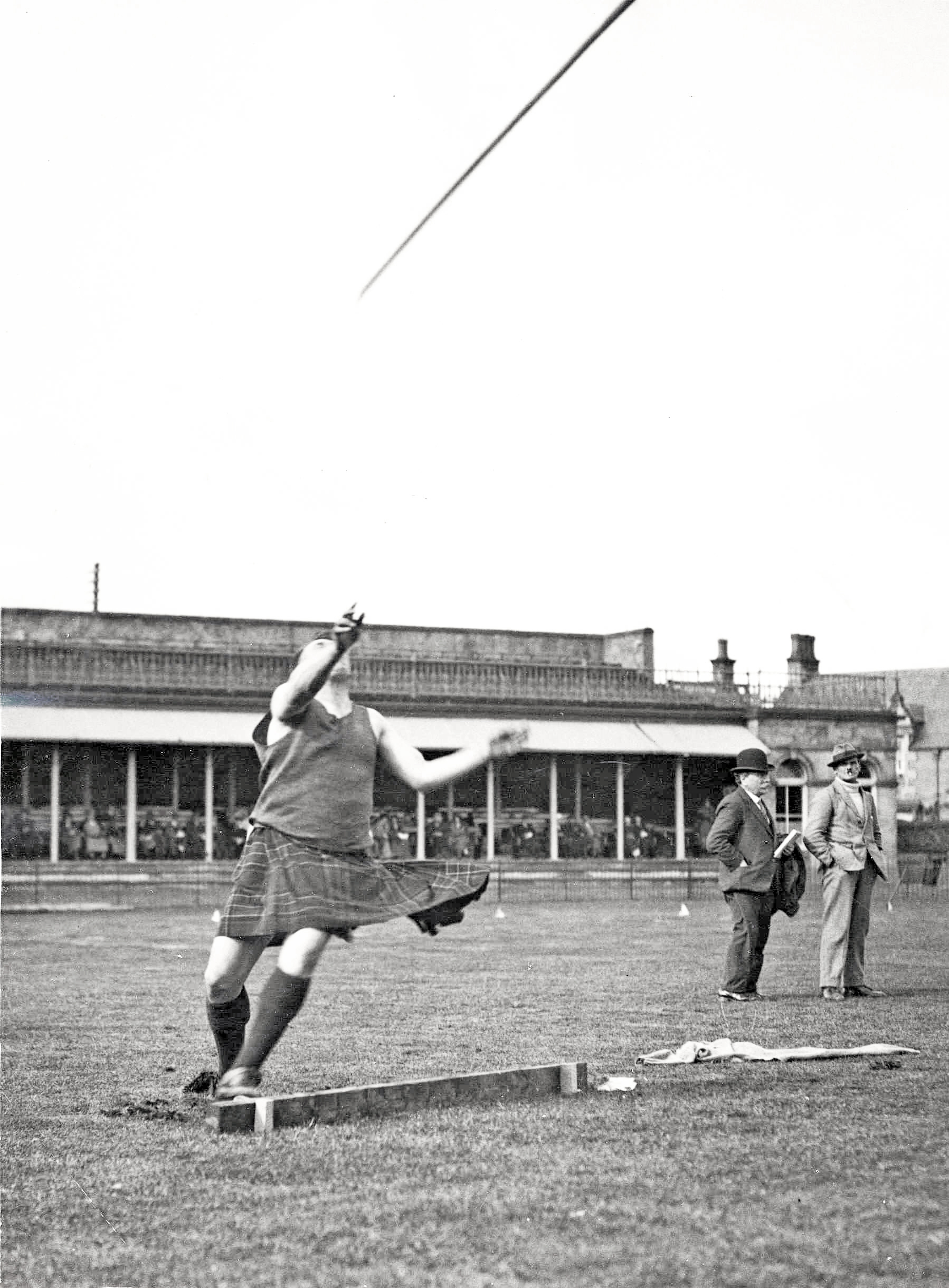
Many members of the Committee of Management were army officers who used their connections to attract military participants to the Games. Members who were local clan chiefs sometimes organised teams of their estate staff to take part in the tug of war — although an offer in 1906 by Lord Lovat to raise a shinty team from the Lovat Scouts was declined on the grounds of spectator safety!
In 1919, a special pipe band played at the Northern Meeting comprising the thirteen Pipe Majors of the battalions who had served the 51st Highland Division during WWI. It must have been an deeply emotional occasion for both participants and spectators.
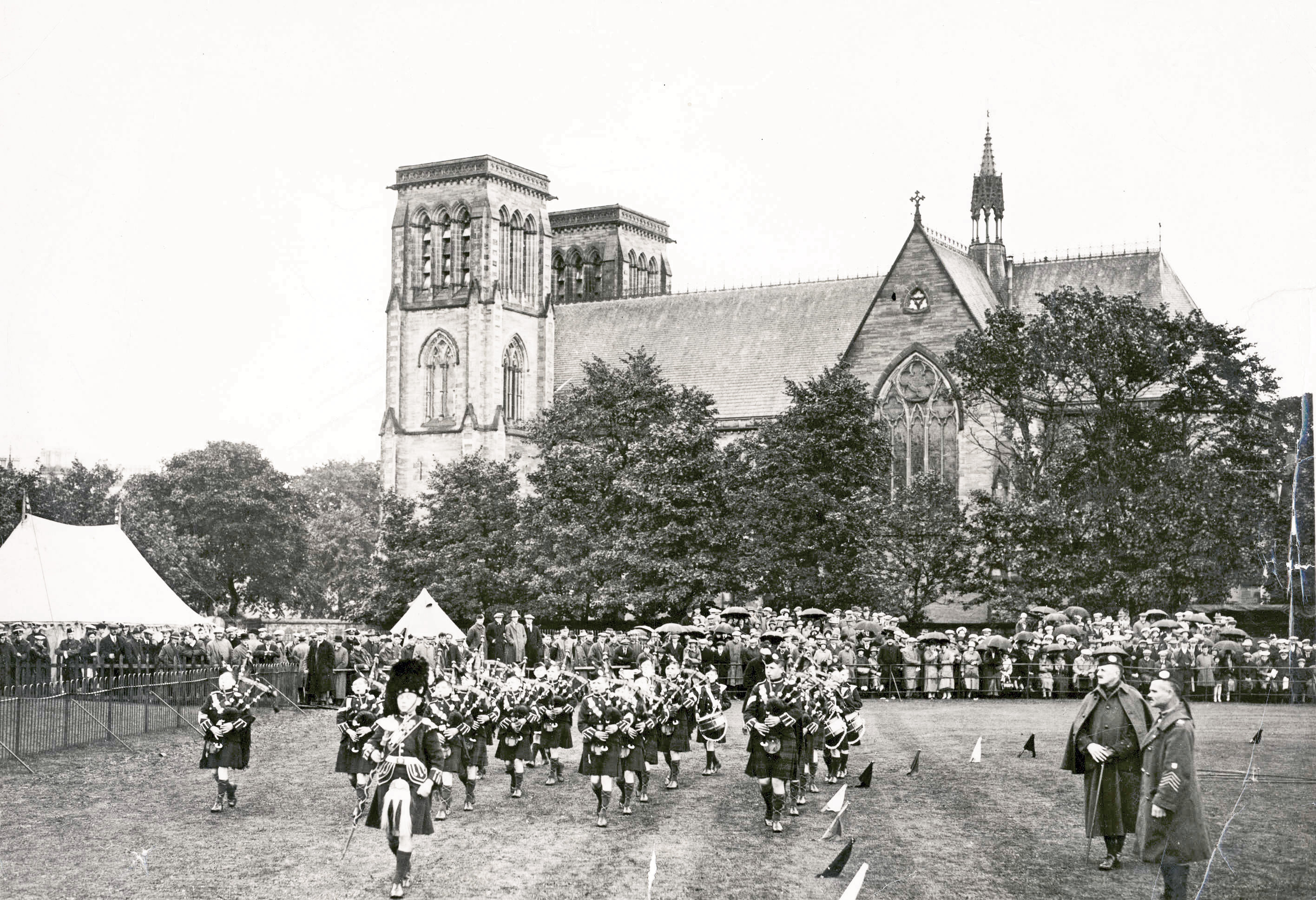
The Queen Victoria School in Dunblane was founded in 1908 as the National Memorial to Scottish soldiers who died in the South African War. By 1920, many of the boys were WWI orphans. The school continued to send pupils to perform at the Northern Meeting Games until 1927.
Scotland's shooting lodges
Video Unavailable
Sorry, this video could not be loaded. Please try refreshing the page or check your internet connection.
Highland Retreats – the storied history of Scotland’s shooting lodges with Mary Miers.