







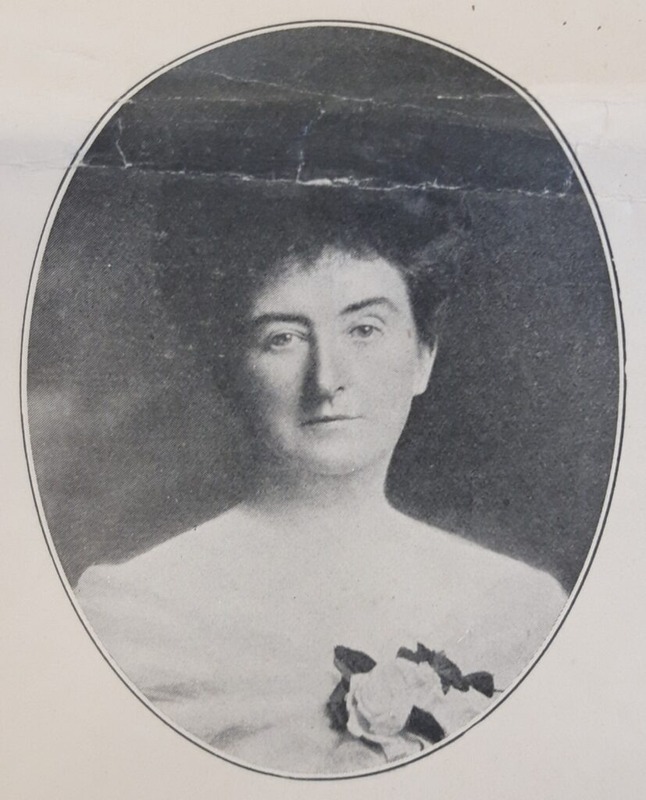
Within our extensive and much consulted Cameron-Head of Inverailort collection, there exists a treasure trove for anybody interested in women’s suffrage, early 20th Century politics, and the art of pamphleteering. Since embarking upon my traineeship at the Lochaber Archive Centre, the suffragette papers of Mrs Cameron-Head, which date from 1912-1914, are amongst the most fascinating discoveries I have made.
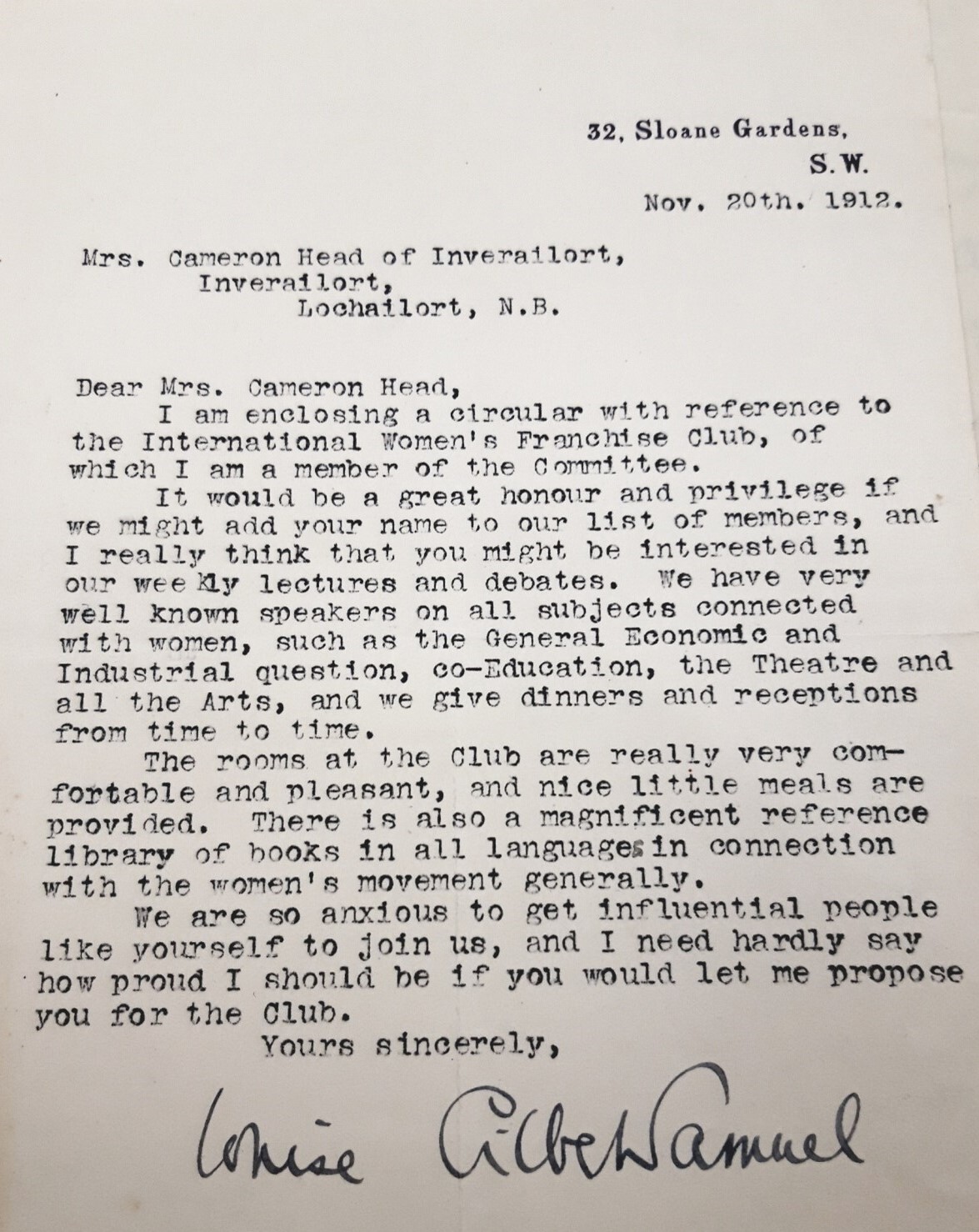
These papers illustrate a burning desire for enfranchisement felt by women across the political spectrum. Mrs Cameron-Head, for a short period at least, was herself a member of The Conservative and Unionist Women’s Franchise Association.
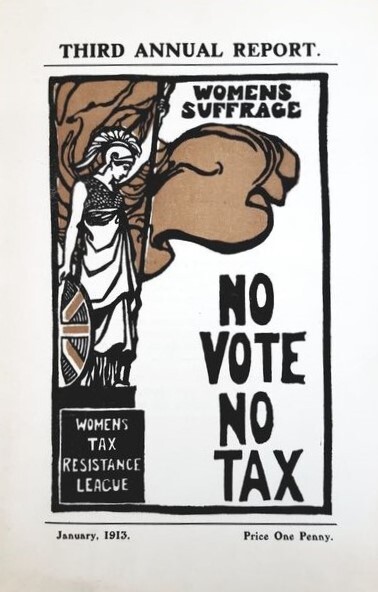
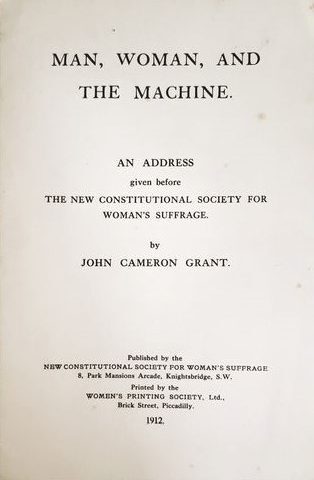
From this brief but seemingly busy time, there survives a great many pamphlets and publications, printed on brightly coloured paper and bearing such titles as, ‘Man, Woman, and The Machine’ and ‘Women’s Suffrage and the Social Evil’. The language is ardent, much of it fired in an internal battle-happening within the Conservative Party, this being the party upholding more traditional values. One conservative voice making the case for the enfranchisement of women is Scot John Buchan, Unionist politician and author of The Thirty-Nine Steps amongst other works. The pamphlet below is from The Women's Tax Resistance League whose members felt the injustice of paying tax on their income, homes and servants when they lacked a parliamentary vote.
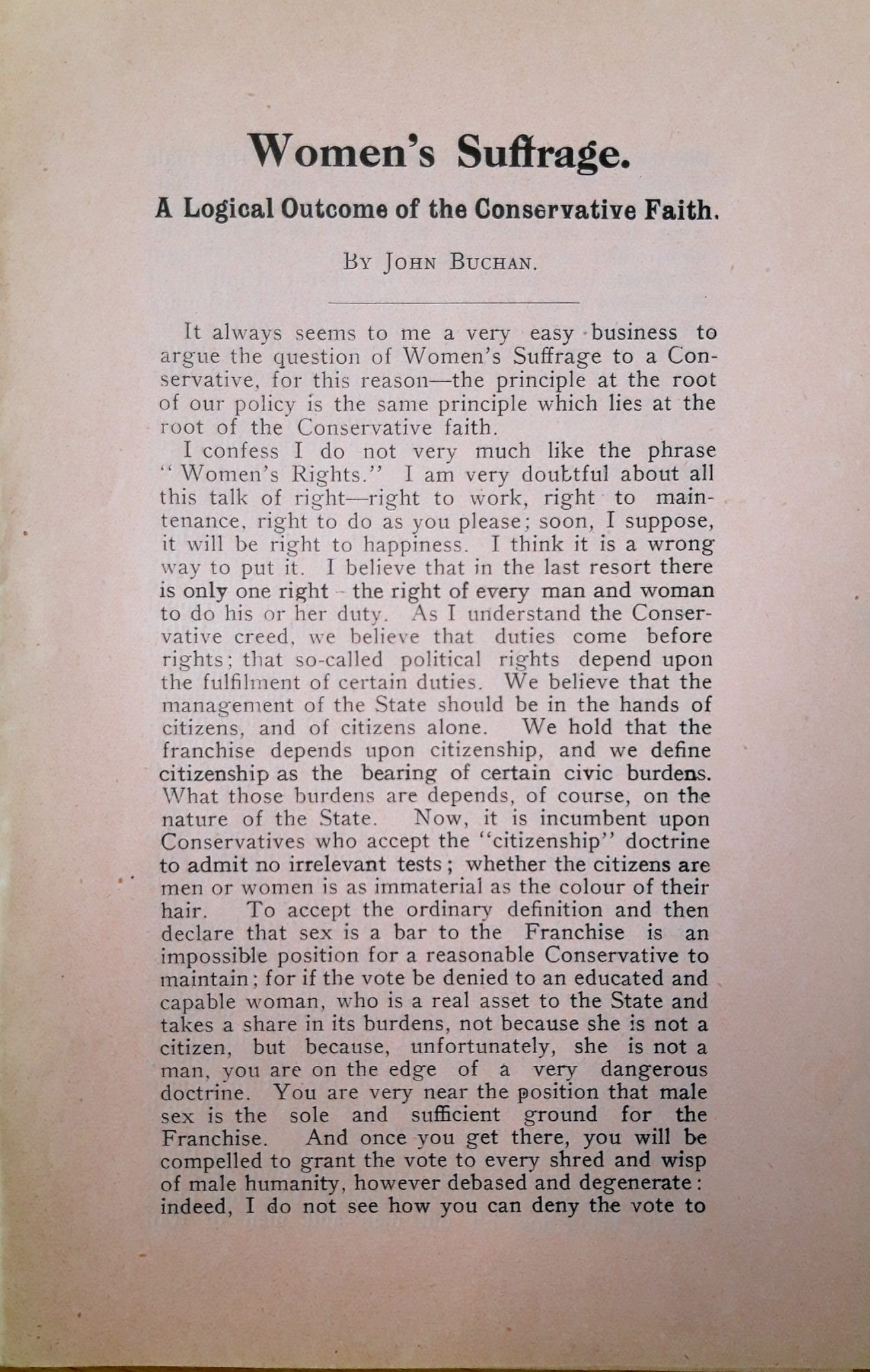
A faded pink pamphlet, written by Buchan, is entitled ‘Women’s Suffrage: A Logical Outcome of the Conservative Faith.’ In response to the common ‘Conservative objection’ that women’s suffrage would make ‘public life more effeminate’, Buchan asks, ‘Are our politics today so very manly? Do we rely solely or mainly on sober reason? Do we never exhibit hysteria or vapid emotion?’
There are other items too that reflect the idea of women’s suffrage as something beneficial to conservative politics, and not just bound to more liberal, or radical circles. Titles include ‘Women’s Franchise: A Safeguard against Socialism’, and ‘The Imperial Aspect of Woman Suffrage’.
Some items are less serious. ‘The Conservative and Unionist Women’s Franchise Review’ a quarterly publication costing twopence, is simultaneously both a political and women’s fashion magazine. There are adverts for London dressmakers, antiques dealers, and needlework specialists. On the final page ‘A Guide to Good Shops’ directs Conservative Suffragettes to florists on Baker Street and bootmakers in Hyde Park.
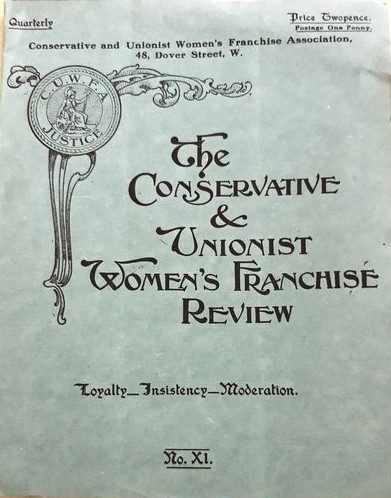
Mrs Cameron-Head’s suffragette papers are a contemporaneous account of early 20th Century politics, culture, and of a moment in British history when the tides began to turn. At the end of the decade these items were distributed and collected, the House of Lords granted women over the age of thirty the right to vote in the UK. Of course, things were still extremely exclusive. These women had to be householders, or the wives of householders, occupying a property with an annual rent of five pounds. They were also required to have a university education. The 1918 Representation of the People Act was a start – but there was still a long way to go.
These papers and much more can be viewed in our Searchroom at the Lochaber Archive Centre every Tuesday, Thursday and Friday.
To learn more about Mrs. Christian Cameron-Head of Inveraiort, watch Episode 103, Women in the Lochaber Collections, from our Learn with Lorna series below.

Video Unavailable
Sorry, this video could not be loaded. Please try refreshing the page or check your internet connection.