







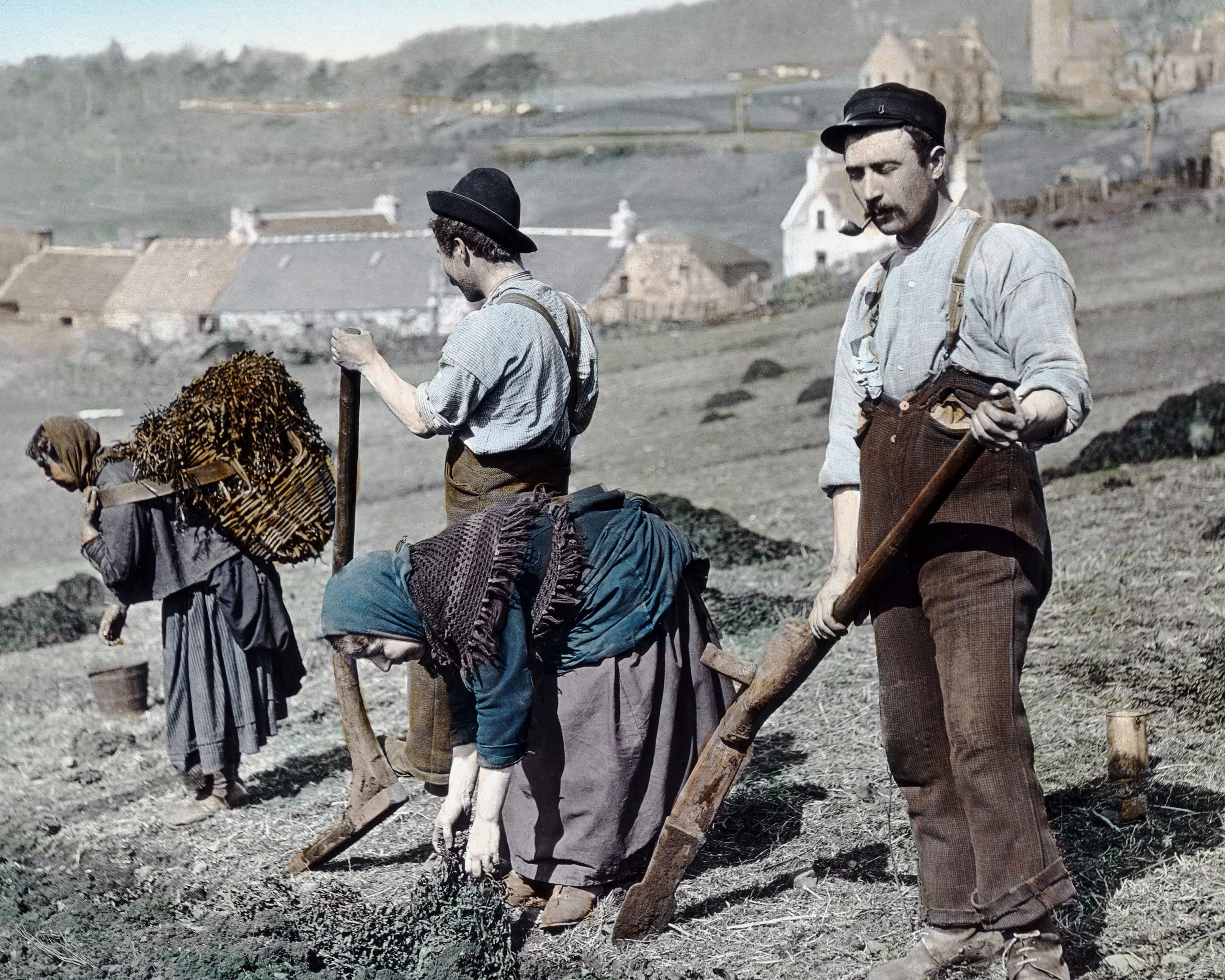
Shockingly, the Highland Potato Famine, that began in 1846 and lasted for roughly a decade, is a much-overlooked event in Scottish history. Unlike the Great Hunger in Ireland, the number of those in the Highlands and Islands at risk of starvation was far fewer, with charity more forthcoming from the establishment, and the death-toll incomparable between the two events. This is perhaps why the Highland Potato Famine does not loom so large in the Scottish national conscious. However, it is important that we do not underestimate or disregard the human misery it caused, and the effect it had on Highlands and Islands society.
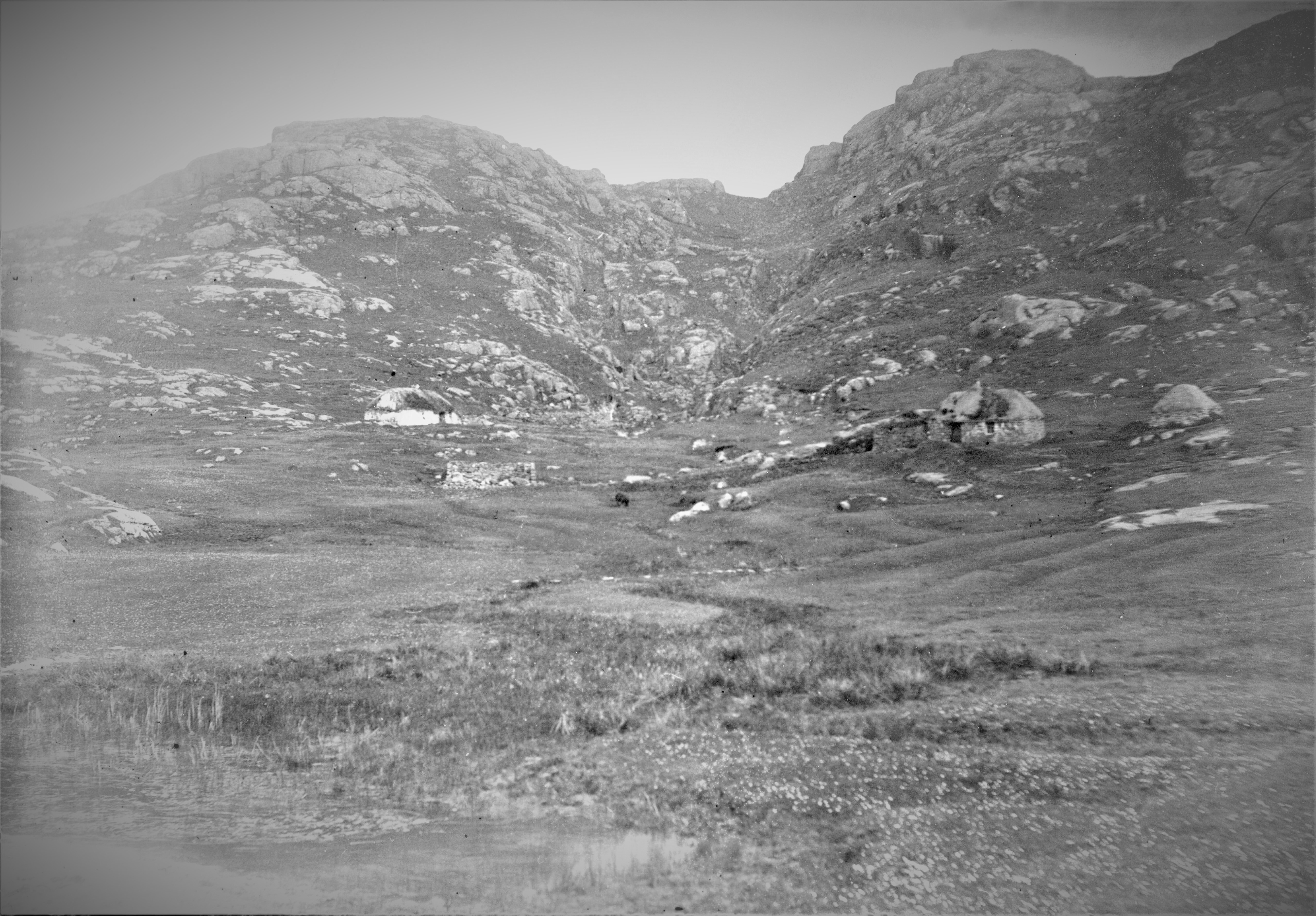
Before beginning work at the Lochaber Archive Centre, I certainly held an interest in the Famine, but knew little of its effect on the region I grew up in. Since then, I have discovered that within our archives we hold some illuminating items on the subject.
The first is a letter dated 1850, written by Martyn Roberts FRS of Torlundie and addressed to ‘The Landowners of the Highlands’. Roberts writes, ‘When the potato formed the chief food of the Highlander and was cultivated with little risk of failure, his condition was free from want and misery…but as the potato has now failed him, the habits of indolence and ignorance engendered by the cultivation of that root are now beginning to tell.’ The Highlander, Roberts believes, ‘is daily becoming more and more depressed’ and unless ‘immediate steps are taken to arrest this rapid deterioration’, the Highlands of Scotland will quickly become ‘one vast pauper settlement, second only to Ireland in destitution and helpless misery.’ The ‘chief remedy for this evil’, in Roberts’ opinion, is to ‘teach the Highland peasant a better system of agriculture’, and to enlarge his croft. The enlargement of crofts should be done so that crofters, without employment or means of buying food, must ‘grow it for himself and family by cultivating the soil.’ Roberts believed that the size of crofts should be increased from the existing 6-8 acres to 15 acres if they were to be a viable means of support to the people living on them.
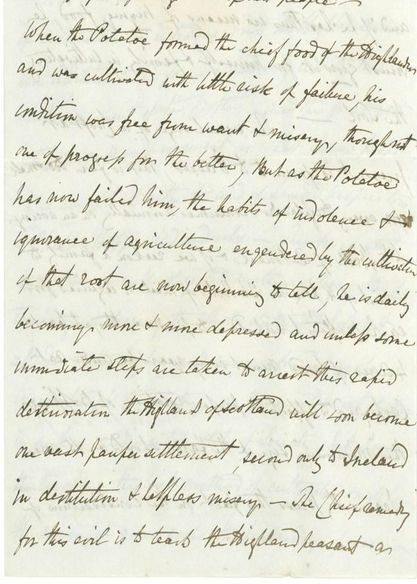
Roberts’ letter is interesting. It at once reveals sympathy towards the Highlander’s situation, and an alertness to the fact that things could soon become immeasurably worse without intervention from the landowning class. However, Roberts was clearly of the belief, one shared by many landowners and agriculturalists of the time, that the Highlander’s reliance on the potato was partly the result of their own idleness.
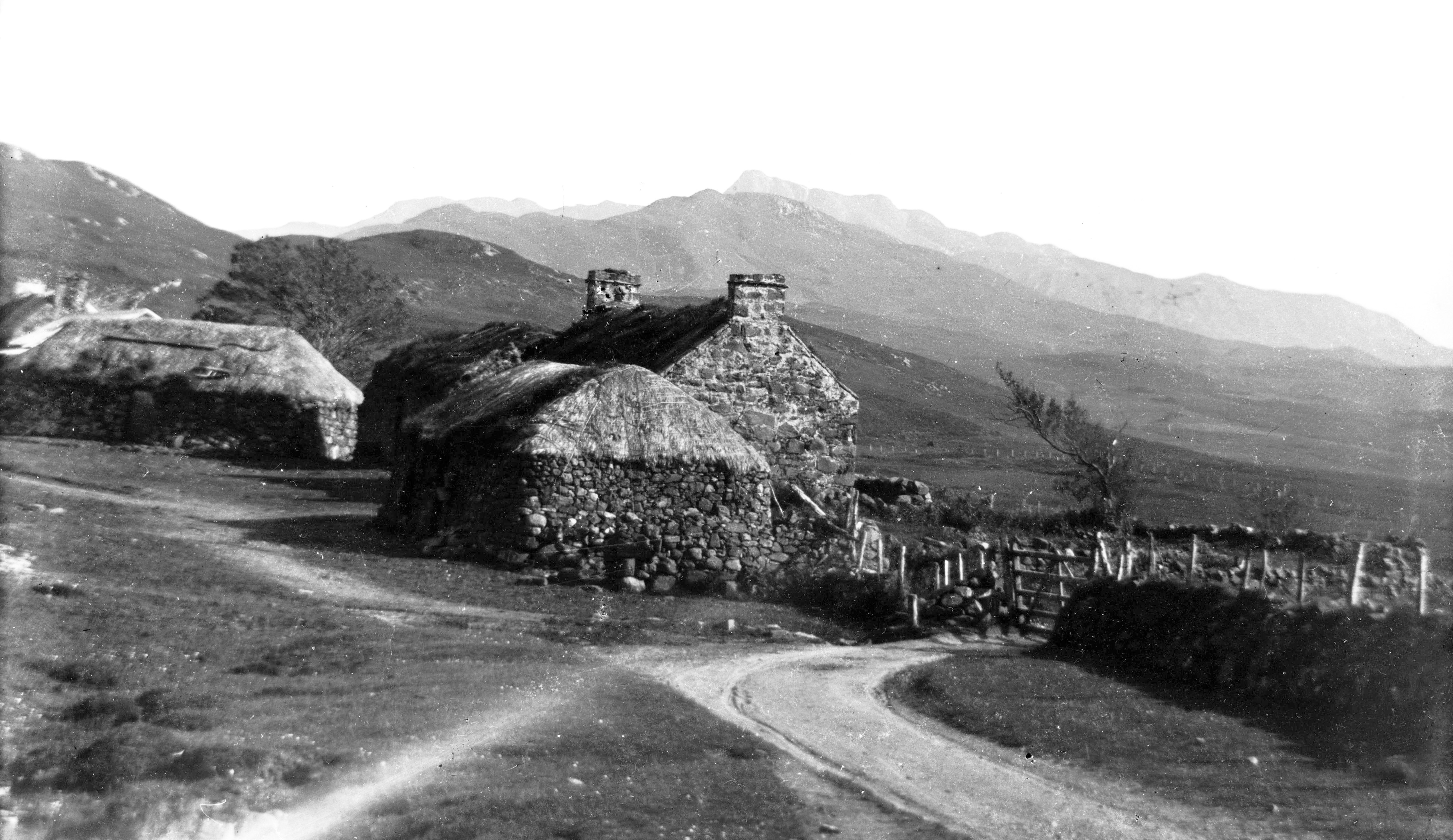
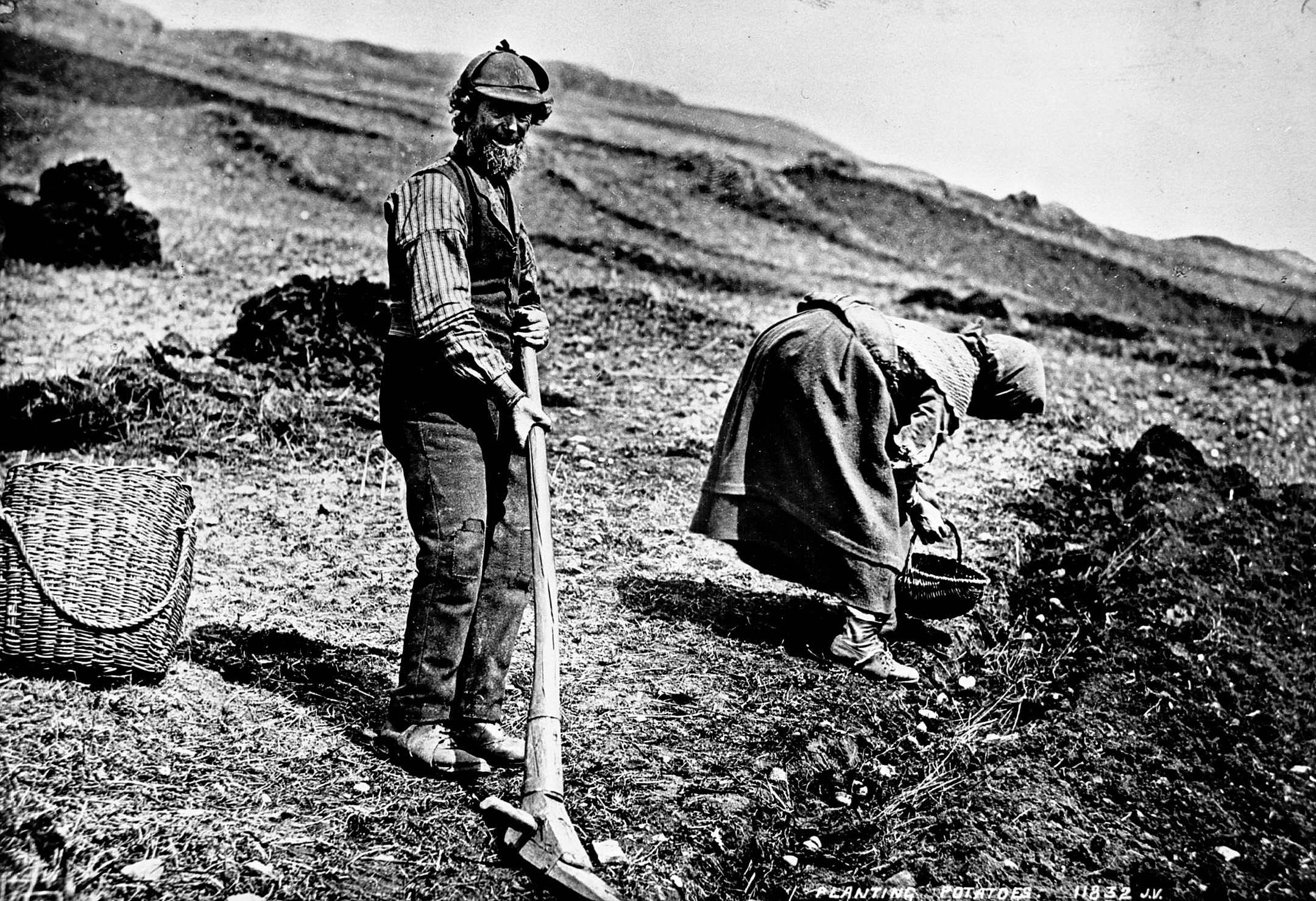
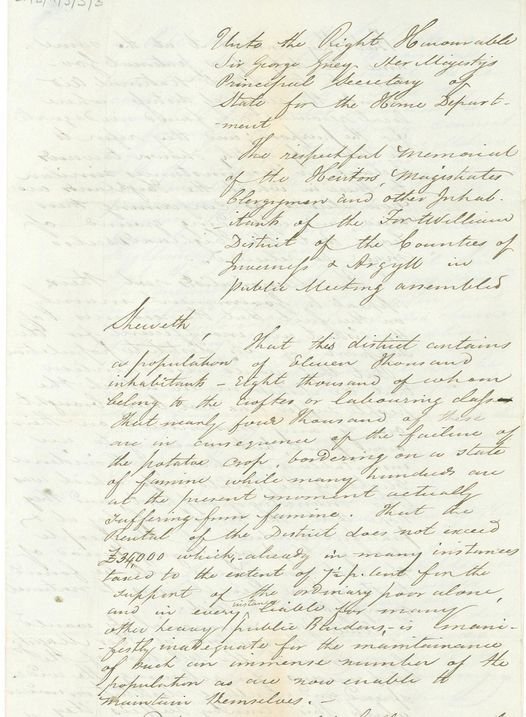
I then found another letter, dated 1851, and signed by the heritors, magistrates, and clergymen of Fort William District, appealing directly to Sir George Grey, then the Home Secretary. It is put to Sir Grey that the £34000 rental of the District, taxed to over seven percent in support of ‘the ordinary poor alone’ is ‘manifestly inadequate’ in a famine situation, where an ‘immense number of the population as are now unable to maintain themselves.’ District of Fort William is said to have eleven thousand inhabitants, some eight thousand of these belong to the ‘crofter or labouring class’, of whom four thousand are either suffering from famine or something bordering it.
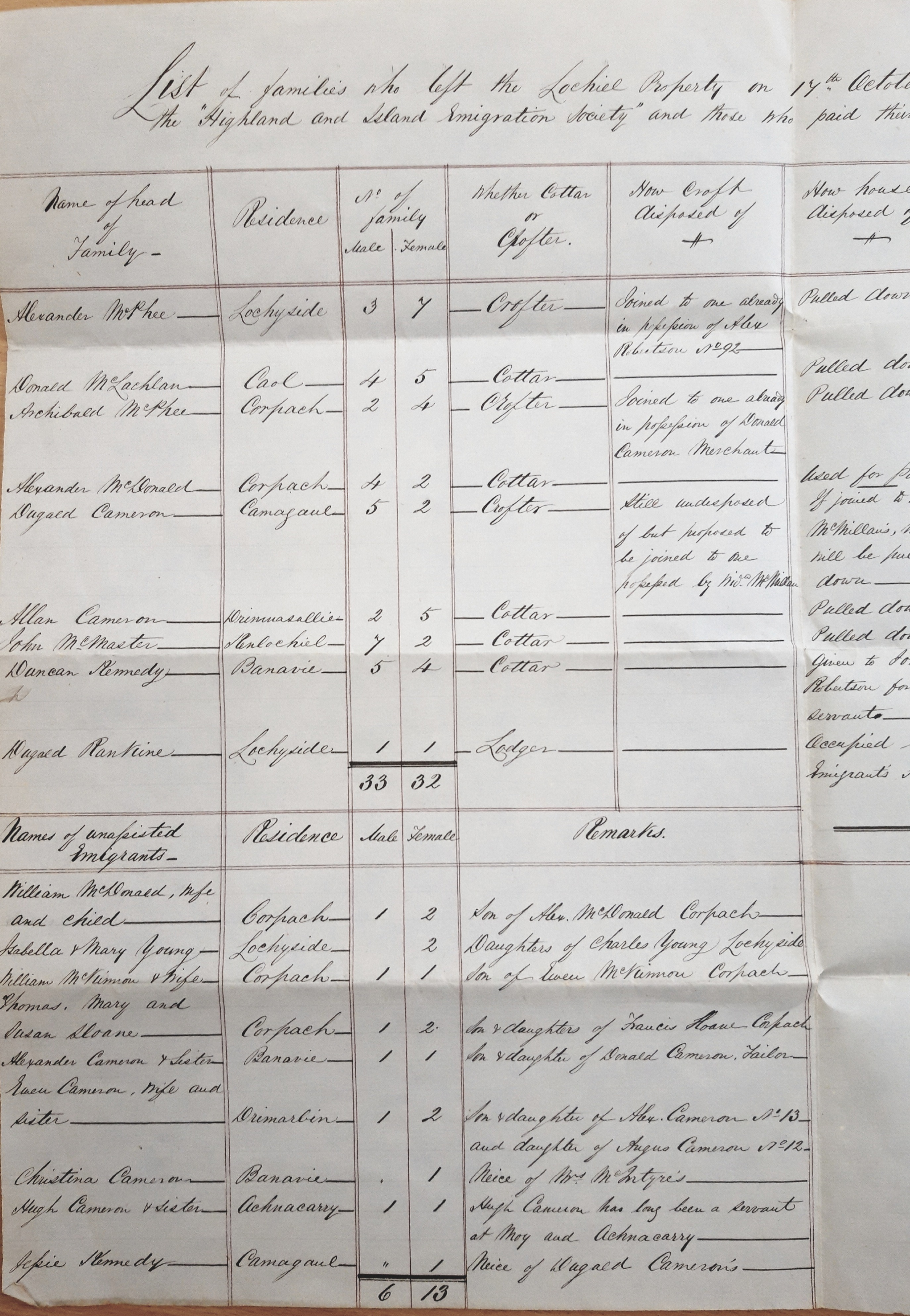
The items discussed so far are taken from our Cameron of Lochiel Collection, as is a third; a list of all families leaving the Lochiel estate on the 17th October 1853 for Australia. These emigrations were paid for by landowners, and overseen by the Highlands and Islands Emigration Society, a charity established to assist those affected by the famine in finding a more prosperous existence elsewhere. Only the head of household is named on the document, but an estimated eighty individuals left the Lochiel estate at this time.
The Highlands and Island Emigration Society was controversial and is viewed by some to be the Clearances continued beneath the façade of charity. Whether this is true or not, along with the Clearances, the Highland Potato Famine was the cause of huge numbers migrating from the Highlands and Islands in search of a better life. A significant portion of our usership at the Archive Centre are visitors from the likes of Australia, Canada, and America, hoping to find more information on their ancestors who once called Lochaber home. Some have read of the Famine; others are shocked to hear such a thing ever happened.
That the Highland Potato Famine remains a rather obscure historical event is saddening. However, the preservation of these documents means this can easily be rectified. They are able to be viewed, without charge, in our Searchroom.