







A Remarkable Roman Find
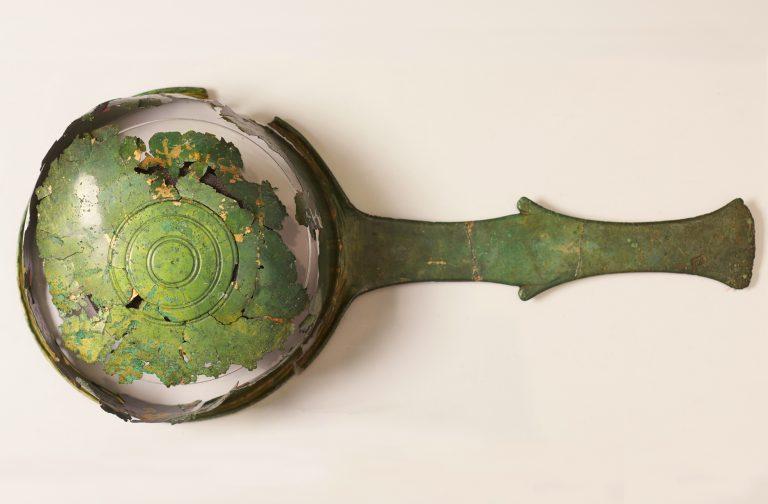
In 2003, a rare Roman wine dipper was unearthed near Auldearn, offering a fascinating glimpse into Scotland’s ancient past. This 2nd-century artefact, made from high-tin bronze, underwent meticulous conservation to stabilize and reconstruct its fragile structure. Today, it stands proudly on display at Inverness Museum & Art Gallery—a testament to both Roman craftsmanship and Highland Archive Service's conservation expertise.
Discovery
In late 2003, a remarkable find was made in a stubble field near Auldearn—a Roman copper alloy vessel, later identified as a 2nd-century AD wine dipper. Although fragmentary, the dipper was around 80% complete. Reported as Treasure Trove, it was sent to National Museums Scotland for initial cleaning, analysis, and research. Tests confirmed the metal composition as high-tin bronze.
Through the Treasure Trove process, the dipper was allocated to Inverness Museum & Art Gallery, where it was stored in a controlled environment with silica gel until treatment could begin.
Assessing the Condition
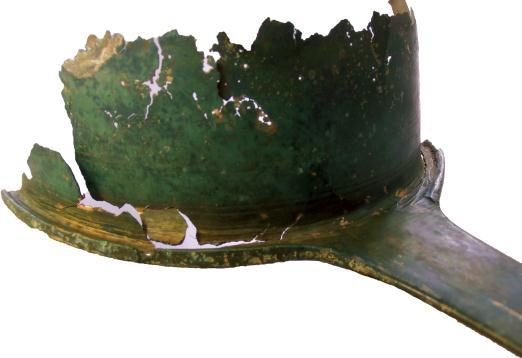
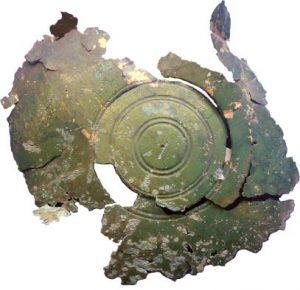
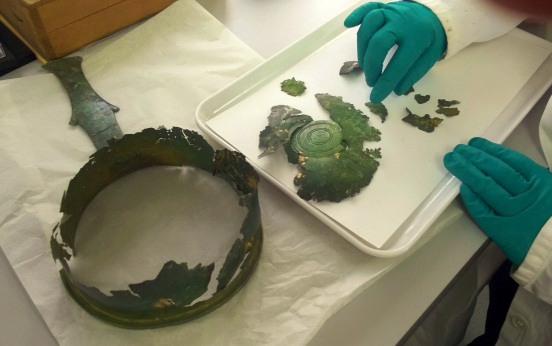
Damage likely occurred when the vessel was struck by a plough, causing fractures to the handle and distortion of the bowl. The surface showed scratches and loss of patina, exposing bright metal beneath. Each fragment was photographed and examined under a microscope. While some areas were stable, others—particularly the bowl—were affected by bronze disease, a chemical reaction with moisture that turns bronze into a pale green powder and can destroy the metal completely.
Stabilisation and Cleaning
To halt deterioration, conservators:
- Removed loose corrosion
- Treated the metal with a moisture barrier solution
- Lacquered fragments for added protection
During cleaning, new holes appeared in the thin bronze, revealing the fragility of the artifact.
Reconstruction for Display
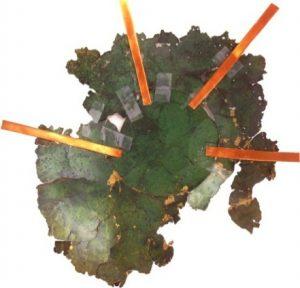
The fragments were carefully aligned and temporarily taped before being “stitched” together using copper foil strips and a chemically stable, reversible adhesive. This method provided support while ensuring future reversibility. The base of the bowl was assembled separately due to minimal connection points.
On Display Today
The reconstruction was designed for display purposes only, and the condition of the dipper continues to be monitored.
You can view this fascinating piece of Roman history in the Roman Iron Age case at Inverness Museum & Art Gallery.