Shieling, or àirigh in Gaelic, is the name given to both a summer pasture and to the small turf and stone bothies constructed on it, which were historically used as shelter or dwellings during the summer months. By way of song, stories, written and recorded memory, the exhibition brings together various accounts of shieling life in Skye, examining the relationship sheiling culture has to land use, biodiversity, community and tourism today.
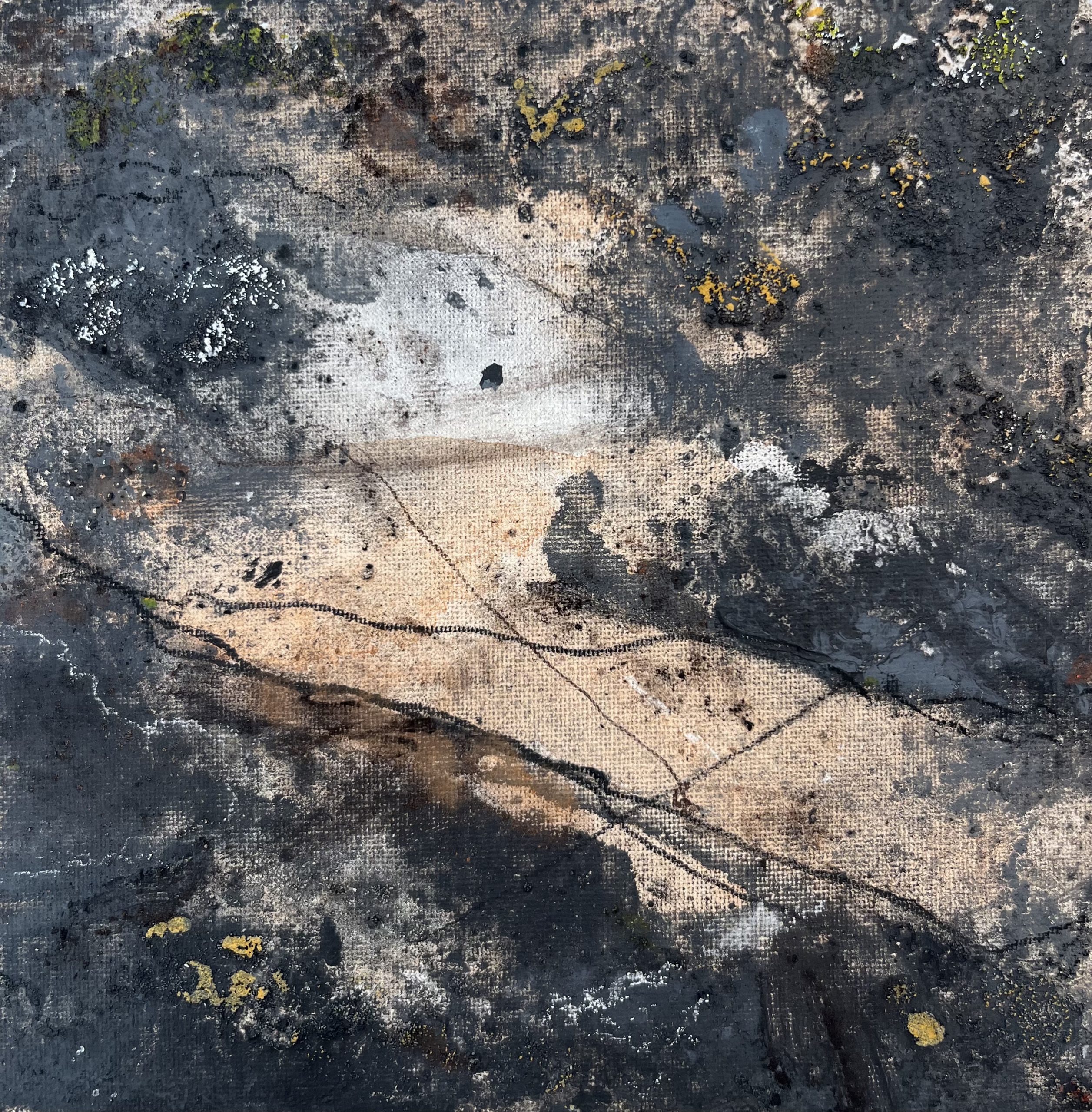
Eilidh MacKenzie is a musician, visual artist and educator from North Skye. She has a deeply-rooted interest in Gaelic culture and local tradition, and her work explores aspects of the island’s physical and cultural landscape through printmaking and mixed media. Her work for the exhibition includes paintings, earth pigments, sound, historical objects and sculpture, as well as artwork made with children at Bun-sgoil Ghàidhlig Phort Rìgh.
ùir-sgeul | earth story is part of Curious Travellers, a wider, ongoing collaborative research project between the University of Wales Centre for Advanced Welsh and Celtic Studies, Glasgow University and the Natural History Museum, London.
Curious Travellers focuses on the 18th century travel writer Thomas Pennant, who visited Skye and the Hebrides in 1772, and on how travel writing may have shaped contemporary perspectives of the Hebrides. Pennant’s writing is notable for its depth of engagement with people, place, and culture, an approach that was arguably very different to many of his peers. Eilidh was invited to take part in a Curious Travellers artist residency with ATLAS Arts in 2024, with support from Sabhal Mòr Ostaig, the National Centre for Gaelic Language and Culture.
Curious Travellers project partner Prof Nigel Leask of Glasgow University said: “After editing Pennant’s account of visiting Skye in 1772 I’ve really enjoyed connecting with Eilidh and the team to put Pennant back into a Gaelic context and history, without which the full meaning of his book is lost. It’s a tremendous project that moves between 18th century sheilings and 21st century tourist pods, and we’re very excited to see the outcomes first hand.”
On this residency, Eilidh encountered an image of a shieling site in Jura from 1772, which was drawn by Pennant’s travel companion, the artist Moses Griffith. Seeing this rare first hand account led Eilidh to begin to map various shielings across Skye, (of which there are hundreds), and to draw connections between the material culture, songs, and ecological significance of these places. In a chapbook to be published as part of the exhibition, on shieling life, and the urgency of the research, Eilidh commented: “There feels a powerful connectedness through place, stone and soil to generations past, and at the same time an overwhelming sense of cultural loss; the loss of indigenous knowledge and culture, of sounds and language of place, a way of seeing and being that was shaped entirely by the land. In terms of physical proximity you can’t get any closer than where I sit to the shieling culture that has otherwise disappeared – but in the time that has passed between the last milking and my curiosity – almost everything else around this place is changed.
“You need to be motivated to go deeper and look harder to find out about the history, heritage, culture, language, stories or music of a place, and it is the case that these are aspects of place that are not always of interest to visitors. Many who have made their own journeys to Skye have been attracted by visual imagery – often virally-shared, digitally-enhanced images of dramatic landscape and raw, atmospheric elements, which for them is overwhelmingly more appealing.”
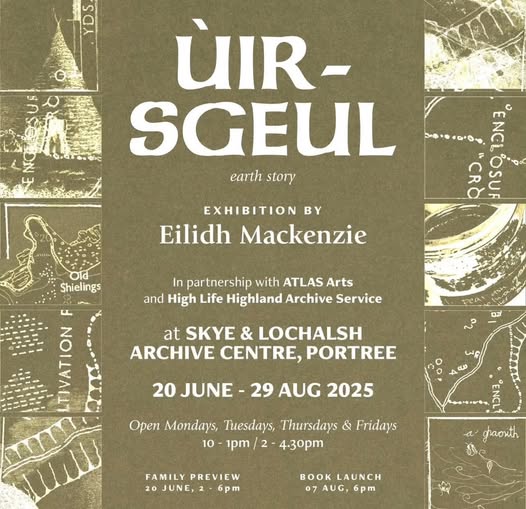
The exhibition runs from 20 June to 29 August, with an exhibition preview from 2pm on Friday 20 June, and a day of talks and sharings at Sabhal Mòr Ostaig on Thursday 19 June, as part of the wider Curious Travellers project. Curious Travellers collaborator Mary-Ann Constantine from The University of Wales said: “It’s been wonderful to work with colleagues here on Skye, and to feel Thomas Pennant’s writings come alive in the landscape and the imaginations of people who live here.”
The exhibition is also accompanied by a new publication to be launched with an artist talk on 7 August, available to purchase for £10. Book sale proceeds will go to Skye Mountain Rescue.
Up coming events associated with the exhibition include:
- 19 June, 2pm at Sabhal Mòr Ostaig: ‘Ships, songs, sheilings, Thomas Pennant in the Isle of Skye’. The afternoon will be rounded off by a presentation in song and spoken word by the renowned Gaelic singer Margaret Stewart.
- 20 June, 2pm at the Skye & Lochalsh Archive Centre, Portree: Family exhibition preview, with cake and music.
- 7 August, 6pm at Skye & Lochalsh Archive Centre, Portree: Book launch – artist talk and book launch for a specially produced exhibition publication, published with ATLAS Arts Making Publics Press.
For more information go here or contact the Skye & Lochalsh Archive Centre Skye and Lochalsh Archive Centre – Skye and Lochalsh Archive Centre
Funding for the exhibition has come from Creative Scotland, Glasgow University, The University of Wales, The Arts and Humanities Research Council, and the Highland Council Ward funding. With thanks to Prof Mary-Ann Constantine, Prof Abigail Burnyeat, Dr Dòmhnall Uilleam Stiùbhart, Greg MacThòmais, Prof Nigel Leask, Prof Michael Given, Catherine MacPhee, Anne Beaton, Skye and Lochalsh Archive Centre, Ulrike Hogg, Richy Carey, Angus MacKenzie, Claire Flyn, Angela MacGillivray, Christine Primrose, staff and C7 pupils of Bun-sgoil Ghàidhlig Phort Rìgh, ATLAS Arts team, Sabhal Mòr Ostaig and the Curious Travellers project.
The image shows Às an Àirigh, by Eilidh MacKenzie, peat and peat ash on paper, 2025